
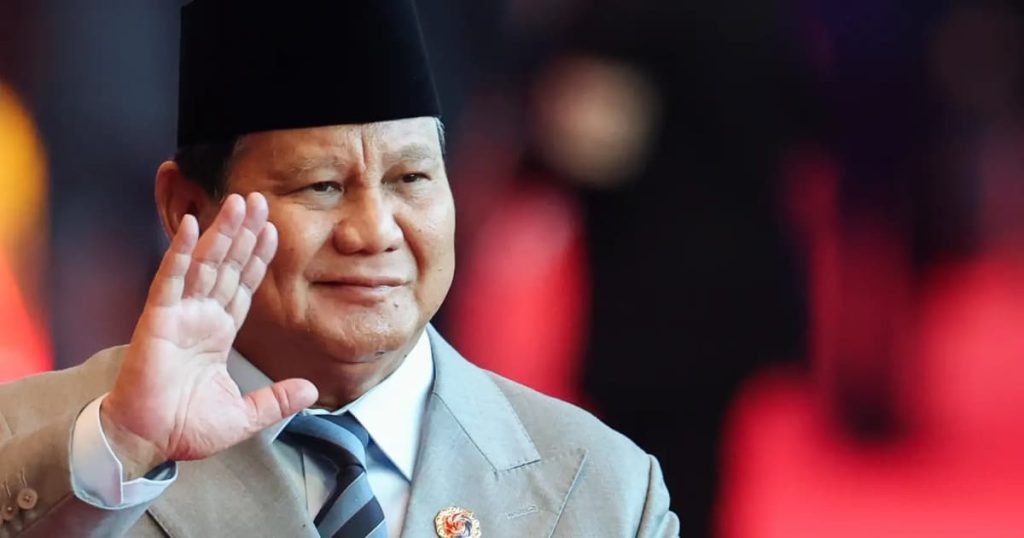

Indonesia’s President Prabowo Subianto will depart for Russia on Sunday for talks with counterpart Vladimir Putin on oil, Prabowo’s office said.
The presidency in Jakarta confirmed to AFP that Prabowo would leave Sunday evening.
Foreign minister Sugiono said Saturday that oil, which is “of strategic importance for the Indonesian nation”, would be on the agenda.
“He will meet with President Putin and will also discuss global geopolitics and, certainly, the energy situation,” said Sugiono, who like many Indonesians has only one name.
Prabowo, who recently travelled to South Korea and Japan, has defended his foreign travels.
“Brothers and sisters, it’s to secure oil, I have to go everywhere,” he said in an address to his cabinet last week.
Like many nations, Indonesia has come under pressure from soaring global oil prices over the war in the Middle East.
Southeast Asia’s largest economy, where fuel is heavily subsidised, is an oil producer but nevertheless a net importer.
Last month, Prabowo’s government announced fuel rationing and mandated a day-per-week work-from-home policy for civil servants to conserve energy stocks.
It has vowed not to increase the price of fuel in the near future.
Russia’s ambassador to Indonesia Sergei Tolchenov told reporters in March that his country was open to selling oil to Indonesia.
“If Indonesia needs it, please tell us and you will have it,” Tolchenov said as the countries prepared for joint military exercises at a Jakarta port.
Last year, Jakarta joined the Brics bloc of emerging economies that includes Russia and China.
But Prabowo has also signed a trade deal with US President Donald Trump and joined his so-called “Board of Peace”.