
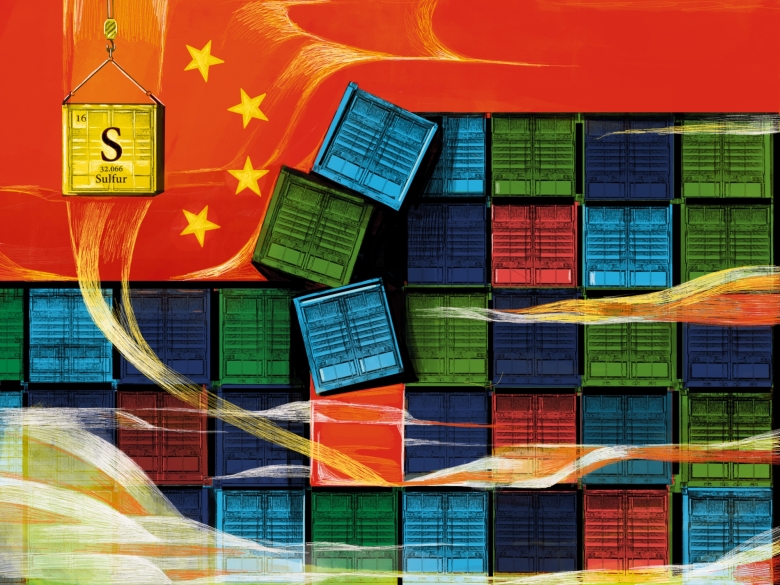
Under normal circumstances, a substance such as sulphuric acid attracts little attention outside industrial circles. Few people follow its price movements in the way they track oil or gold, and it rarely features prominently in economic headlines. Yet in recent weeks, that has changed abruptly.
China’s decision to impose near-total restrictions on sulphuric acid exports from the beginning of May, according to market reports and specialised agencies, has sparked deep concern across fertiliser, mining, and energy markets. Almost overnight, a material that barely registered in the public consciousness became something closely watched by copper producers, fertiliser manufacturers, and mining companies worldwide.
The decision did not emerge out of nowhere, nor was it implemented suddenly. It was preceded by a gradual tightening of Chinese export management through quotas and restrictions. Market estimates indicate that China’s sulphuric acid exports between January and April 2026 were capped at roughly 700,000 tonnes, compared with around 1.3 million tonnes during the same period in 2025. In other words, Beijing did not move overnight from an open market to a complete shutdown; it had already begun reducing available export volumes before the market effectively reached a near-total halt.
The timing could hardly be more sensitive. The closure of the Strait of Hormuz amid tensions linked to the US-Israeli war on Iran has disrupted one of the world’s most important shipping routes, not only for oil and gas, but also for vast quantities of sulphur, ammonia, fertilisers, and industrial chemicals. As freight routes were disrupted and transport and insurance costs climbed, markets began confronting a new kind of crisis—this time centred on a chemical vital to global industry.
The situation is further complicated by the crisis extending beyond China and the Strait of Hormuz. Russia, another significant sulphur market player, has also extended restrictions on sulphur exports until June. Pressure is therefore building from several directions: Chinese restrictions on sulphuric acid, instability in Gulf shipping lanes, and Russian controls on sulphur exports. What is emerging is no longer a temporary shortage of a single commodity, but a sign of broader fragility within industrial chemical supply chains.
Invisible, yet everywhere
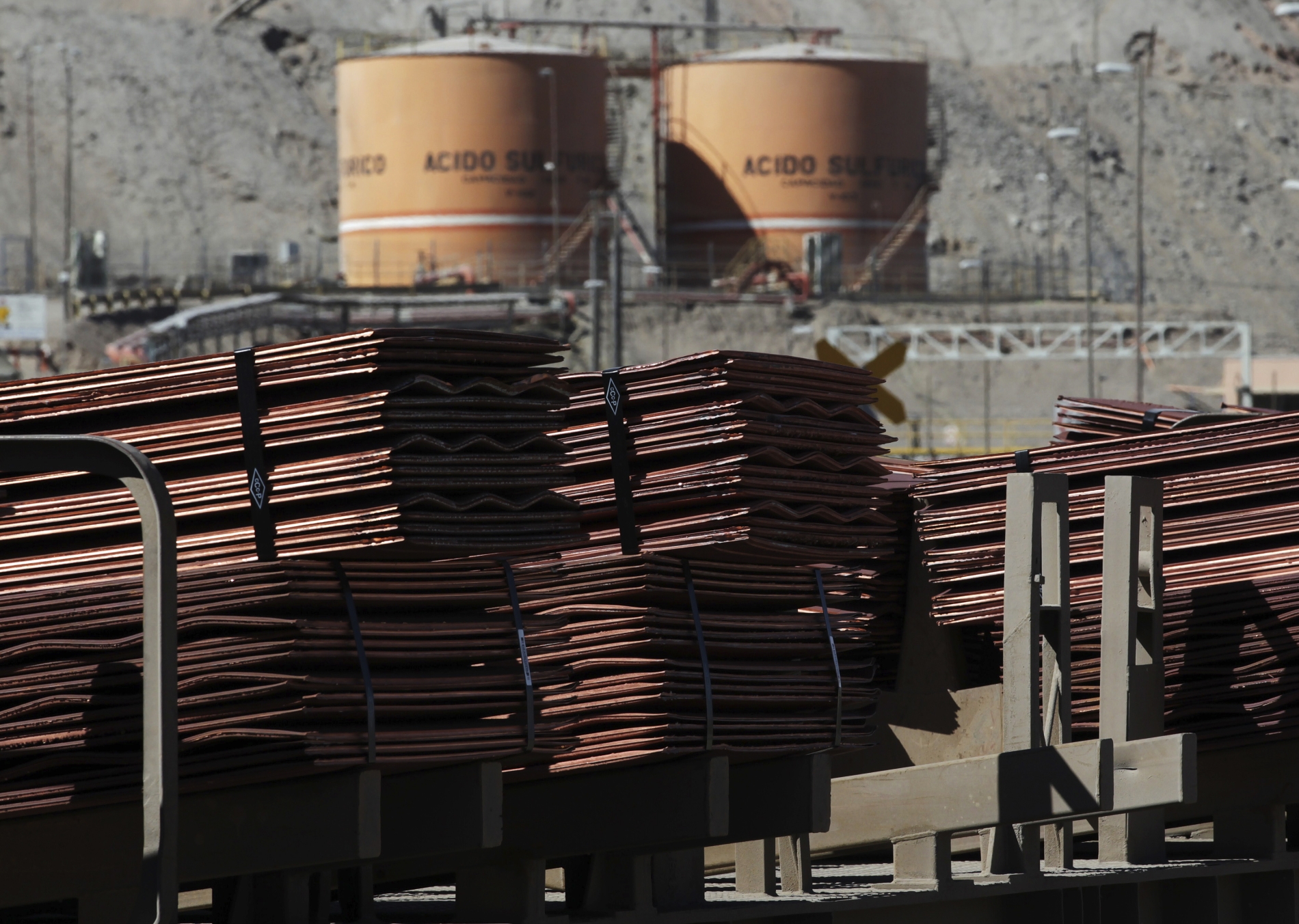
Sulphuric acid may seem remote from daily life, but it is woven into almost every aspect of the modern economy. It is a key component in phosphate fertiliser production, copper, nickel, cobalt, and uranium extraction, chemical manufacturing, water treatment, and certain refining processes. It is also used in explosives and other sensitive industries. For that reason, any disruption to its supply quickly spreads beyond the narrow chemical sector. Higher sulphuric acid prices quickly feed through to mining, agriculture, energy, and heavy industry. Over time, the effects can reach food prices themselves.
There is another reason why markets are highly sensitive to this substance: it is difficult to store and transport. Sulphuric acid is highly corrosive and requires specialised handling infrastructure, meaning companies rarely maintain large stockpiles. As soon as part of the global supply chain is disrupted, the impact becomes visible very quickly.
The global semiconductor shortage of 2020-2023, which disrupted industries from car-making to consumer electronics during and after the Covid-19 pandemic, exposed how economic bottlenecks could emerge from seemingly minor components. Markets are now confronting a similar reality in industrial chemicals. The long-standing assumption that intermediate industrial materials would remain cheap, abundant, and easy to transport is beginning to fracture.
Industry estimates suggest China is both the world’s largest producer and consumer of sulphuric acid. Its production exceeded 110 million tonnes in 2025, while domestic consumption ranged between 105 million and 107 million tonnes. Exports, meanwhile, surpassed four million tonnes. Although relatively modest compared with total production, those exports account for a significant share of global seaborne trade.
In practical terms, it means Beijing only needs to retain a relatively small portion of its domestic output to send shockwaves through global markets.
More than a trade decision
The issue does not appear to be solely about shielding the domestic market from shortages or rising prices, although that is undoubtedly part of the calculation. China has also tightened restrictions on certain phosphate fertiliser exports in recent months to stabilise its agricultural market.
The move also reflects broader changes in Chinese strategic thinking. Since Russia’s invasion of Ukraine and escalating tensions with the West, Beijing has been working to reduce external vulnerabilities in sensitive sectors while expanding reserves of oil, metals, grain, and raw materials.
China increasingly appears to be acting as a state preparing for a more unstable world, not a calmer one—a world shaped by sanctions, trade wars, and geopolitical pressure, where control over strategic materials forms part of economic power.
Previously, discussion often focused on rare earths, gallium, or graphite as potential instruments of Chinese leverage. Today, Beijing seems to be sending a broader message: influence no longer depends solely on controlling end resources, but also on controlling the intermediate materials that make the extraction and processing of those resources possible in the first place.