
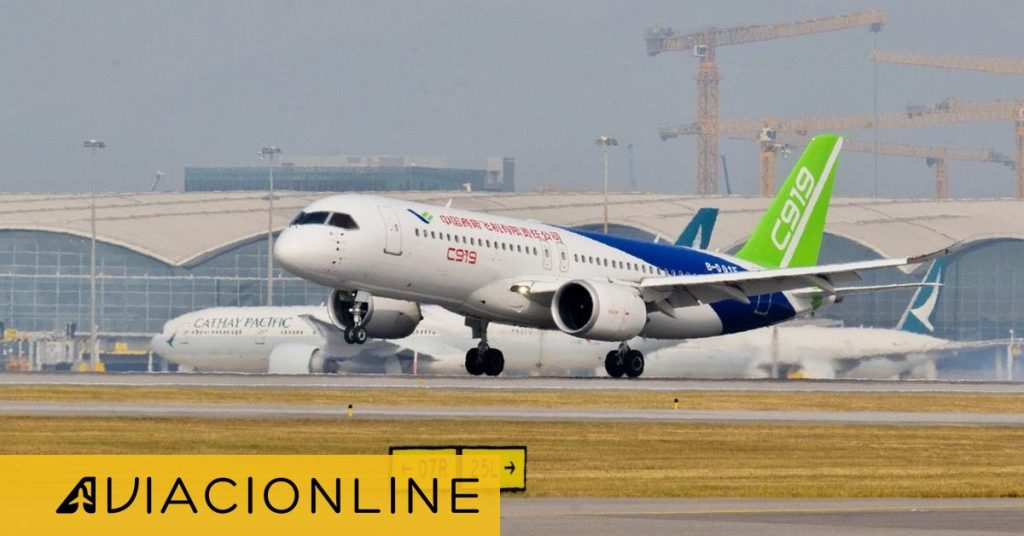
Malaysia Airlines has conditioned any potential addition of COMAC C919 aircraft to its fleet on prior certification by EASA and the FAA. The carrier remains actively interested in the Chinese-built narrowbody model but demands the endorsement of Western regulatory bodies before making a formal purchase decision.
The approval from European and US authorities is essential to support operations in international markets and strengthen confidence in the model, according to our partner outlet Aeroin. Bryan Foong, a commercial executive at Malaysia Aviation Group, noted that international regulatory approval represents a practical necessity for a carrier with a global network, rather than a mere preference.
The growing air cooperation between China, Malaysia and other Southeast Asian nations will increase confidence in the aircraft once it meets the regulatory requirements set by Western entities, the executive added. The COMAC C919, designed to compete directly against the Boeing 737 and Airbus A320 families, began commercial flights in May 2023 and is currently undergoing a validation process with the European agency, which includes flight tests in Shanghai with European pilots.
There are already 40 units of the model in commercial service, with China Eastern Airlines as its main operator with 17 aircraft, followed by Air China with 12 and China Southern Airlines with 11. The backlog stands at 963 firm orders and 65 options, according to data obtained through Cirium Fleet Analyzer.
Foong explained that the Chinese jet lacked sufficient operational maturity when the company began the evaluation process to renew its narrowbody fleet. This situation led the airline to lean toward orders from US manufacturer Boeing, which underpin its current fleet replacement strategy. The carrier rules out placing new narrowbody aircraft orders until approximately 2035, as existing commitments cover the projected growth in its schedule.
This time horizon opens a window of opportunity for COMAC to demonstrate the reliability of its aircraft and obtain the required international certifications over the next decade. Although regular communication exists between the parties, the airline is not holding active acquisition negotiations and will evaluate the manufacturer’s long-term maintenance and support capabilities in detail before moving forward. The Chinese firm needs to strengthen its regional maintenance, repair and support network in Southeast Asia to support foreign operators — a process that began with the opening of an office in Singapore and the operation of the regional C909 aircraft in neighboring countries.
In parallel with this technical evaluation, the airline is expanding its presence in the Chinese market following the launch of flights to Shenzhen. This route joins existing links to Hong Kong and Guangzhou, solidifying Kuala Lumpur as a strategic connection hub for passengers traveling between the Asian country and destinations in Australia, New Zealand and India.