

Thailand’s tourism sector, a key driver of economic growth, faces increasing headwinds from both external and domestic pressures.
Promoting sustainability through green financing has emerged as an important way to strengthen tourism-related industries.
Green solutions for hotels
The Bank of Thailand recently launched an initiative called “Green Solutions for Hotels” aimed at supporting the sector’s transition to environmental sustainability.
The project is designed to enhance the competitiveness of local operators amid growing global and domestic challenges.
Speaking at the programme launch last month, Roong Mallikamas, deputy governor of the central bank, said the initiative forms part of a broader effort to address Thailand’s structural economic weaknesses while preparing for future uncertainties.
“Thailand continues to face a spate of long-standing constraints, including low economic growth, high inequality, a concentrated economic structure, and persistently high household debt. These challenges have been exacerbated by external factors such as sharply higher US tariffs last year and escalating geopolitical tensions, particularly the ongoing conflict in the Middle East,” she said.
“These developments added pressure to energy costs and global supply chains, underscoring the need for Thailand to strengthen resilience and reduce vulnerabilities.”
Rejigging the growth model
Thailand needs to develop new engines of growth that can support GDP expansion and job creation, while upgrading industries to become more efficient and competitive, said Ms Roong.
The central bank is working with financial institutions and private sector partners in the Joint Standing Committee on Commerce, Industry and Banking to advance the “Reinvent Thailand” agenda, which targets six priority sectors and their supply chains, including tourism.
While technology and innovation remain essential, she said environmental sustainability has become equally critical. The oil shock highlights the limits of reliance on fossil fuels.
Improving energy efficiency and expanding renewable energy adoption would reduce risks and enhance competitiveness, said Ms Roong.
“Visitors to Thailand, multinational partners and regulators have expectations, particularly in Europe, where sustainability disclosure requirements are becoming more stringent,” she noted.
Hotels linked to European supply chains or marketing platforms are likely to face stricter reporting obligations in the coming years and may need to comply with international standards, such as the Global Sustainable Tourism Council (GSTC) and Green Hotel Plus.
Consumer behaviour is shifting in the same direction. According to Booking.com’s 2025 Sustainable Travel Report, more than 84% of global travellers intend to travel more sustainably, with the share expected to rise in the future.
Thailand also faces growing climate-related risks. Flooding in Hat Yai last year caused an estimated 15.7 billion baht in economic losses, highlighting the increasing frequency and severity of natural disasters.
Total solutions approach
Ms Roong said the Green Solutions for Hotels programme builds on lessons from the first phase of the central bank’s sustainable financing initiative.
For a successful transition, businesses must recognise climate risks and commit to change; firms need access to financing as well as technical expertise; and public agencies must provide incentives that make sustainability upgrades more accessible.
Under the programme, the central bank partnered with the Department of Climate Change and Environment, the Tourism Authority of Thailand, commercial banks, the Thai Energy Service Companies Association, and the International Finance Corporation.
The initiative supports hotels across four stages of transition:
Know: Raising awareness and providing guidance on suitable sustainability technologies
Measure: Helping hotels assess emissions and environmental performance through the CF-Hotels platform
Reduce: Offering access to green financing products from nine participating banks, along with credit guarantees and small and medium-sized enterprise (SME) lending support
Certify: Assisting hotels in obtaining recognised certifications such as Green Hotel Plus and EDGE
Phuket, one of Thailand’s leading tourism destinations, was selected as the launch site due to strong engagement from local hotel operators and its strategic role as a tourism hub.
Ms Roong said the programme is designed to deliver tangible outcomes rather than broad policy statements, helping businesses navigate short-term uncertainties while building stronger foundations for long-term growth.
“As global risks intensify, sustainability is no longer optional. It is becoming central to competitiveness, access to financing and long-term resilience,” she said.
Bank lending
Nine commercial banks are offering loan products under the programme, each tailoring lending to support hoteliers transitioning towards sustainability.
Bangkok Bank’s loans focus on three areas: reducing greenhouse gas emissions (such as replacing boilers with heat pumps), climate adaptation for areas facing water shortages or disaster risks, and waste management.
Krungthai Bank’s products offer financing of up to 1.25 times the appraised value and repayment terms of up to 12 years. Interest rates and fees are reduced based on sustainability progress across three tiers: investment, carbon measurement and certification.
For Kasikornbank, it offers financing of up to 100% of project value, with interest rates of 3.5-5% for the first two years and preferential rates as low as the minimum loan rate minus 1.25% for up to five years for borrowers using a carbon-calculation platform.
Siam Commercial Bank is supporting both new high-efficiency green buildings and the retrofitting of existing properties. The bank offers sustainability-linked loans, rewarding borrowers for achieving targets such as GSTC or Green Hotel Plus certification.
Krungsri (Bank of Ayudhya) is providing sustainable hotel loans with fixed interest rates of 3.5-5% for the first two years, financing of up to 150 million baht, and loan terms of up to 10 years. Customers also receive one year of complimentary access to the SET Carbon platform (subject to availability).
TMBThanachart Bank is offering financing of up to 100% of project value, with interest rates of 3.5-5% for the first two years. Coverage includes building upgrades, renewable energy, water and waste management, and electric vehicle financing for hotel fleets.
Kiatnakin Phatra Bank is applying a performance-based approach, reducing interest rates as carbon output shrinks. Hotels are categorised by carbon emissions per square metre, from tier C to A+, and the bank provides in-house engineering advisory services.
UOB Thailand is providing unsecured SME loans of up to 5 million baht, repayable over five years. Hotels certified under Green Hotel Plus receive an additional 0.25% interest rate discount from a starting rate of 3.5%.
ICBC (Thai) is supporting both SMEs and large enterprises, offering interest rates of 3.5-5% for the first two years and repayment terms of up to 10 years, with a focus on solar systems, wastewater treatment and green buildings.

A recent report from Booking.com found 84% of global travellers intend to travel more sustainably. Varuth Hirunyatheb
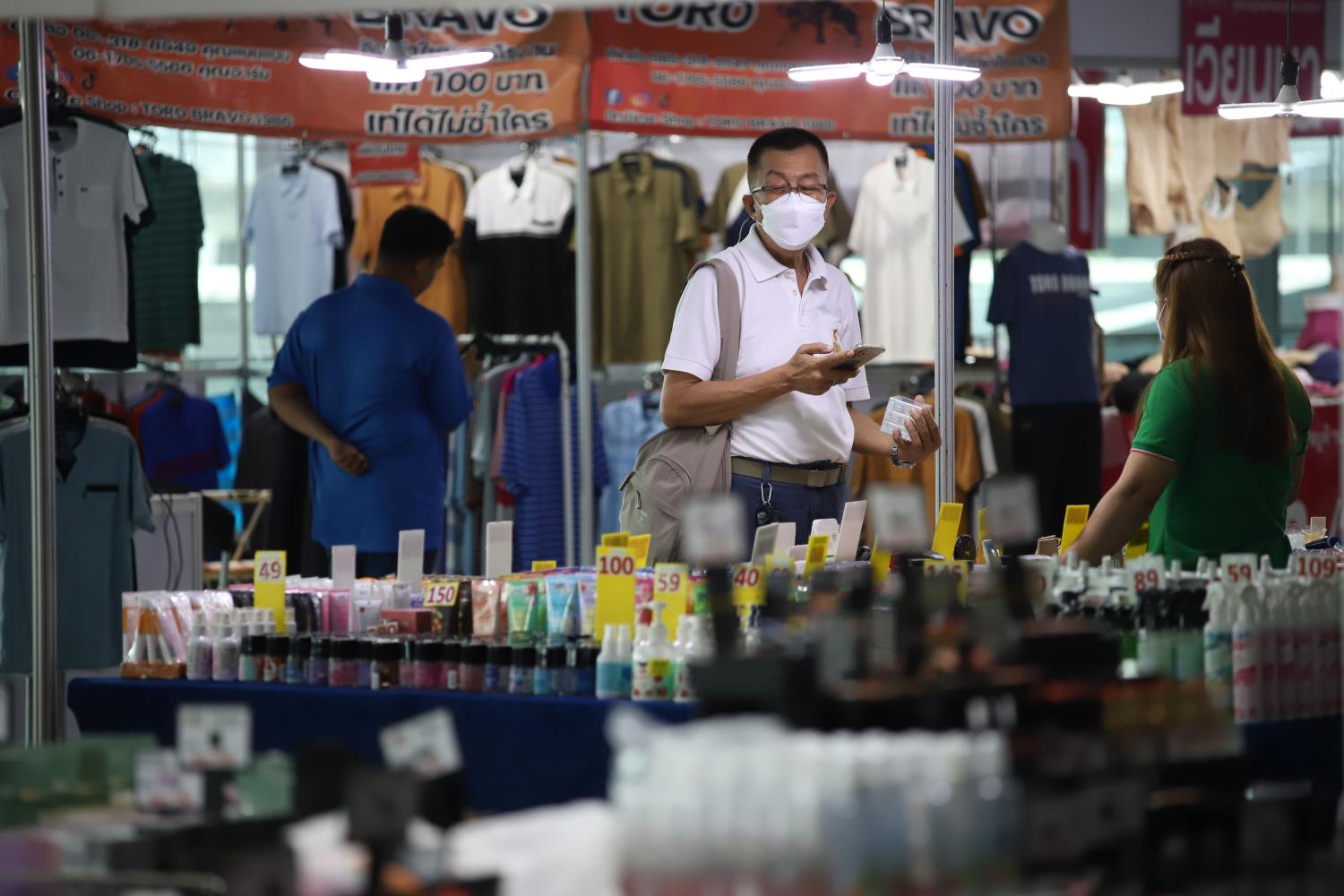
Various products on display at an industry fair at Bang Sue Grand Station in Bangkok, featuring small businesses and factories. A new loan scheme helps SMEs invest in eco-friendly manufacturing. Varuth Hirunyatheb
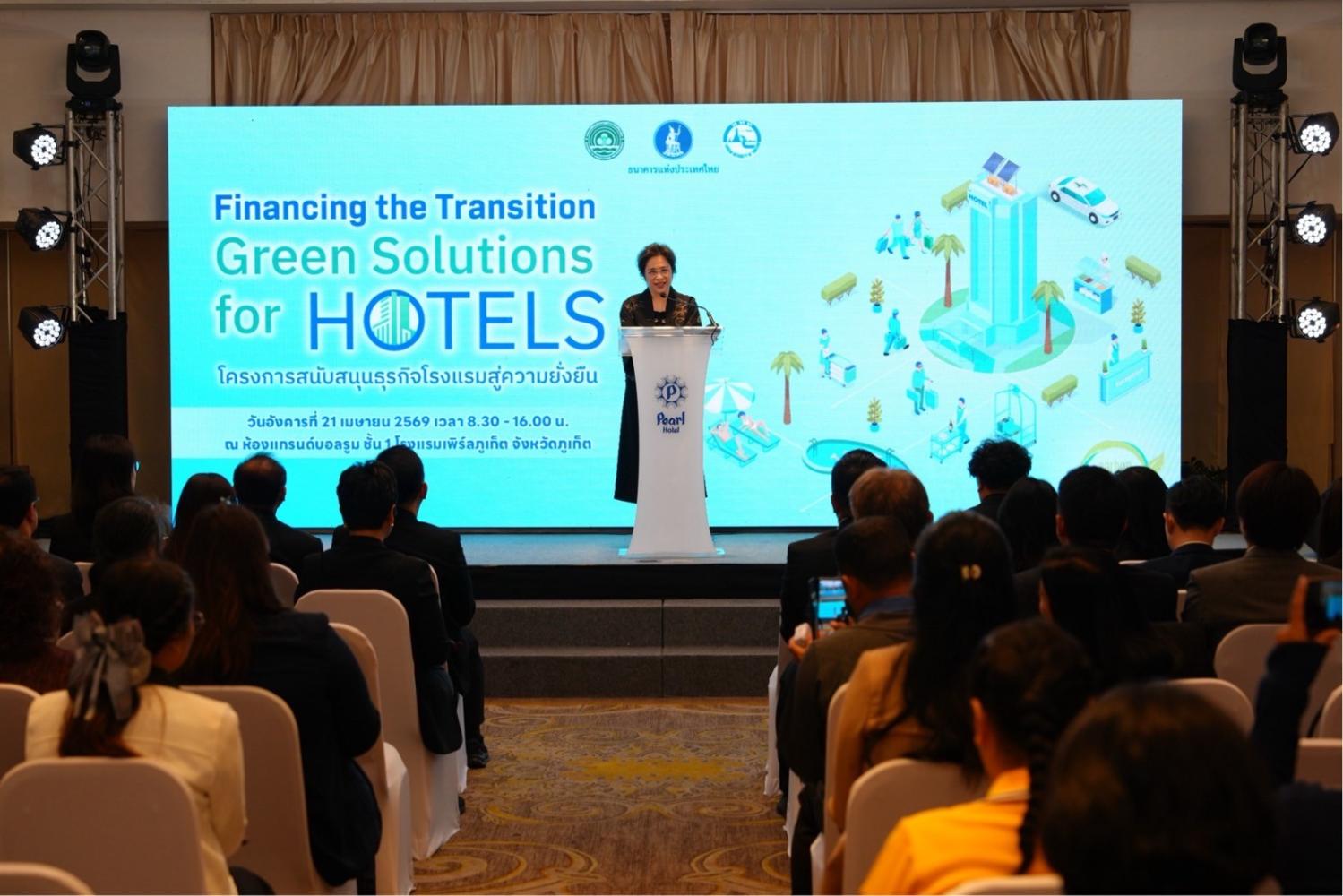
Ms Roong speaks to attendees at the launch of the lending programme.