

A market redefining itself
The halal story at THAIFEX was not merely one of scale but of sophistication. Industry analysts tracking the sector have identified five trends reshaping the halal food and beverage landscape in 2026.
Conscious Halal—sometimes described as “halal-proof”—places transparency at the forefront, requiring brands to demonstrate their entire supply chain, from farm to table, rather than simply displaying a certification logo.
Health-Led Halal is responding to rising rates of lifestyle diseases across Muslim-majority markets, driving demand for low-sugar, organic, and functional products aligned with the Islamic concept of Tayyib, meaning pure, wholesome, and ethical.
Mainstream inclusivity is another force at work. Halal products are increasingly appearing on menus and retail shelves alongside vegan and gluten-free options, attracting non-Muslim consumers who associate halal certification with hygiene, ethical sourcing, and quality control.
In Thailand specifically, the halal economy is receiving further momentum from high-spending tourists from the Middle East, prompting local food brands to adapt their menus while maintaining rigorous certification standards.
Hyper-convenience rounds out the picture, as urbanisation and fast-paced lifestyles fuel demand for ready-to-eat and delivery-friendly halal meals.
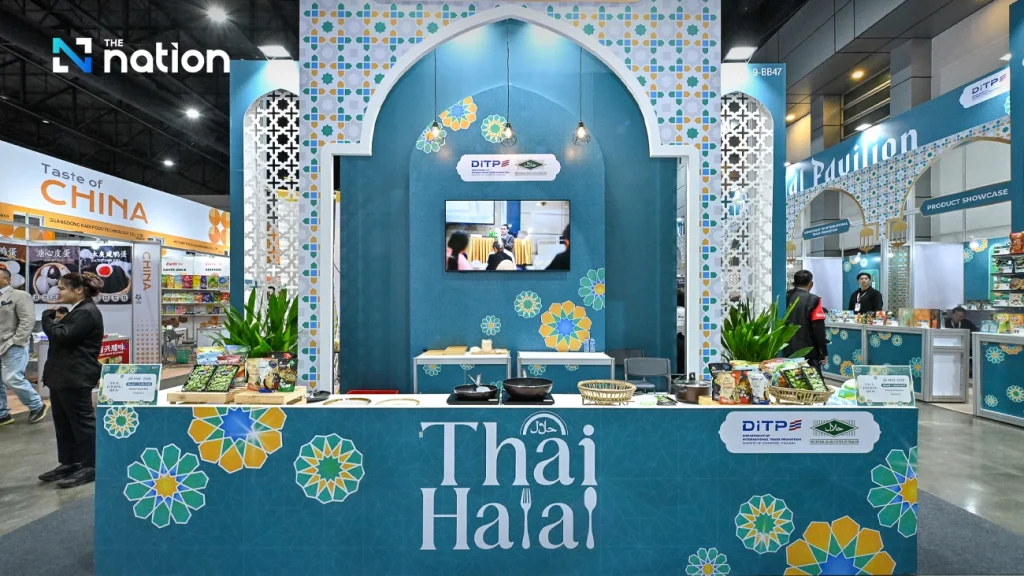
The exhibition floor reflected all of these shifts. The halal pavilion in Hall 9 was among the most visited on the opening day, with visitors from multiple countries sampling products and exploring business opportunities.
The presence of a Macau pavilion prominently displaying halal logos illustrated how the certification has spread well beyond its traditional geographic heartland.

Regional competition and cooperation
Thailand is not alone in recognising the commercial significance of the halal sector. Malaysia arrived at THAIFEX – Anuga Asia 2026 with 159 companies spanning processed food, halal-certified products, frozen and ready-to-eat items, health and wellness products, and food technology – one of the largest national delegations at the event.
Dato’ Wan Zaidi Wan Abdullah, Malaysia’s Ambassador to Thailand, described the bilateral trade relationship as a strategic priority, noting that total trade between the two countries rose 28.5 per cent in the first quarter of 2026 to US$7.9 billion.
Malaysia used its presence at THAIFEX to promote MIHAS 2026, the world’s largest halal trade exhibition, scheduled for 23 to 26 September in Kuala Lumpur, where AI-powered business-matching systems and smart trade facilitation tools are expected to generate approximately US$1.13 billion in trade value.
The competitive dynamic between Southeast Asia’s halal producers is, however, as much complementary as it is rivalrous. Supply chains across the region are deeply integrated, and the growth of the global halal market — a market now far too large to be served by any single country — creates space for multiple players to expand simultaneously.

Standards, trust, and the road ahead
For all its momentum, the halal industry continues to face structural challenges. Variations in certification standards across markets add compliance complexity for exporters, while building robust halal supply chains requires sustained investment in logistics, research, and specialist expertise.
These constraints make platforms such as THAIFEX – Anuga Asia particularly valuable — not only as trade venues but also as spaces where certification bodies, producers, buyers, and policymakers can align on standards and build the cross-border relationships that underpin credible, scalable halal commerce.
For Thailand, the message from this year’s exhibition is clear: the country’s halal food sector, long anchored in the cultural and agricultural strengths of its southern provinces, is ready to be taken seriously on the world stage.