
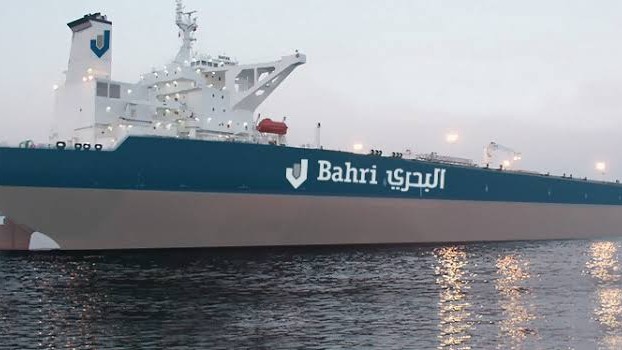
Saudi Arabia is not waiting for the Strait of Hormuz to return to normal to deliver its crude to Asia. It is building a workaround, one tanker handoff at a time.
Saudi Aramco is offering more September crude to Asian buyers through ship-to-ship transfers outside Hormuz, according to Reuters, after shipping data showed Saudi barrels moving through the strait aboard tankers with their tracking systems switched off.
The model is relatively simple: move Saudi crude through the dangerous part of the journey, then transfer it to another tanker off Fujairah in the UAE or Sohar in Oman. The buyer gets its cargo without having to send its own vessel into Hormuz.
Aramco has now opened sales of Arab Medium and Arab Heavy using the arrangement for a second consecutive week.
And China is buying.
Two VLCCs carrying a combined 4 million barrels of Saudi crude were headed to China after receiving their cargoes through ship-to-ship transfers off Sohar, according to Vortexa and Kpler data cited by Reuters. One is expected at Ningbo on September 15 and the other at Zhanjiang on September 12, with both cargoes destined for Sinopec.
The strategy represents another evolution in Saudi Arabia’s increasingly complicated effort to keep crude flowing despite two compromised export corridors.
Aramco resumed loading tankers at Ras Tanura and Juaymah earlier this month after a three-week pause, while simultaneously routing more crude west through the East-West pipeline and Egypt’s Sidi Kerir terminal to serve European customers without traversing Hormuz.
For Asian buyers, geography makes that solution considerably less attractive. China sits on the other side of Hormuz.
The ship-to-ship arrangement effectively splits the voyage in two, allowing Aramco to shoulder the riskiest leg before handing the crude to buyers outside the strait.
It is hardly a return to normal Gulf oil trade, but Saudi barrels are reaching China again, with the Hormuz leg now Aramco’s problem.
By Julianne Geiger for Oilprice.com