
A separation technology refined for decades by the biotech industry could soon find a new use in rare earth processing.
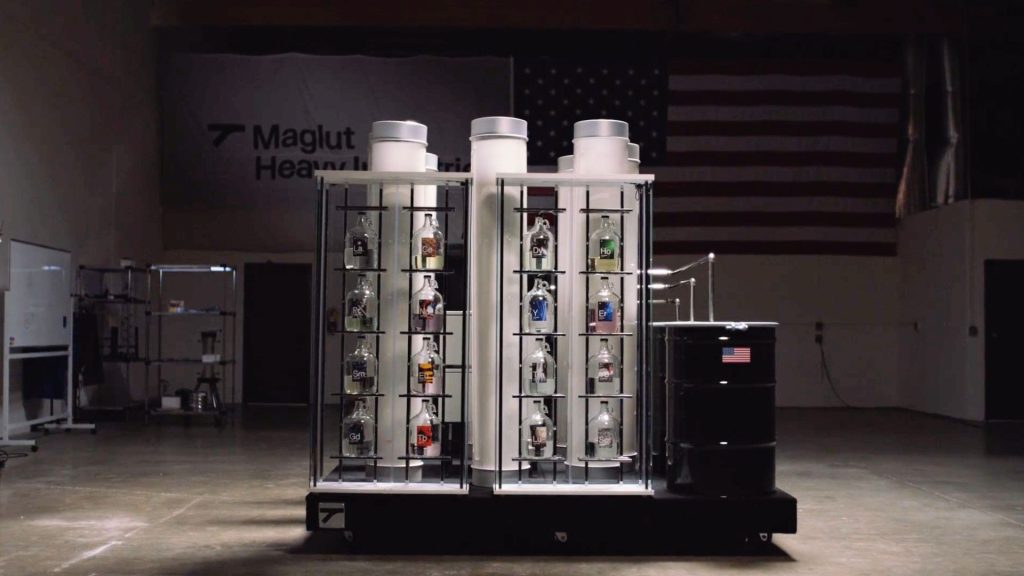
Maglut Heavy Industries has emerged from stealth with ARC-1, a chromatography-based system designed to separate rare earth elements into high-purity oxides. The startup says it has validated the technology using real-world feedstock at pilot scale.
Its approach targets one of the most difficult steps in the rare earth supply chain. Extracting rare earth materials is only part of the challenge.
Manufacturers must then separate chemically similar elements from complex mixtures. That process requires extreme precision.
Maglut is adapting chromatography for that task. The technique already plays a major role in biotechnology, where manufacturers use it to purify complex compounds and biologic medicines.
Separating rare earth elements
Chromatography separates substances based on how they interact with a specialized material. Maglut has redesigned that principle for rare earth processing.
Its ARC-1 system uses proprietary resin technology to separate individual elements from mixed feedstocks. The startup designs and manufactures its own resins, making it a vertically integrated chromatography company.
That resin sits at the center of the separation process. Different rare earth elements interact differently with the material, allowing the system to isolate them. Maglut says ARC-1 has produced individual rare earth oxides with purity levels exceeding 99.9 percent.
Those purity levels matter because advanced manufacturing requires highly refined materials. Magnets, electronics, defense hardware, and energy systems often depend on specific rare earth compounds. The technology could offer a different path from solvent extraction, the dominant method used for rare earth separation.
Replacing chemical-heavy processing
Conventional solvent extraction relies on repeated chemical separation stages. The process can consume significant amounts of energy and require large volumes of chemical reagents.
Separating closely related rare earth elements can also involve complex processing chains. Maglut instead uses a water-based system built around chromatography.
The company believes decades of biotechnology research have lowered the cost of chromatography enough for industrial applications. ARC-1 represents Maglut’s attempt to transfer that mature technology into a completely different manufacturing environment.
Scaling remains the central engineering challenge. A technology that works at pilot scale must eventually process large material volumes without sacrificing purity or raising costs.
Maglut believes its integrated approach could help solve that problem. Designing its own resins gives engineers control over a key component of the separation system. The startup plans to showcase ARC-1 at its Long Beach headquarters during an invitation-only event.
Technology faces larger test
The system now enters a critical phase. Rare earth processing technologies must compete on throughput, operating costs, purity, and reliability. A successful industrial platform must also handle variations in real-world feedstock.
Maglut says rising rare earth prices have improved the economics for new separation technologies. Falling chromatography costs have created another opening.
Success could give U.S. manufacturers a new processing option. That matters as domestic industries seek alternatives to foreign rare earth supply chains. Beginning in January 2027, new Department of War requirements will also push defense contractors to remove China from their rare earth magnet supply chains.
Maglut has shown that chromatography can separate real-world rare earth feedstock at high purity. The next challenge involves proving that the system can deliver those results at industrial scale.