
Iyobosa Uwugiaren, who recently returned from China after a three-month seminar, writes on how the Great Wall, the National Museum of China, the Temple of Heaven, and the rise of Chongqing reveal China’s culture, traditions, arts, and urban development.
Long before the day fully begins, Beijing is already awake. In public parks, elderly residents move gracefully through tai chi routines, commuters flood subway stations, and the morning sun illuminates ancient rooftops that have stood watch over the capital for centuries.
Thousands of kilometres away, in the mountainous metropolis of Chongqing, ferryboats glide across the confluence of the Yangtze and Jialing rivers, while high-speed trains emerge from tunnels carved into steep hillsides.
Beijing is often described as the political and cultural heart of China, while Chongqing is celebrated as a symbol of modern innovation and urban transformation.
Together, the two cities tell the story of a nation that treasures its past while boldly shaping its future. They are cities of memory and green dreams—places where heritage and development exist side by side. Through Beijing’s iconic landmarks—the Great Wall of China, the National Museum of China, and the Temple of Heaven—and through Chongqing’s remarkable urban landscape, China’s culture, traditions, arts, and vision for sustainable development come sharply into focus.
The Story of the Great Wall
The story begins at the Great Wall, where history stretches across mountain peaks like a stone dragon winding through northern China. Near Beijing, visitors climb ancient watchtowers and gaze across landscapes that have witnessed centuries of change. The wall stands as a monument to endurance, resilience, and national unity.
Built over many centuries by successive dynasties, the Great Wall was designed to protect the empire’s northern borders. Yet its significance today extends far beyond defence. It has become a powerful symbol of Chinese civilisation itself—a reminder of collective effort, determination, and the capacity of people to achieve extraordinary feats.
Artists, writers, and poets have long drawn inspiration from the Great Wall. It appears in paintings, literature, and folklore as a symbol of perseverance and identity. For many Chinese citizens, it embodies the spirit of a nation that has overcome countless challenges throughout its long history.
While the Great Wall preserves memories of China’s ancient past, modern conservation efforts around the site point toward the future. Reforestation projects and environmental protection programmes have helped restore the surrounding landscape, demonstrating how historical preservation can coexist with ecological responsibility. This balance between memory and sustainability has become an increasingly important hallmark of China’s urban development.
What the National Museum Offers
Back in central Beijing, the National Museum of China offers another window into the nation’s story. Located beside Tiananmen Square, the museum houses millions of artefacts that trace the progression of Chinese civilisation from prehistoric times to the present day.
Walking through its galleries feels like travelling across thousands of years. Ancient bronzes, jade carvings, porcelain masterpieces, calligraphy, and paintings reveal the richness of China’s cultural heritage. Each artefact tells a story of creativity, innovation, and social transformation.
The museum serves as a custodian of collective memory. It preserves the achievements of past generations while helping new generations understand their cultural roots. Schoolchildren stroll through exhibitions, discovering the stories of emperors, philosophers, inventors, revolutionaries, and artists. International visitors gain a deeper appreciation of the civilisation that helped shape East Asia and the wider world.
The institution also highlights the importance of art in Chinese society. Throughout history, artistic expression has reflected philosophical ideas, spiritual beliefs, and social values. Traditional Chinese paintings celebrate harmony with nature, while calligraphy transforms language into visual art. These artistic traditions continue to influence contemporary Chinese culture.
The museum itself is a product of modern Beijing. Advanced technology, digital displays, and innovative exhibition designs demonstrate how historical conservation can embrace contemporary methods. The result is a cultural institution that connects the past to the future, much as Beijing itself does.
Temple of Heaven: Where Emperors Prayed for Good Harvests
Not far away, the Temple of Heaven provides a different perspective on Chinese civilisation. Surrounded by ancient cypress trees—many of them planted more than 800 years ago—and expansive green spaces, the temple stands as one of the finest examples of traditional Chinese architecture.
Constructed during the Ming Dynasty, the temple was once the site where emperors prayed for good harvests and sought harmony between heaven and earth. The rituals performed there reflected a worldview that emphasised balance, responsibility, and respect for natural forces.
The magnificent Hall of Prayer for Good Harvests remains one of China’s architectural masterpieces. Its elegant circular form symbolises heaven, while its intricate details reveal the sophistication of traditional craftsmanship.
More importantly, the Temple of Heaven reflects a philosophy that remains relevant today: the belief that human prosperity depends upon harmony with nature. This principle has gained renewed importance as Chinese cities pursue more sustainable forms of development.
The Mountain City
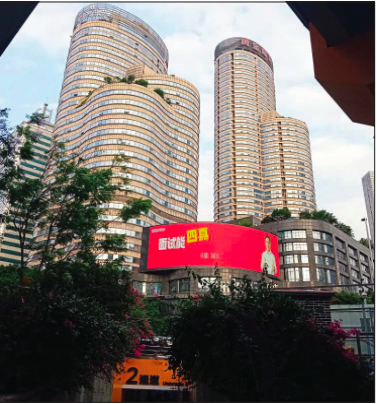
That vision becomes especially visible in Chongqing, one of the fastest-growing urban centres in the world. Unlike Beijing’s broad avenues and imperial landmarks, Chongqing rises naturally from rugged mountains. Skyscrapers seem to emerge directly from cliffs, while bridges span vast river valleys. The city is often described as a “mountain city,” and its unique geography has shaped both its identity and its development.
For many visitors, Chongqing represents the future of urban China. Among them is the President of the International Press Institute (IPI), Nigeria, Musikilu Mojeed, who visited China as part of the delegation. He argued that elected politicians in Nigeria should visit Chongqing before assuming office because it offers valuable lessons in infrastructure development and long-term urban planning.
It is a city where modern transit systems navigate steep terrain with remarkable efficiency. Green spaces are integrated into densely populated neighbourhoods, while new technologies support transportation, environmental management, and public services.
Yet beneath its futuristic appearance, Chongqing remains deeply connected to Chinese traditions. Historic neighbourhoods preserve local culture, architecture, and cuisine. Ancient temples stand alongside modern commercial districts, while traditional arts, including folk music and crafts, continue to thrive within the rapidly expanding metropolis.]
The Contrast Between Beijing and Chongqing
The contrast between Beijing and Chongqing is striking, yet the two cities share common aspirations. Beijing preserves the symbols of China’s historical memory, while Chongqing demonstrates how innovation can shape the future. Together, they reveal a broader national effort to balance cultural heritage with modernisation.
This balance lies at the heart of China’s “green dream.” Across the country, cities are seeking ways to improve quality of life while protecting natural resources and historical landmarks. Sustainable transportation systems, expanded urban forests, renewable energy initiatives, and heritage conservation projects all contribute to this vision.
In Beijing, the green spaces surrounding the Temple of Heaven provide a sanctuary within a bustling metropolis. Conservation efforts at the Great Wall protect both cultural and natural landscapes, while the National Museum ensures that historical knowledge remains accessible to future generations.
In Chongqing, green corridors and riverfront parks soften the impact of rapid urbanisation. Modern engineering solutions help reduce environmental pressures while supporting economic growth. The city demonstrates that even large-scale development can incorporate sustainability and respect for local culture.
As evening descends, the lights of Beijing and Chongqing illuminate two different chapters of China’s story. In Beijing, ancient monuments stand quietly against the night sky, preserving memories of emperors, scholars, and artists. In Chongqing, illuminated skyscrapers reflect on river waters, symbolising ambition, innovation, and possibility.
Their stories remind us that progress does not require abandoning the past. Instead, the most successful cities often draw strength from their history while embracing new opportunities. In Beijing and Chongqing, memory and dreams walk hand in hand, creating urban landscapes that honour tradition, celebrate culture, inspire artistic expression, and build a greener future for generations to come.
What Lessons Can Abuja Learn from Beijing?
For the Nigerian journalists who visited China, Beijing appeared to have discovered something many developing cities often overlook: modernity without memory eventually becomes hollow. That observation raises an important question: What lessons can Abuja learn from Beijing?
The question is significant because Abuja itself was conceived as a modern African capital—a planned city designed to symbolise national unity, order, and effective governance. Yet decades after its establishment, Abuja still grapples with weak cultural identity, inadequate maintenance of public spaces, shrinking green areas, uncontrolled expansion, and insufficient long-term urban planning.
The Nigerian capital was originally designed with green belts, open spaces, broad avenues, and environmental aesthetics in mind. However, years of unregulated growth, political pressure, poor maintenance culture, and weak enforcement of planning regulations have steadily eroded many of those ideals. Beijing demonstrates that preserving green spaces requires political discipline and long-term commitment.
In many parts of Abuja today, public parks are poorly maintained, converted to commercial use, or neglected altogether. Recreational spaces that could strengthen community life remain underdeveloped, while urban planning often appears reactive rather than strategic.
China’s experience suggests that environmental planning must become central to governance rather than an afterthought.
The transformation of Beijing also offers Abuja lessons in cultural confidence. Abuja still lacks sufficient cultural symbols capable of projecting Nigeria’s historical depth and civilisational diversity. Beyond the National Mosque and the National Christian Centre, much of the city’s architecture and public spaces struggle to communicate a distinctly Nigerian identity. A capital city should reflect the soul of a nation.
Abuja possesses the natural landscape to achieve something similar. Its hills, open land, and relatively organised structure provide opportunities for urban forests, waterfront recreation, pedestrian-friendly districts, cycling infrastructure, botanical gardens, and protected ecological corridors. Yet many of these possibilities remain underutilised.
For Abuja, the deeper lesson is not that Nigeria should copy China wholesale. Rather, it is that cities earn global respect when they combine infrastructure with identity, environmental sustainability, and cultural purpose.
The Nigerian editors who visited Beijing returned with more than photographs of the Great Wall or memories of museum galleries. They encountered a civilisation using urban planning to tell a national story. Perhaps that is the central challenge facing Abuja today.