
Close Menu
Simply Invest Asia
  • Home
  • About us
  • Explore industries/sectors
    • Automobile
    • Aviation
    • Banking
    • Biotechnology
    • Chemical & Fertilizer
    • Entertainment and Media
    • Food Processing
    • Healthcare
    • Iron and Steel
    • Leather
    • Mining
    • Oil and Gas
    • Pharmaceutical
  • Explore by countries
    • China
    • Dubai / UAE
    • Hong Kong
    • India
    • Indonesia
    • Japan
    • Malaysia
  • Explore cities
    • Bangkok
    • Beijing
    • Chongqing
    • Delhi
    • Dubai
    • Guangzhou
    • Jakarta
    • Kuala Lumpur
  • Why Asia
Facebook X (Twitter) Instagram Threads
Trending:
  • Mourners line Bangkok streets to pay respects to Thailand’s Princess Bha | Thailand
  • Quince’s Leather Tote Bag Is Made for Long Travel Days
  • Indonesia Joins Saudi Arabia, United Arab Emirates, Qatar, Bahrain, Oman, Kuwait, Egypt, Jordan and Türkiye in Advancing Cross-Border Tourism Growth Through Religious Travel Expansion, Middle East Visitor Engagement, Lombok Hospitality Development and Strategic Bilateral Tourism Cooperation
  • Guangzhou Metro inks railway service contract with Colombia
  • Gargash: UAE is committed to the security and stability of the Arabian Gulf
  • China built Asia’s largest rail station in two years, with 5.1 million ft.² and welding robots setting the pace
  • Japan: Seven-Eleven Rolls Out Retail-Media
  • Race Result | 13 Jun 2026 | Sha Tin | Race 1 SUNBIRD PLATE | HK Racing – South China Morning Post
  • The US and India have become regional rivals
  • Malaysia a global model of peaceful coexistence, tolerance, says Muslim World League
  • State of Palestine reiterates condemnation of attacks targeting UAE infrastructure and Barakah nuclear plant
  • Police Dispute Students’ Claim of Prior Notice for Jakarta Protest
  • Beijing and Chongqing: China’s Cities of Memory and Green Dreams – THISDAYLIVE
  • ‘Team Hong Kong’ strategy pushes aviation hub to new heights with Central Asia expansion and 70m passenger target
  • Mount Dukono eruption prompts safety warnings in eastern Indonesia
  • Katie Price’s husband Lee Andrews ‘released from Dubai prison’ as former glamour model speaks out on ordeal
  • Deadly military plane crash in India’s Assam | Aviation
  • Katie Price’s husband ‘released’ from Dubai prison where he was pals with Daniel Kinahan
Saturday, June 13
Facebook X (Twitter) Instagram
Simply Invest Asia
  • Home
  • About us
  • Explore industries/sectors
    • Automobile
    • Aviation
    • Banking
    • Biotechnology
    • Chemical & Fertilizer
    • Entertainment and Media
    • Food Processing
    • Healthcare
    • Iron and Steel
    • Leather
    • Mining
    • Oil and Gas
    • Pharmaceutical
  • Explore by countries
    • China
    • Dubai / UAE
    • Hong Kong
    • India
    • Indonesia
    • Japan
    • Malaysia
  • Explore cities
    • Bangkok
    • Beijing
    • Chongqing
    • Delhi
    • Dubai
    • Guangzhou
    • Jakarta
    • Kuala Lumpur
  • Why Asia
Simply Invest Asia
Home»Explore by countries»India»The US and India have become regional rivals
India

The US and India have become regional rivals

By IslaJune 13, 20265 Mins Read
Share
Facebook Twitter Pinterest Threads Bluesky Copy Link


On his recent visit to India, US Secretary of State Marco Rubio predictably touted India as one of America’s “most important strategic partners,” citing the two countries’ shared values, “people-to-people ties,” and strategic alignment on “all of the key issues that will define the new century.”

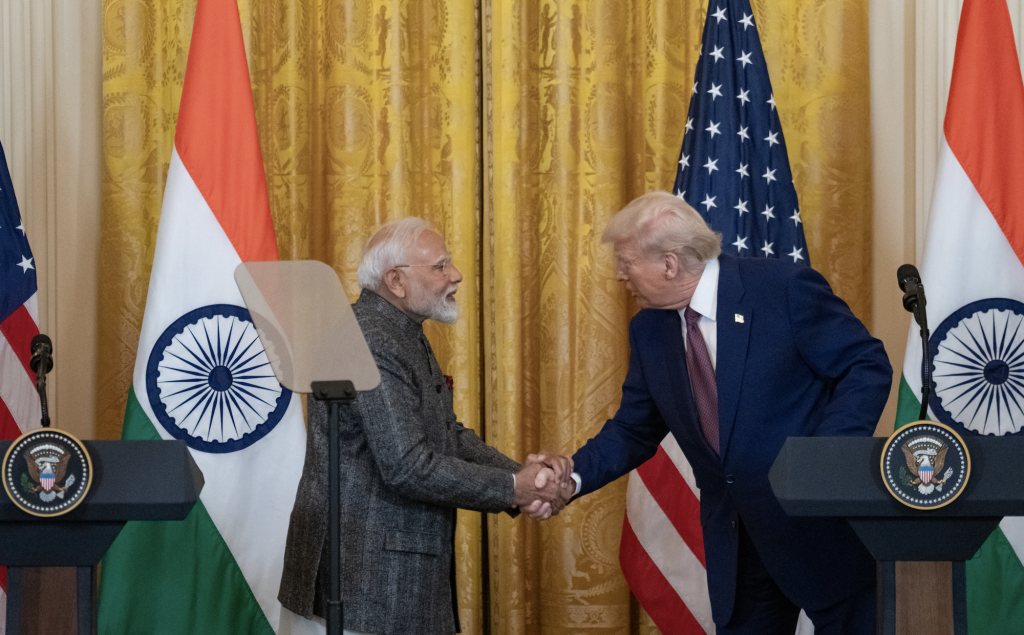
But this familiar language of partnership rings increasingly hollow with Donald Trump’s public insults and weaponisation of tariffs. But the bilateral relationship was under pressure well before Trump’s return to the White House in 2025.

In recent years, as India’s regional standing has been steadily eroded by China’s expanding strategic footprint, the United States has pursued policies in India’s strategic backyard that have disregarded Indian interests — and sometimes run directly counter to them.

Bangladesh is a case in point. After the military-backed ouster of Prime Minister Sheikh Hasina’s government in 2024, the US endorsed regime change. But India knew this posed serious risks, which have since materialised: Bangladesh is now gripped by Islamist violence, jeopardising stability on India’s eastern flank.

Then there is Burma. Since the military’s 2021 overthrow of a civilian government, the US has maintained a punitive approach toward the junta, including tough sanctions and ‘nonlethal’ military aid for rebel groups, despite the security risks this has created along India’s sensitive northeastern frontier. In March, a US citizen, along with six Ukrainian nationals, were arrested in India for allegedly entering the country’s northeast without permits and crossing into Burma to train and arm anti-junta fighters for drone warfare.

The US has also begun treating Nepal — a country bound to India through geography, culture and economics — as a strategic priority in its own right, rather than as part of its India policy. In recent years, high-level US officials have visited Kathmandu more frequently, often without making the once-customary stop in New Delhi.

Trump has made matters much worse, not least by pursuing closer ties with Pakistan. Never mind that Pakistan continues to provide safe haven, as well as military and intelligence aid, to terrorist groups, or that Pakistani Army Chief Asim Munir staged a constitutional coup last November. Trump’s family members and business associates have struck lucrative deals in the country and that is apparently good enough reason for the Trump administration to revive dangerous strategic dynamics on the subcontinent.

The US has even begun taking a more conciliatory approach toward China. Though the strategic competition between the two superpowers remains intense, Trump’s recent shift toward accommodation in some areas has created considerable uncertainty — not least for India, whose value to the US has long been rooted in its ability to act as a regional counterweight to China.

But while the US has long viewed India as a critical democratic bulwark against Chinese dominance in the Indo-Pacific, it also balks at the idea of Indian regional dominance. As US Assistant Secretary of State Samir Paul Kapur explained in February, the United States is seeking to prevent any single power from gaining too much influence in South Asia.

Kapur’s remarks echoed the Trump administration’s National Security Strategy (NSS), according to which the US “cannot allow any nation to become so dominant” that it could “threaten interests” and must maintain “global and regional balances of power.”

In America’s view, a more pluralistic regional order is inherently more stable and favourable to US interests than one dominated by any country — even a close ‘strategic partner’. Unlike its 2017 predecessor, the NSS barely mentions India, noting only that the US wants to ‘improve commercial (and other) relations’ with the country, in order to encourage it to ‘contribute to Indo-Pacific security’.

America’s reservations are not just geopolitical. “We are not going to make the same mistakes with India that we made with China 20 years ago,” Deputy Secretary of State Christopher Landau said on a recent visit to New Delhi, letting it “develop all these markets” and then start “beating” the US in “a lot of commercial things”. The message is clear: the US now views India less as a strategic partner to be nurtured than as a regional and economic rival to be contained.

India must adapt to this new reality, which demands a fundamental shift in its strategic thinking. India can no longer count on its close relationship with the US to sustain its influence across South Asia and beyond. Instead, it must cultivate regional influence through economic engagement, political sensitivity toward neighbouring states and the delivery of tangible public goods that appeal to smaller countries.

The US should rethink its approach as well. It might want a more diversified regional order, but this cannot come at the expense of its partnership with India, with which it continues to share important interests, from managing China’s rise to preserving stability across the Indo-Pacific. Policies that systematically weaken India’s position in its own neighbourhood risk undermining these shared objectives.

The Trump administration seems to hope that the U.S. and India can remain global partners, even as they become regional rivals. But this will be no easy feat, and the outcome will shape not only the future of the bilateral relationship, but also the strategic landscape in South Asia and beyond. © Project Syndicate

Brahma Chellaney, professor emeritus of strategic studies at the New Delhi-based Center for Policy Research and Fellow at the Robert Bosch Academy in Berlin, is the author of Water, Peace, and War: Confronting the Global Water Crisis.


Source link

Related Posts

Deadly military plane crash in India’s Assam | Aviation

June 13, 2026

Investigators say ‘significant progress’ made but final report on deadly Air India crash yet to be released

June 13, 2026

Rain showers delay the start of the first India-Afghanistan one-day cricket match

June 13, 2026
Add A Comment
Leave A Reply Cancel Reply

Top Posts

Chinese Wall may stem India tech flows for electronics and automobile

June 1, 2026

Abandoned malls, whispers of nuclear war and young foreigners detained. This is what’s REALLY going on in Dubai… and the chilling warning one taxi driver gave to the Mail’s IAN BIRRELL

April 11, 2026

Von der Leyen warned about China. Europe didn’t listen. Will it now?

June 6, 2026
Don't Miss

Mourners line Bangkok streets to pay respects to Thailand’s Princess Bha | Thailand

By IslaJune 13, 2026

As the sun began to set on the golden spires and gilded finials of Bangkok’s…

Quince’s Leather Tote Bag Is Made for Long Travel Days

June 13, 2026

Indonesia Joins Saudi Arabia, United Arab Emirates, Qatar, Bahrain, Oman, Kuwait, Egypt, Jordan and Türkiye in Advancing Cross-Border Tourism Growth Through Religious Travel Expansion, Middle East Visitor Engagement, Lombok Hospitality Development and Strategic Bilateral Tourism Cooperation

June 13, 2026

Guangzhou Metro inks railway service contract with Colombia

June 13, 2026
SUBSCRIBE TO OUR NEWSLETTER

Get our latest downloads and information first. Complete the form below to subscribe to our weekly newsletter.


I consent to being contacted via telephone and/or email and I consent to my data being stored in accordance with European GDPR regulations and agree to the terms of use and privacy policy.

Stay In Touch
  • Facebook
  • YouTube
  • TikTok
  • WhatsApp
  • Twitter
  • Instagram
Top Trending

Beijing and Chongqing: China’s Cities of Memory and Green Dreams – THISDAYLIVE

By IslaJune 13, 2026

‘Team Hong Kong’ strategy pushes aviation hub to new heights with Central Asia expansion and 70m passenger target

By IslaJune 13, 2026

Mount Dukono eruption prompts safety warnings in eastern Indonesia

By IslaJune 13, 2026
Most Popular

‘I’m safer in Dubai than London – even when missiles are fired over my head’ | Football | Sport

April 25, 2026

PDG acquires land in Jakarta, Indonesia, for 240MW data center campus

April 30, 2026

Honda postpones self-driving goal to 2028 as EV retreat takes toll

April 25, 2026
Our Picks

Exclusive | Hong Kong Golf & Tennis Academy patrons threaten legal action over clubhouse changes

June 6, 2026

Vietnam’s Gene Solutions eyes Hong Kong IPO to fund global growth

June 1, 2026

Kroo Bank replaces C-suite amid revised profit timeline

April 9, 2026
SUBSCRIBE TO OUR NEWSLETTER

Get our latest downloads and information first. Complete the form below to subscribe to our weekly newsletter.


I consent to being contacted via telephone and/or email and I consent to my data being stored in accordance with European GDPR regulations and agree to the terms of use and privacy policy.

© 2026 Simply Invest Asia.
  • Get In Touch
  • Cookie Policy
  • Privacy policy
  • Terms & Conditions

Type above and press Enter to search. Press Esc to cancel.

SUBSCRIBE TO OUR NEWSLETTER

Get our latest downloads and information first.

Complete the form below to subscribe to our weekly newsletter.


I consent to being contacted via telephone and/or email and I consent to my data being stored in accordance with European GDPR regulations and agree to the terms of use and privacy policy.