
Close Menu
Simply Invest Asia
  • Home
  • About us
  • Explore industries/sectors
    • Automobile
    • Aviation
    • Banking
    • Biotechnology
    • Chemical & Fertilizer
    • Entertainment and Media
    • Food Processing
    • Healthcare
    • Iron and Steel
    • Leather
    • Mining
    • Oil and Gas
    • Pharmaceutical
  • Explore by countries
    • China
    • Dubai / UAE
    • Hong Kong
    • India
    • Indonesia
    • Japan
    • Malaysia
  • Explore cities
    • Bangkok
    • Beijing
    • Chongqing
    • Delhi
    • Dubai
    • Guangzhou
    • Jakarta
    • Kuala Lumpur
  • Why Asia
Facebook X (Twitter) Instagram Threads
Trending:
  • Syria’s investment authority and UAE Ambassador follow up on joint forum outcomes
  • Guangzhou Goaland Energy Hits Day Low of CNY 37.70 Amid Price Pressure – Markets Mojo
  • HSBC Targets 70 Asia IPO Mandates In Hong Kong Comeback — TradingView News
  • The Beijing way: China is quietly calming global oil markets
  • Progress in macaque conservation in SW China -Xinhua
  • 600 Indian restaurants in Malaysia on verge of closure due to lack of workers
  • Black Friday Expands Beyond Retail into Media, AI Commerce, Advertising, and Entertainment Opportunities
  • U.S. says it attacked a UAE-owned commercial vessel trying to break through the Iran maritime blockade — The Insider
  • The geopolitical lesson of India’s multi-alignment- opinion
  • Why the UK-Indonesia Deal is a High-Value Win for B2B logistics
  • HSBC Targets 70 Asia IPO Mandates In Hong Kong Comeback
  • From Vulcan to Spitfire and Back: A Life in Aviation : : FLYER
  • LRT derailment: Alternative train services, free shuttle buses to continue
  • Uzbekistan energy production decline deepens in 2026
  • Chinese, US militaries hold talks to ‘avoid miscalculation’
  • Bugatti Centodieci for sale in Dubai; Dealer demanding $16 million
  • APATS 2026 to Spotlight AI, Pilot Shortages and New Training Standards in Bangkok
  • From Japan, a Sexy Matte Black Sledge
Monday, June 1
Facebook X (Twitter) Instagram
Simply Invest Asia
  • Home
  • About us
  • Explore industries/sectors
    • Automobile
    • Aviation
    • Banking
    • Biotechnology
    • Chemical & Fertilizer
    • Entertainment and Media
    • Food Processing
    • Healthcare
    • Iron and Steel
    • Leather
    • Mining
    • Oil and Gas
    • Pharmaceutical
  • Explore by countries
    • China
    • Dubai / UAE
    • Hong Kong
    • India
    • Indonesia
    • Japan
    • Malaysia
  • Explore cities
    • Bangkok
    • Beijing
    • Chongqing
    • Delhi
    • Dubai
    • Guangzhou
    • Jakarta
    • Kuala Lumpur
  • Why Asia
Simply Invest Asia
Home»Explore by countries»India»The geopolitical lesson of India’s multi-alignment- opinion
India

The geopolitical lesson of India’s multi-alignment- opinion

By IslaJune 1, 20265 Mins Read
Share
Facebook Twitter Pinterest Threads Bluesky Copy Link


For years, Western commentators have viewed India’s foreign policy with shared frustration and bewilderment. They watch New Delhi seamlessly dance across diplomatic aisles — tightening ties with Washington through the QUAD, purchasing discounted oil from Moscow, and signing massive trade and technology agreements in Europe — and hastily label it as “opportunistic” or “sitting on the fence.”

This is a classic, simplistic Western paradigm that insists on viewing the world as a zero-sum game: You are either with us or you are against us. However, the past few weeks has provided undeniable proof that this paradigm is obsolete.

Prime Minister Narendra Modi’s whirlwind diplomatic marathon, bridging the United Arab Emirates, Oslo, Amsterdam, and Rome, demonstrates that Indian foreign policy operates on entirely different wavelengths. This is a highly sophisticated framework of multi-alignment, and in today’s volatile global landscape, it represents perhaps the most pragmatic and clear-eyed model of statecraft available.

Consider what transpired in the span of just five days: In Abu Dhabi, India reinforced its energy security by securing an agreement to expand its strategic petroleum reserves to 30 million barrels.

In Oslo, it translated the historic EFTA TEPA agreement into a concrete Nordic commitment to invest $100 billion and create 1 million jobs in India.

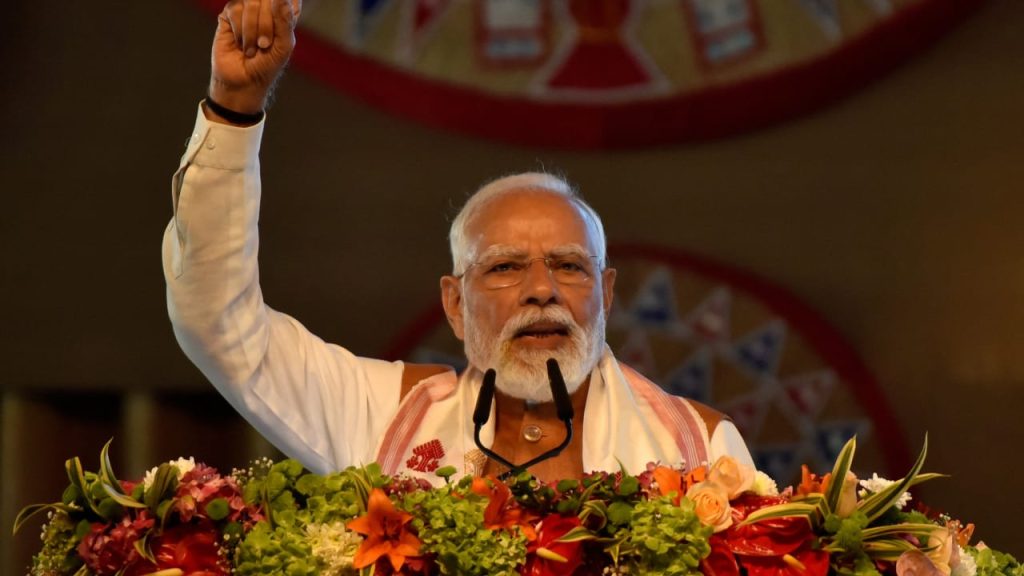
India's Prime Minister Narendra Modi Delivers A Speech At The AI Impact Summit In New Delhi On February 19, 2026
India’s Prime Minister Narendra Modi Delivers A Speech At The AI Impact Summit In New Delhi On February 19, 2026 (credit: Ludovic Marin/AFP/Getty Images)

In Venice, under the guidance of IN-SPACe, New Delhi anchored a decentralized satellite infrastructure network (GSaaS) to insulate its intelligence streams from Chinese cyber interference. Concurrently, Nikos Christodoulides the president of the Republic of Cyprus arrived in India for a state visit, further expanding New Delhi’s Mediterranean diplomatic architecture.

This extraordinary volume of agreements does not merely indicate India’s reliance on global partnerships; it underscores just how much the global arena needs India. 

Western and Gulf nations are urgently seeking a structural counterweight to an increasingly assertive China.

The Nordic countries, eager to purge their critical digital infrastructure of vulnerable Chinese-manufactured components from entities like Huawei, view India as the ideal partner for cyber resilience and trusted telecom grids.

Similarly, Italy — through defense giants like Fincantieri and Leonardo — is accelerating joint maritime manufacturing, allowing India to diversify and systematically scale back its historical and increasingly complicated dependence on Russian military hardware.

Yet New Delhi operates on the understanding that hard military and economic power cannot be divorced from soft power and personal diplomacy. While the technical echelons finalize satellite arrays, Modi conducts highly precise, tailored personal diplomacy with leaders aligned with India’s vision.

When Modi gifts  the prime minister of Sweden, Ulf Kristersson, a handcrafted leather bag from Shantiniketan — the historic university founded by Debendranath Tagore and immortalized by his son, Nobel Laureate Rabindranath Tagore — he is not merely exchanging diplomatic pleasantries; he is exporting a rich, cosmopolitan cultural heritage.

When Modi shares lighthearted moments and exchanges chocolates with Italian Prime Minister Giorgia Meloni, he builds the kind of personal rapport that bypasses rigid bureaucratic gridlocks.

To this, one must add his systematic engagements with the global Indian diaspora at every single destination. For New Delhi, this community is not just an expatriate population; it is a permanent strategic asset embedded within host nations, ensuring that bilateral relationships remain deeply rooted and mutually indispensable.

This strategic sophistication assumes heightened significance in the current global climate. Under a Trump administration defined by an unpredictable “America First” transactionalism, traditional allies are losing faith in the reliability of the American security umbrella. In such an unstable landscape, the Western demand for India to choose a definitive side is not only patronizing — it is fundamentally detached from reality.

This is precisely where the flaw in the Western gaze lies.

When New Delhi refuses to march in absolute lockstep, the West immediately falls into a binary trap, assuming that if India is not entirely within its camp, it must belong to the opposing axis. The reality is exactly the opposite: India is not anti-Western; it is non-Western.

The developments of this past few weeks demonstrate that India seeks and values deep integration with the West. It co-develops satellite networks, purchases maritime technologies, and absorbs massive Western capital. It simply rejects the archaic, imperialistic premise that partnership requires total submission to a singular club and the surrender of national sovereignty.

India refuses to be the satellite state of any superpower. Its doctrine of strategic autonomy proves that a nation can erect digital fortresses, secure vital sea lines of communication through the India-Middle East-Europe Economic Corridor (IMEC), and collaborate on space technology with Europe without being submerged by the political agendas of Washington or Brussels.

A MIG-29K fighter jet sits on the flight deck of India’s aircraft carrier ‘INS Vikrant’ during the International Fleet Review 2026 off the coast of Visakhapatnam, India.
A MIG-29K fighter jet sits on the flight deck of India’s aircraft carrier ‘INS Vikrant’ during the International Fleet Review 2026 off the coast of Visakhapatnam, India. (credit: ALEX WINSTON)

It is high time that Western academia and media stop superimposing outdated Cold War templates onto New Delhi. This reductive, zero-sum worldview must change. India is not sitting on the fence; it is building an entirely new, resilient, and decentralized fence tailored precisely for the 21st century.

Critically, this is a juncture where we, in Israel, must pause and examine ourselves in this Indian mirror.

The paradigm shift demonstrated by India is precisely the intellectual evolution Israel desperately requires as it continues to shackle itself to an outdated, rigid framework of total dependence on a single strategic anchor.

In an era of global fluidity, the Indian model proves that genuine national security in the 21st century demands diversified strategic options, overlapping technological alliances, and cross-cutting mutual interests rather than blind reliance on a singular axis.

Adopting such a doctrine demands profound political and analytical courage. — the courage to look directly at a shifting global reality, admit that our old conceptions have simply stopped working, and recognize that sometimes, protecting the national interest requires rewriting the rules of the game.


Source link

Related Posts

India Faces Severe Water and Food Security Risks with approaching El Niño

June 1, 2026

India, Myanmar to Deepen Cooperation on Critical Minerals and Rare Earths, Says MEA

June 1, 2026

Faital Pro chooses VMT for India

June 1, 2026
Add A Comment
Leave A Reply Cancel Reply

Top Posts

Abandoned malls, whispers of nuclear war and young foreigners detained. This is what’s REALLY going on in Dubai… and the chilling warning one taxi driver gave to the Mail’s IAN BIRRELL

April 11, 2026

Dubai food conglomerate IFFCO set to go into provisional liquidation – Financial Times

May 3, 2026

Asian Angle | Why Japan-China ties can benefit from promoting people-to-people exchanges

May 3, 2026
Don't Miss

Syria’s investment authority and UAE Ambassador follow up on joint forum outcomes

By IslaJune 1, 2026

Damascus, June 1 (SANA)    Director General of the Syrian Investment Authority, Talal al-Hilali, met Monday with…

Guangzhou Goaland Energy Hits Day Low of CNY 37.70 Amid Price Pressure – Markets Mojo

June 1, 2026

HSBC Targets 70 Asia IPO Mandates In Hong Kong Comeback — TradingView News

June 1, 2026

The Beijing way: China is quietly calming global oil markets

June 1, 2026
SUBSCRIBE TO OUR NEWSLETTER

Get our latest downloads and information first. Complete the form below to subscribe to our weekly newsletter.


I consent to being contacted via telephone and/or email and I consent to my data being stored in accordance with European GDPR regulations and agree to the terms of use and privacy policy.

Stay In Touch
  • Facebook
  • YouTube
  • TikTok
  • WhatsApp
  • Twitter
  • Instagram
Top Trending

LRT derailment: Alternative train services, free shuttle buses to continue

By IslaJune 1, 2026

Uzbekistan energy production decline deepens in 2026

By IslaJune 1, 2026

Chinese, US militaries hold talks to ‘avoid miscalculation’

By IslaJune 1, 2026
Most Popular

Hong Kong life insurers’ premiums jump 51% in 2025

April 27, 2026

Bangladesh lags in biotechnology due to weak research-industry linkages, despite strong potential: Experts

April 25, 2026

Nothing off the radar: Malaysia’s army to deploy mobile CBRNE command centre in 2027 as AI upgrades its threat‑response readiness

April 23, 2026
Our Picks

How is BeZero Carbon Supporting Japan’s Green Finance Plan?

April 15, 2026

Indonesia’s De-Dollarization Success: A New Blueprint for BRICS

April 27, 2026

HSBC Private Bank appoints Gautam Anand as Global India head

April 30, 2026
SUBSCRIBE TO OUR NEWSLETTER

Get our latest downloads and information first. Complete the form below to subscribe to our weekly newsletter.


I consent to being contacted via telephone and/or email and I consent to my data being stored in accordance with European GDPR regulations and agree to the terms of use and privacy policy.

© 2026 Simply Invest Asia.
  • Get In Touch
  • Cookie Policy
  • Privacy policy
  • Terms & Conditions

Type above and press Enter to search. Press Esc to cancel.

SUBSCRIBE TO OUR NEWSLETTER

Get our latest downloads and information first.

Complete the form below to subscribe to our weekly newsletter.


I consent to being contacted via telephone and/or email and I consent to my data being stored in accordance with European GDPR regulations and agree to the terms of use and privacy policy.