
In the first quarter of 2026, CATL delivered a strong financial report: revenue reached 129.1 billion yuan, net profit hit 20.738 billion yuan, with a daily net profit of 230 million yuan.
During the same period, the average profit margin of China’s domestic vehicle manufacturing industry was approximately 1.5%. As a reference, the overall average profit margin of the manufacturing sector typically hovers around 5%.
Vehicle manufacturing has become one of the least profitable businesses in the entire manufacturing industry.
Batteries are only one segment in this ecosystem. During the same period, Huawei’s Intelligent Automotive Solutions achieved a gross profit margin of 55%, while both Momenta and Horizon Robotics recorded even higher figures.
Although these three companies have different business structures and revenue recognition standards, they share the same underlying trend: capital is flowing into these specific segments of the industry.
At the peak of the brutal price war in the automotive market, leading suppliers in the battery and intelligent driving segments barely saw their profit curves affected, maintaining strong profitability over vehicle manufacturers.
However, this is not the universal reality for all suppliers. Traditional Tier 1 suppliers specializing in wiring harnesses, interior/exterior trim, and stamping parts are also facing pressure from annual price reductions and extended payment terms.
Chen Shihua, Deputy Secretary-General of the China Association of Automobile Manufacturers, stated bluntly, “For a vehicle priced at 200,000 yuan, the vehicle manufacturer’s profit is roughly 3,000 yuan”. This is only a static estimate and does not represent the actual profit of any specific vehicle model. However, the profits are not captured by traditional upstream component suppliers, but by companies specializing in intelligent systems, batteries, and semiconductors.
This stark contrast has spawned a popular narrative: vehicle manufacturers are essentially working for their suppliers, with upstream players reaping all the profits.
This claim is only half correct. The accurate part is that the profits of the automotive industry are indeed concentrating in a small number of specific segments.
The incorrect part is that interpreting this as a zero-sum game where “suppliers are exploiting vehicle manufacturers” would cause people to miss far more important underlying changes.
Because looking solely at the gross profit margins on financial statements cannot explain why the localization rate of Volkswagen’s new vehicle models has reached 95%.
A high localization rate indicates a high proportion of local procurement, but it does not mean that core technologies and core profits remain within the country – these are two completely separate matters. At the same time, if the domestic supply chain was only “earning the price difference” from Chinese vehicle manufacturers, it would be impossible to explain why global automakers are actively moving their technology verification processes to China.
The zero-sum game narrative no longer holds up once domestic suppliers begin supplying products to global automakers.
Therefore, the more precise question is not “Who is taking all the profits?”, but three interrelated yet distinct questions:
Which specific segments are generating profits?
Why are Chinese suppliers the ones capturing these profits?
And, how far are these profitable Chinese suppliers from achieving true industry leadership?
01 Where Profits Are Flowing: Three Distinct Types of Business Models
If you disassemble an electric vehicle, where exactly do the profits go? The answer is simpler than most people imagine.
First, we need to clarify one key point: it is not the entire “supplier” group that is making profits, but only a small subset of them.
Three completely different types of business models have maintained sustained high profitability: large-scale manufacturing businesses, platform reuse businesses, and software feature businesses.
In gasoline-powered vehicles, the core cost components are the engine and transmission. Electric vehicles replace these two components with batteries and intelligent systems.
For pure electric vehicles equipped with large-capacity batteries and high-level intelligent driving systems, these two components together account for more than half of the total BOM (Bill of Materials) cost.
Plug-in hybrid vehicles and entry-level electric models typically have a much lower proportion of these costs.
More importantly, most vehicle manufacturers can only source these components externally. To be precise, the battery cell segment is mostly outsourced, while in-house R&D, joint development, and joint venture factory construction for battery packs are at a different operational level – the joint venture between Li Auto and Sunwoda is a typical example.
First Category: Large-Scale Manufacturing Businesses
At the end of the vehicle manufacturing industry chain, the first companies to achieve substantial wealth are battery manufacturers.
Last year, CATL recorded a net profit of 72.2 billion yuan, three times that of Tesla’s net profit during the same period. The two companies have completely different business structures, capital expenditures, and regional revenue distributions. This comparison highlights a stark contrast rather than a universal rule. A more meaningful reference for this figure is that it exceeds the annual total revenue of most vehicle manufacturers.
However, behind this impressive number lies a hidden trend: CATL’s domestic market share has dropped from 52.1% in 2021 to 43.42% in 2025.
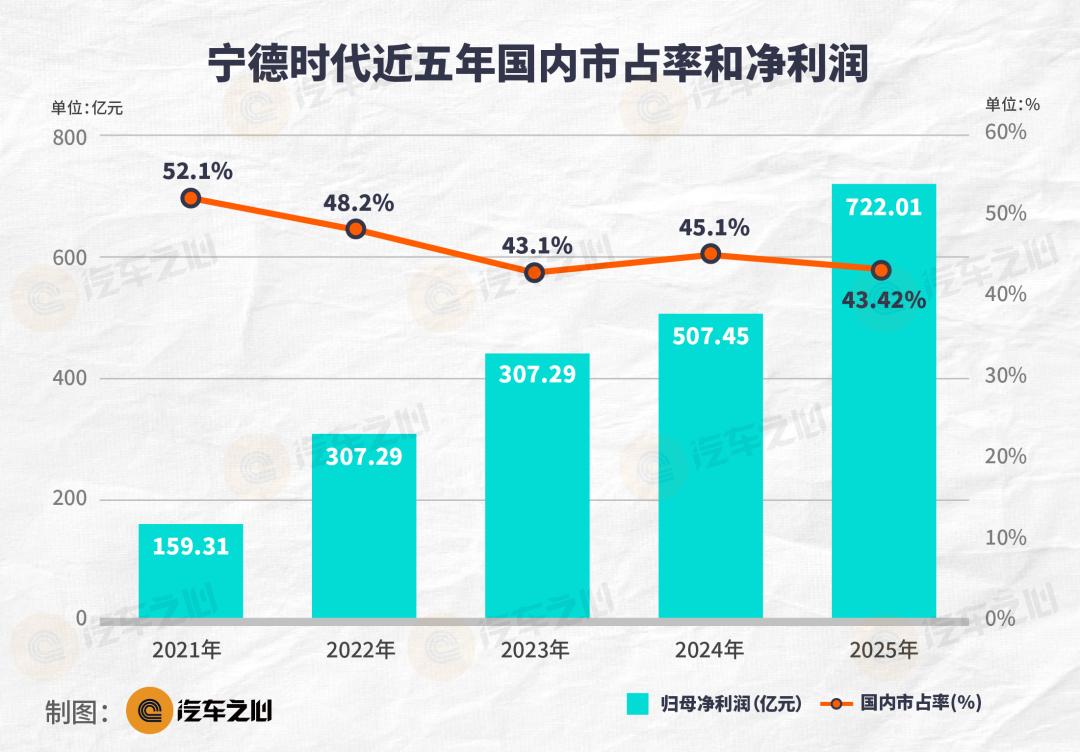
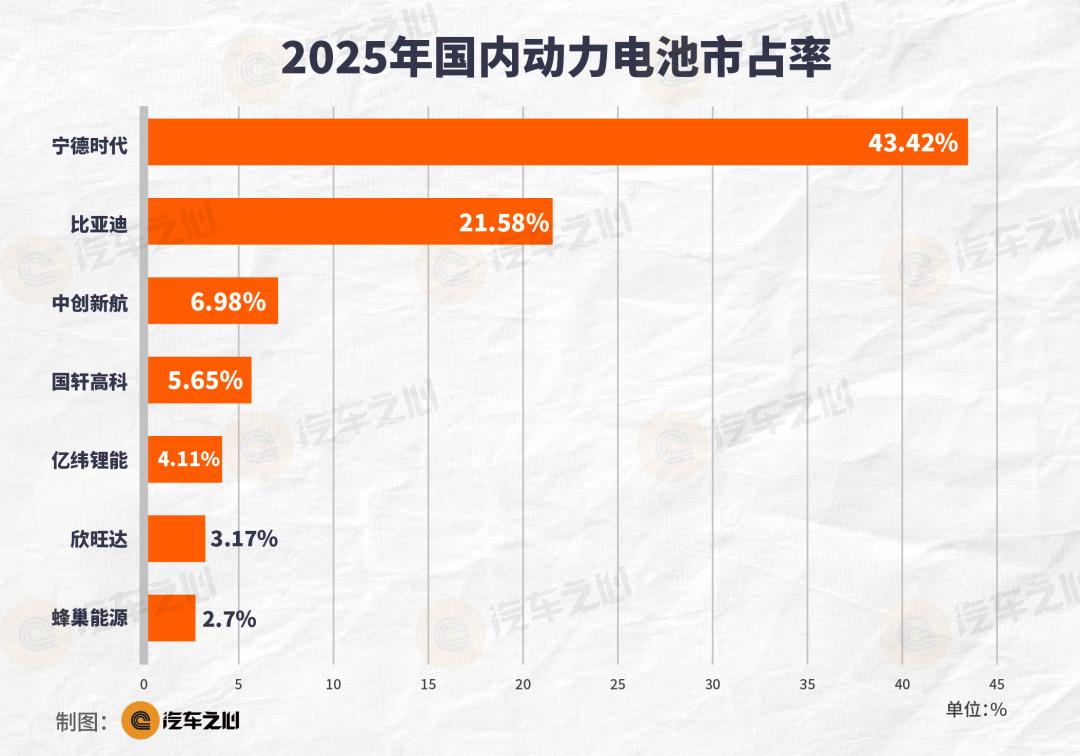
The companies that have captured this lost market share are CALB, Gotion High-Tech, and EVE Energy, with their market shares reaching 6.98%, 5.65%, and 4.11% respectively. Both Sunwoda and Hithium have achieved growth rates exceeding 30%.
The driving force behind CATL’s declining market share is the vehicle manufacturers themselves.
Under the Harmony Intelligent Mobility Alliance (HIMA), all brands except Zunjie have introduced second-tier battery manufacturers such as CALB and Gotion High-Tech into their supply chains.
A small but noteworthy detail is that Gotion High-Tech has built a dedicated 40GWh production capacity for Huawei in Wuhu, with Huawei participating in every stage from factory planning to production line process design.
Li Auto has gone even further. Last year, it established a joint venture battery company with Sunwoda, where the battery packs for the Li Auto i9 are manufactured in-house by Li Auto, while the battery cells are supplied by Sunwoda and CATL’s Jiangsu subsidiary.
Li Auto has elevated the status of secondary suppliers from a simple procurement relationship to a formal joint venture partnership.
Huawei and Li Auto share the same motivation: controlling prices and managing costs. For battery packs of the same specification, second-tier battery manufacturers offer prices approximately 10% lower than CATL, which can save tens of billions of yuan for a vehicle manufacturer selling 1 million vehicles annually.
No vehicle manufacturer fails to recognize this economic logic – Xpeng, Leapmotor, Tesla, BMW, and Volkswagen are all following this trend.
However, the impact of breaking down CATL’s market dominance is far smaller than expected. In the past three years, CATL’s market share has decreased by 8%, but its net profit has actually increased from 30.7 billion yuan to 72.2 billion yuan.
This cannot be explained solely by economies of scale. The overall market is still expanding, so a declining market share does not equate to lower installation volume. The growth of the energy storage business, the increasing proportion of overseas revenue, and the falling prices of raw materials have all contributed to higher profits.
CATL’s annual battery installation volume is more than ten times that of any single vehicle manufacturer’s self-built production line, and seven times that of CALB. The most fundamental rule of the manufacturing industry is that under the condition of sufficiently high capacity utilization, larger scale leads to lower unit costs.
CATL’s products now cover 150 countries and regions worldwide, serving 176 brands and 529 passenger vehicle models.
Although vehicle manufacturers can reduce procurement costs by 10% through supporting secondary suppliers, they cannot quickly close the cost gap that CATL has achieved through large-scale operations. The battery business is an industry where scale determines survival, and this fundamental rule remains unshaken.
Second Category: Platform Reuse Businesses
In three and a half years, Seres has paid a total of 75 billion yuan to Huawei. This includes 8% in channel service fees, 2% in technology licensing fees, and the remaining amount for in-vehicle infotainment and intelligent driving hardware. The channel service fees go to Huawei’s Terminal Business Group, while the technology base revenue belongs to Huawei’s Intelligent Automotive Solutions.
Huawei’s Intelligent Automotive Solutions recorded 45 billion yuan in revenue last year, with a gross profit margin of approximately 55%, generating over 5 billion yuan in net profit. These profits are distributed across three main segments.
The Harmony Intelligent Mobility Alliance contributed 25.6 billion yuan, with the Turking chassis, Whale battery, HarmonyOS cockpit, and ADS 2.0 intelligent driving system being deployed across different vehicle models according to their classification levels.
The HI (Huawei Inside) model contributed 11.4 billion yuan, focusing purely on selling technologies and solutions. Now, the new HI Plus model has been added, which introduces the “Jing” brand through deep technical customization.
The components segment contributed 8 billion yuan, with independent sales of LiDAR systems, in-vehicle infotainment systems, electric drive systems, and electric motors.
It is not difficult to see that the Harmony Intelligent Mobility Alliance is the cornerstone of Huawei’s Intelligent Automotive Solutions. In 2025, it delivered nearly 590,000 vehicles, with this year’s target set at 1 million to 1.3 million vehicles. The HI model serves as the growth engine, with projected deliveries exceeding 400,000 vehicles this year.
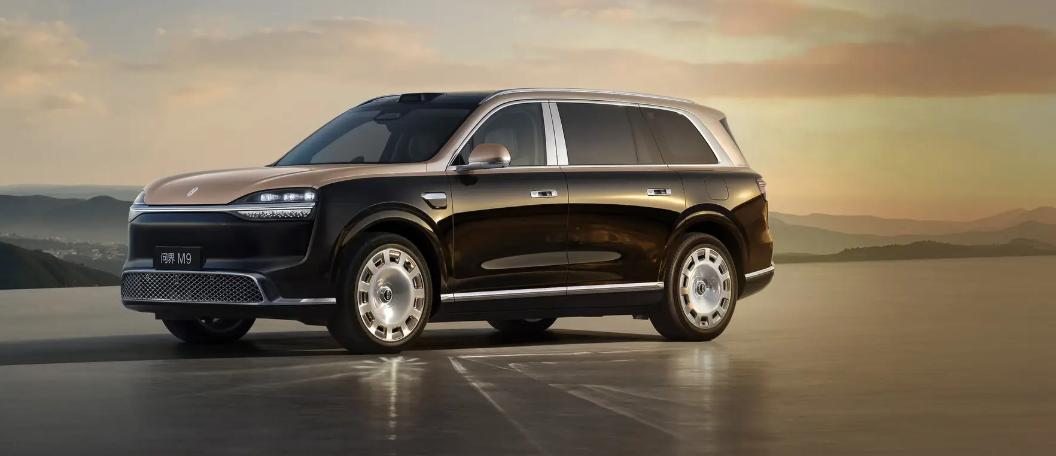
The essence of ecosystem fees is the large-scale reuse of standardized technologies. The same underlying platform, when adopted by more vehicle manufacturers, reduces the R&D cost per customer, allowing Huawei to generate higher profits.
Third Category: Software Feature Businesses
According to research by J.D. Power, intelligent driving ranks third in purchase consideration for vehicles priced between 200,000 and 300,000 yuan, and enters the top two considerations for vehicles priced above 300,000 yuan. As user demands change, suppliers in this segment are starting to generate substantial profits.
The optional installation rate of Horizon Robotics’ HSD V2.0 has reached an impressive 77%, while Momenta’s latest cumulative installation volume has exceeded 1 million units, currently covering more than 57 mass-produced vehicle models.
The snowballing growth of market demand cannot be fully represented solely on gross profit margin curves.
Installation volume and optional installation rates demonstrate growing market demand, but to truly evaluate profitability, we need to look at metrics such as revenue per vehicle, the proportion of software licensing income, and the amortization of pre-mass-production R&D investments.
Last year, Horizon Robotics and Momenta recorded gross profit margins of 64.5% and 71.6% respectively, while the gross profit margin ceiling for traditional Tier 1 suppliers is less than 25%.
Here we must issue a critical reminder: High gross profit margins do not guarantee actual profitability. The software business inherently has high gross profit margins because its marginal cost approaches zero.
The real challenge lies in the R&D expense ratio. Most intelligent driving companies are still investing heavily in R&D to secure vehicle model design wins, and many have not yet achieved stable positive net profits. While their gross profit margin curves look impressive, their profit models have not been fully validated.
These three types of business models illustrate one key reality: Manufacturing in-house is less profitable than sourcing from external suppliers.
This statement holds true for most vehicle manufacturers, but not for a small number of leading players with sufficient scale and long-term technology accumulation (such as BYD and Tesla). These companies prove that vertical integration can also achieve economic viability when operating at a sufficiently large scale.
Chinese suppliers, leveraging three core advantages – large scale, platform reuse, and advanced technology – have created significant cost gaps and time-to-market gaps that vehicle manufacturers cannot overcome through in-house R&D.
02 Capabilities Forged Through Intense Market Competition
Profits are just the end result. What deserves deeper exploration is why Chinese suppliers, including those from global automakers, are winning these orders.
Real competition is not between individual enterprises, but between entire supply chains. This statement from supply chain expert Martin Christopher has found strong validation in the electric vehicle industry.
FAW-Audi has replaced Bosch with Huawei in its supply chain, Mercedes-Benz has entrusted Momenta with its intelligent driving development, BMW has established deep partnerships with CATL, and Nissan’s N7 model uses a complete set of Chinese solutions for everything from batteries to intelligent driving systems.
From traditional BBA premium brands to major Japanese automakers, mainstream joint-venture vehicle manufacturers are significantly increasing their procurement proportions from Chinese suppliers specializing in batteries, intelligent driving, and in-vehicle infotainment systems.
The reason is simple: the domestic supply chain has developed three unique, irreplicable core capabilities through global market competition.
The first capability is Completeness. To be precise, the density of this supply chain in segments such as battery materials, battery cells, and intelligent cockpits is unmatched anywhere else in the world.
From lithium mines to battery cells to complete battery packs, from semiconductors to algorithms to operating systems, from sensors to domain controllers to complete vehicle platforms, China has built one of the world’s most comprehensive and highest-density new energy vehicle supply chains.
However, “comprehensive” does not equal “completely independent”. Certain manufacturing processes for automotive chips, EDA tools, and several key production equipment are still integrated into the global industrial system.
But when it comes to “sourcing all components needed to assemble a complete electric vehicle within a few hundred kilometers”, there is no other comparable industrial ecosystem anywhere in the world.
Imagine the entire supply chain for a power battery. Lithium ore comes from Ganfeng’s mines, electrolyte from Tinci’s materials, separator from Semcorp’s production lines, battery cells are manufactured in CATL’s factories, and finally the complete battery packs are transported to the vehicle assembly plant for installation.
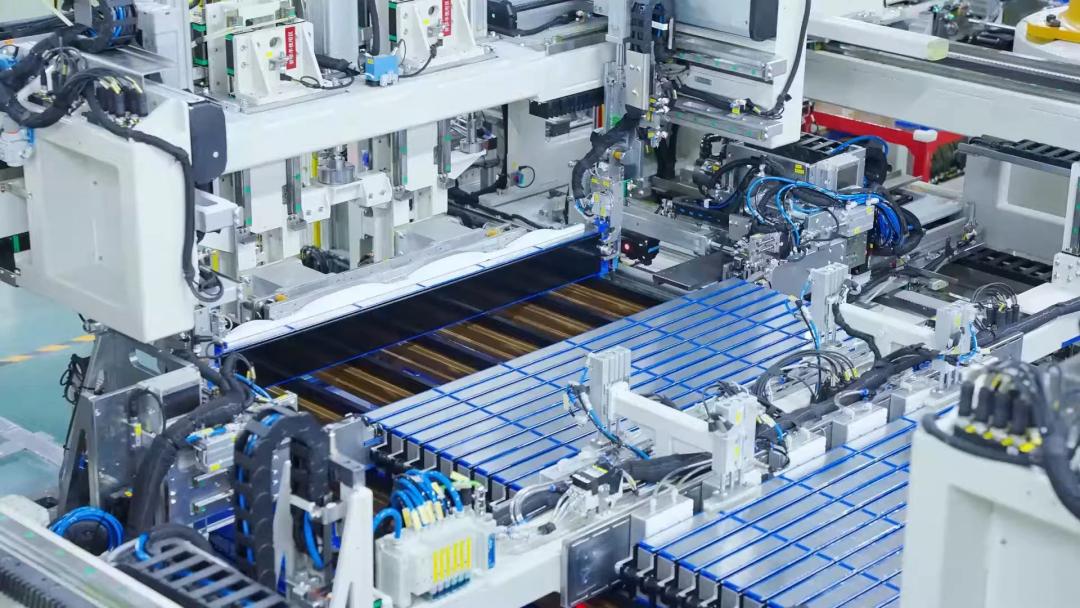
This high level of completeness delivers exceptional supply chain responsiveness.
Tesla has built a cluster of over 400 core suppliers around its Shanghai Gigafactory. Every component for batteries, motors, electronic control systems, thermal management systems, and chassis parts can be delivered from order placement to arrival within 4 hours.
The second capability is Speed.
This speed is built upon the foundation of a complete supply chain, and has been pushed to its absolute limit by the life-or-death competitive pressure faced by vehicle manufacturers.
European automakers typically take 5 years to develop an entirely new vehicle platform. Even transporting components from Europe to China alone takes more than 3 months.
The domestic Chinese supply chain has compressed the entire process from receiving customer requirements to delivering final solutions to less than 12 months. Before Leapmotor launched a new vehicle model, CATL deployed its core technical team to urgently reconfigure the production line, reducing the mass production preparation