
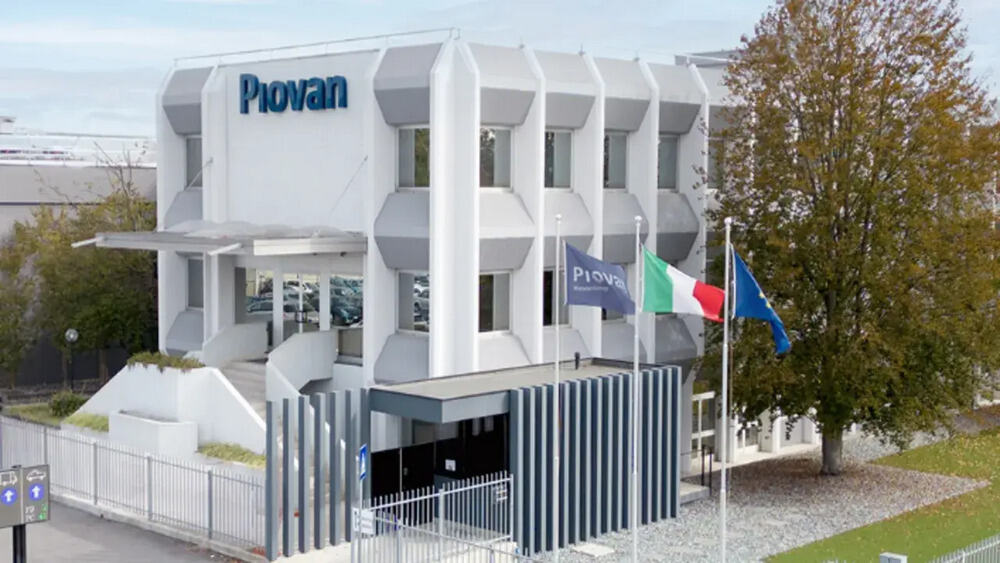
Piovan Group has expanded its food & powders division with the opening of a major new production facility in Modena, Italy, significantly increasing its capacity to supply ingredient‑handling and processing technologies to the global food industry.
The new 14,000m² site, almost three times the size of the division’s previous 5,000m² facility, marks a strategic investment in one of the company’s fastest‑growing business areas.
The food & powders division has risen from €2 million to €60 million in revenue over the past decade, driven by rising demand for automated, hygienic and energy‑efficient systems for handling powders, ingredients and mixes across bakery, beverage, nutrition and wider food categories.
The Modena facility brings together expanded manufacturing, engineering, design and project‑management teams, with around 100 employees on site and further recruitment underway.
A key feature of the new site is a dedicated testing room equipped with pilot‑scale systems, allowing food manufacturers to trial their own ingredients, validate recipes and assess system performance before committing to full‑scale installations. Piovan says this capability will reduce project risk and accelerate commissioning for customers investing in new processing lines.
The company has designed the new plant to improve production flow, increase output and support larger, more complex turnkey projects. By expanding its footprint, Piovan aims to shorten lead times, enhance customisation and strengthen service support for customers seeking greater automation, traceability and consistency in ingredient handling.
CEO Alessandro Sala described the investment as essential for meeting the division’s new scale and supporting future growth. The facility also provides room for further expansion as demand for advanced food‑processing technologies continues to rise.
Piovan’s latest move reinforces its ambition to become a global leader in food‑processing automation. For manufacturers, the expansion promises improved access to customised systems, stronger technical support and greater supply resilience at a time when efficiency, hygiene and operational reliability are becoming critical competitive factors across the food and beverage sector.