
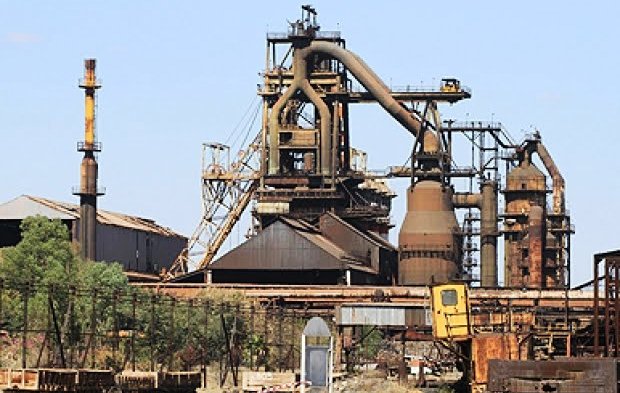
0
Nearly half a century ago, Nigeria embarked on one of the boldest industrial projects ever conceived on the African continent.
The Ajaokuta Steel Company Limited was never intended to be just another government enterprise.
It was designed to become the backbone of Nigeria’s industrial economy, the foundation upon which railways, bridges, refineries, power stations, automobiles, heavy machinery, defence equipment, construction materials, oil and gas infrastructure and thousands of manufacturing businesses would depend.
It represented more than iron and steel. It represented national ambition.
It represented economic independence.
It represented Nigeria’s determination to build an industrial economy capable of competing with the rest of the world.
Few national projects have carried greater expectations.
Unfortunately, few have produced greater disappointment than the Aluminium Smelting Company of Nigeria (ALSCON) in Akwa Ibom State, the Delta Steel Company in Aladja, NAFCON in Port Harcourt, and the NNPC refineries.
Today, after forty-seven years, Ajaokuta no longer represents Nigeria’s industrial future.
These failed projects represent one of the longest-running failures of public-sector industrial policy anywhere in Africa.
Mr President, sir, this letter is not another appeal to revive Ajaokuta and National Iron Ore Mining Company (NIOMCO).
Nigeria has listened to that promise since 1979.
From 1979 to 1983, the largest contract-awarding centres in Africa were Ajaokuta and the Abuja Federal Capital Territory development. Even though Abuja, as the new capital of Nigeria, is today a reality, we are yet to evaluate the economic value or otherwise to Nigerians, but Ajaokuta has definitely not added any socioeconomic development value to our country.
This is an appeal to do something far more relevant and decisive on Ajaokuta and NIOMCO.
Bring forty-seven years of uncertainty to a decisive end.
WHERE IS THE IRON AND STEEL?
NIOMCO in Itakpe, 65 KM away from the Ajaokuta steel complex, with a connecting standard gauge railway infrastructure to evacuate beneficiated iron ore as feedstock to Ajaokuta and probably Alaja steel complex in Delta State.
Iron ore has never been fully produced and delivered to Ajaokuta Steel Complex to date, nor to Alaja Steel Complex in Delta State.
The Ajaokuta Steel Company, therefore, has not been able to blast its uncompleted furnace. It has never ever produced liquid steel; rather, it has produced more speeches, promises, hopes and visitations.
The Ajaokuta steel complex has never been able to agglomerate all the raw materials from limestone to manganese to cooking coal to ball clay to acid and ETC for steel production.
The four rolling mills within the Ajaokuta steel complex were partially completed and operated at great loss, and they have remained ever stranded.
Memoranda after memoranda, technical committees have all failed to produce steel from the complex
For almost five decades, Nigerians have been told that Ajaokuta is almost ready.
Almost completed.
Almost operational.
Almost revived.
Almost producing.
Almost attracting investors.
Almost becoming Africa’s industrial giant.
Yet after all these years, Nigeria still cannot point to sustained commercial steel production from Ajaokuta.
Instead, successive administrations have celebrated meetings instead of manufacturing, announcements instead of output, negotiations instead of production and promises instead of performance.
No private company would survive under such circumstances.
No shareholder would continue financing an enterprise whose principal product remained expectation rather than production.
The government should not apply a lower standard simply because the enterprise belongs to the state, but this seems to be the same characteristic across all federal government-owned enterprises in Nigeria. Thus the justification for privatization and divestment.
The question before the federal government of Nigeria is therefore remarkably simple – Where is the iron and steel?
Until that question is honestly answered, every discussion about Ajaokuta risks becoming another exercise in postponement.
DREAMS ABANDONED
The greatest tragedy of Ajaokuta and NIOMCO is not the abandoned plants. It is the abandoned generation.
When construction began, Nigeria identified many of its brightest young engineers and technical specialists and sent them abroad for advanced training in methurgy and steel making – in countries including the former Soviet Union and India.
Those young men and women returned home believing they would help build one of Africa’s largest integrated steel industries.
They prepared themselves for careers that would shape Nigeria’s industrial future. That future never arrived.
Many of those pioneers have since passed away.
Others are now elderly.
Many retired without ever practising the profession for which they were specially trained.
Some spent entire careers waiting for a project that never truly came alive. Their story is rarely told. What gratuity and pension did they earn compared to their peers who joined NNPC and CBN.
Mr President, I think we need to revisit gratuities and pensions for all these great Nigerians whose talents were wasted in such federal government home projects across Nigeria for fairness and equity.
Nigeria did not merely waste billions of naira.
It wasted talent.
It wasted knowledge.
It wasted experience.
It wasted an entire generation of industrial professionals whose skills should have transformed our industrial landscape.
No financial audit can fully measure this colossal loss.
HAS FAILURE BECOME NORMAL IN NIGERIA?
Mr President, sir, incomplete construction and abandoned federal government projects across Nigeria remain one of the greatest problems and embarrassment. It is because such failures have gradually become an acceptable norm.
Every administration inherits the projects.
Aluminum Smelters Company in Akwa Ibom was completed but non operational over dispute over ownership to date.
The Nabilla hydro project, the Brass and OK LNG, the railway projects and government-owned refineries across Nigeria.
Every administration allocates fresh public funds but never enough to make meaningful progress.
Every administration announces another revival programme. Every administration searches for another foreign technical partner.
Every administration assures Nigerians that steel production is finally within reach.
Then government changes.
The cycle begins again.
The project moves from one administration to another, not as a functioning industrial enterprise, but as a political inheritance no government wishes to resolve permanently.
*To be continued
*Dan D. Kunle writes from Abuja, Nigeria