
“I’ve been waiting for this moment for 20 years.”
From March 28th to 29th, French rider Debies rode the Chinese motorcycle brand “Zhangxue Motorcycle” and won two championships in a row in the World Superbike Championship (WSBK), breaking the decades – long monopoly of Europe, America, and Japan.
Overnight, the name “Zhangxue” became well – known both at home and abroad, and the motorcycle industry behind Zhangxue also attracted much attention.
Now, Chongqing is no longer just home to the world – class motorcycle industry. From automobiles to 3C electronics to the fuselage of the C919, there is a complete industrial chain here. Some people sighed:
“Now, Chongqing can manufacture anything.”
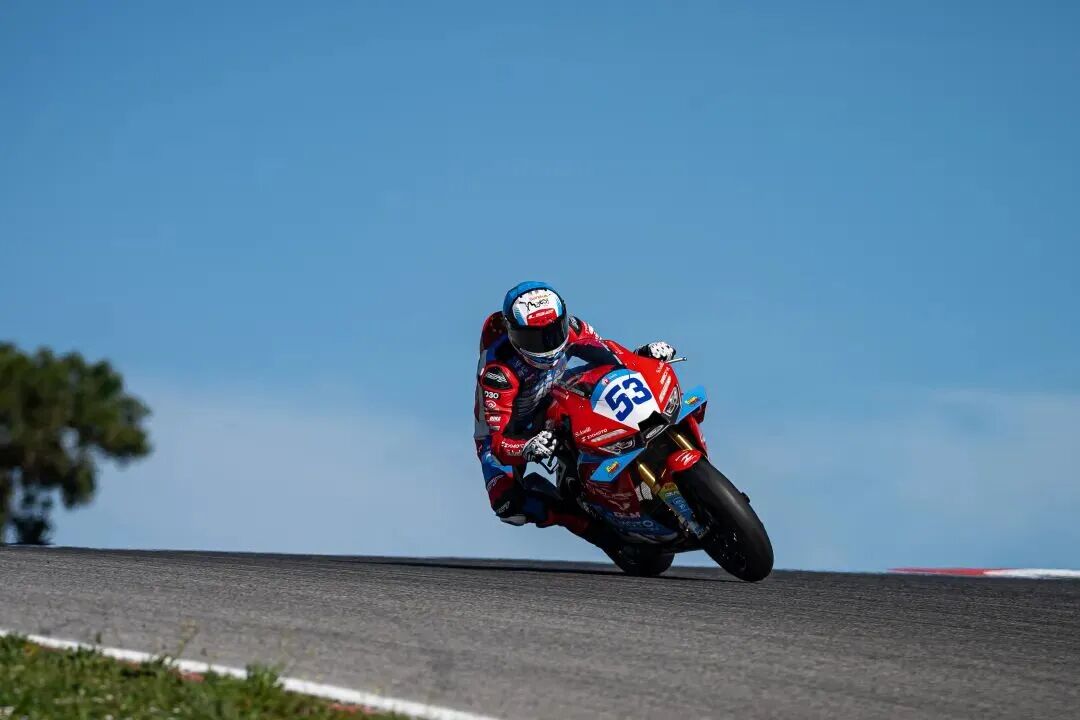
▲ “Zhangxue Motorcycle” won the championship in the two – round main race of the World Superbike Championship. Source: Xinhua News Agency
01 The First City of Chinese Automobiles
The birthplace of China’s first civilian motorcycle is in Chongqing.
In 1979, Jialing Factory purchased three Honda PA50 motorcycles. Without a single drawing and with a serious shortage of equipment, more than 20 technicians spent four and a half months “hand – crafting” a motorcycle, named Jialing CJ50.
Because the whole body of the motorcycle was red, it got the nickname “Red Rooster”.
It was this Red Rooster that ignited Chongqing’s motorcycle industry.
In the following decades, Chongqing’s motorcycle industry has been galloping forward and has become the most hardcore motorcycle capital in China.
Now, the annual output of motorcycles in Chongqing is 7.857 million, accounting for 35.5% of the country’s total output, ranking first. One out of every three exported motorcycles in China is produced in Chongqing. Local brands such as Zongshen and Loncin have long dominated the overseas market. Among the top ten brands in China’s electric motorcycle field, seven brands, including Yadea and Luyuan, have chosen to build factories here.
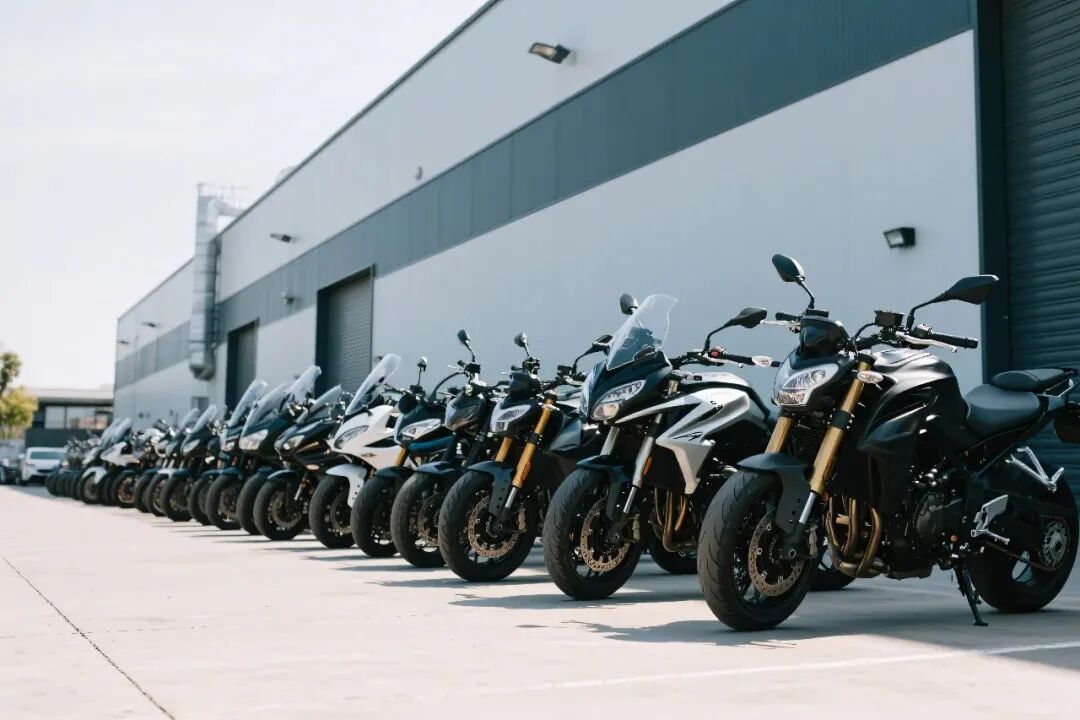
The development of Chongqing’s motorcycle industry has a clear context: starting from the “Red Rooster”, gradually cultivating a motorcycle industry cluster, and then continuously impacting the global high – end market.
This proven path to success has been replicated more than once in other industrial maps of Chongqing.
For example, Chongqing’s more well – known automobile industry. In 2025, the annual output of automobiles in the city reached 2.788 million, regaining the title of “the First City of Chinese Automobiles”. The British “Guardian” said: “Chongqing produces more cars than the sum of France and the UK.”
Moreover, the transformation speed of Chongqing’s automobile industry is faster than most people think. The annual output of new energy vehicles reached 1.296 million, a year – on – year increase of 36%. The value of automobile exports in the first two months of 2026 increased by 89.3% year – on – year.
Chongqing’s self – owned brands such as Seres AITO and Changan Avita have established a firm foothold in the high – end market, helping Chongqing become the only automobile city in China that leads in terms of “total output + exports + high – end new energy vehicles”.
The automobile industry has always been a “battleground” for major cities around the world. Toyota City in Japan, Stuttgart in Germany, Detroit in the United States, and Guangzhou, Shanghai, Changchun, Shenzhen in China are all doing their best to strengthen the automobile industry.
Surrounded by mountains and located inland, how did Chongqing break through the siege?
Chongqing’s key strategy is to maximize the “cluster economy”. The cluster economy was first proposed by Michael Porter, a professor at Harvard Business School. Simply put, it means: “The more enterprises are clustered together, the higher the efficiency.”
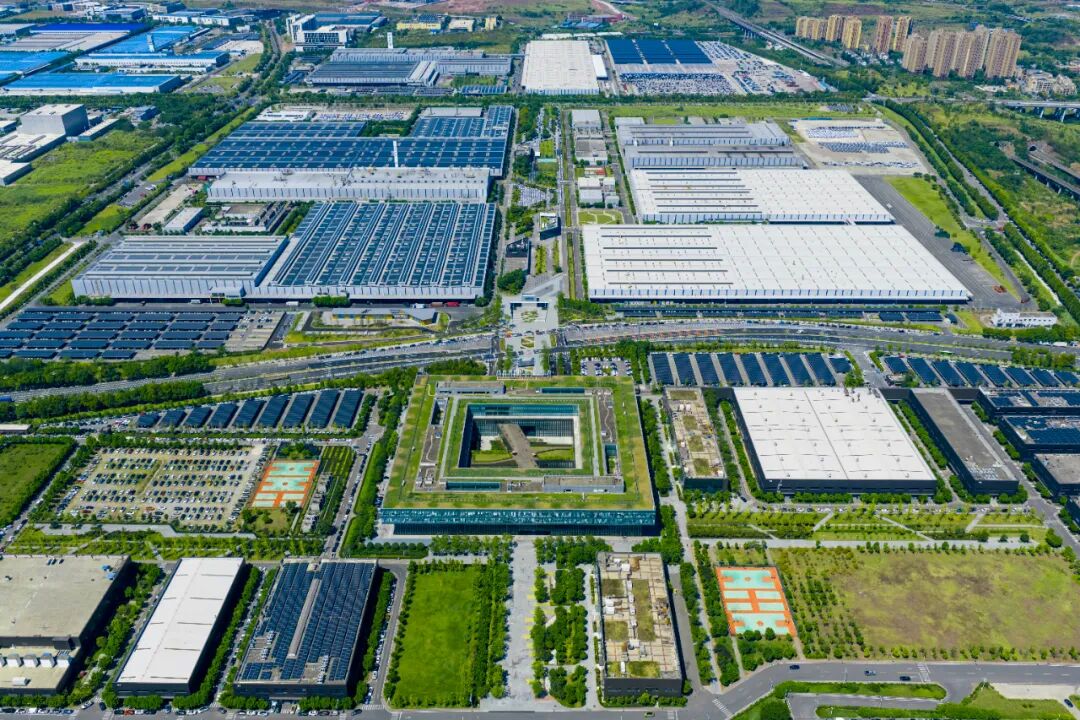
▲ Changan Automobile Global R & D Center
Chongqing realized this early on and consciously gathered the entire automobile industry ecosystem, focusing on creating a cluster effect to enhance industrial competitiveness.
For this reason, on the one hand, Chongqing introduced well – known global parts suppliers such as Germany’s Mahle, Japan’s Yazaki, and South Korea’s Hankook, and cultivated local supporting enterprises such as Pingwei, Dajiang, and Kafu. So far, more than 45% of the parts can be produced locally.
On the other hand, it has worked hard to gather a cluster of “automobile manufacturing enterprises”. In the past, it was common for each region to have one brand in the automobile industry. For example, SAIC was in Shanghai, FAW was in Changchun, and Dongfeng was in Hubei. But Chongqing was the first to break this convention, inviting domestic giants such as SAIC and BAIC, as well as foreign – funded brands like Ford, to set up factories locally.
Through these two – pronged efforts, Chongqing has the densest automobile industry cluster in China. More than 20 automobile manufacturing enterprises and over 1000 supporting suppliers are gathered here, forming an one – hour supply chain ecosystem.
The person – in – charge of a Chongqing automobile enterprise once said: “Within a few kilometers, I can find all the suppliers from engines, transmissions to chassis. For any thorny problems, we can meet and negotiate immediately.”
Relying on the power of the cluster economy, Chongqing topped the list of Chinese automobile cities for the first time in 2014, with an annual output of 2.6289 million vehicles.
However, as the scale increased, there were also hidden worries. At that time, Chongqing mainly produced minicars, concentrated in the mid – and low – end markets, with insufficient profit margins.
The transformation of the automobile market towards intelligence and new energy also posed a huge challenge to Chongqing’s automobile industry.
In 2018, Chongqing’s automobile output dropped sharply to 1.7264 million, and its ranking slipped to sixth among all provinces and municipalities in China.
Facing this life – and – death test, Chongqing showed the determination to cut off one’s wrist and staged a wonderful V – shaped reversal.
Zhang Xinghai, the founder of Sokon Group, a far – sighted private entrepreneur in the local area, took the lead in transformation. Two years before the trough came, he founded Seres, shouting the goal of “making high – end electric vehicles”, staking his entire fortune, establishing a R & D center in Silicon Valley, USA, acquiring the InEVit company founded by a co – founder of Tesla to obtain core three – electric technologies, and building an intelligent factory in Liangjiang New Area, Chongqing.
Subsequently, the Seres SF5 was launched. Although only 732 SF5s were sold in 2020 and it was almost ignored, this experience allowed Seres to accumulate solid technology and craftsmanship.
The turning point came in 2021. When Huawei entered the automobile industry and sought cooperation, most automobile enterprises chose to wait and see for fear of losing the right to lead. But Zhang Xinghai resolutely found Huawei for cooperation. He believed that new energy vehicles require the combination of software and hardware, and cross – border cooperation can complement each other’s advantages. Yu Chengdong later recalled that Zhang Xinghai was the only one who hit it off immediately.
After that, Seres’ manufacturing capabilities were integrated with Huawei’s intelligent technologies, and the new brand “AITO” was born.
In 2025, the sales volume of Seres’ new energy vehicles reached 472,300, and the AITO series delivered more than 426,000 vehicles. Among them, the AITO M9 delivered more than 110,000 vehicles throughout the year, ranking first in the sales of 500,000 – yuan – level models for two consecutive years.
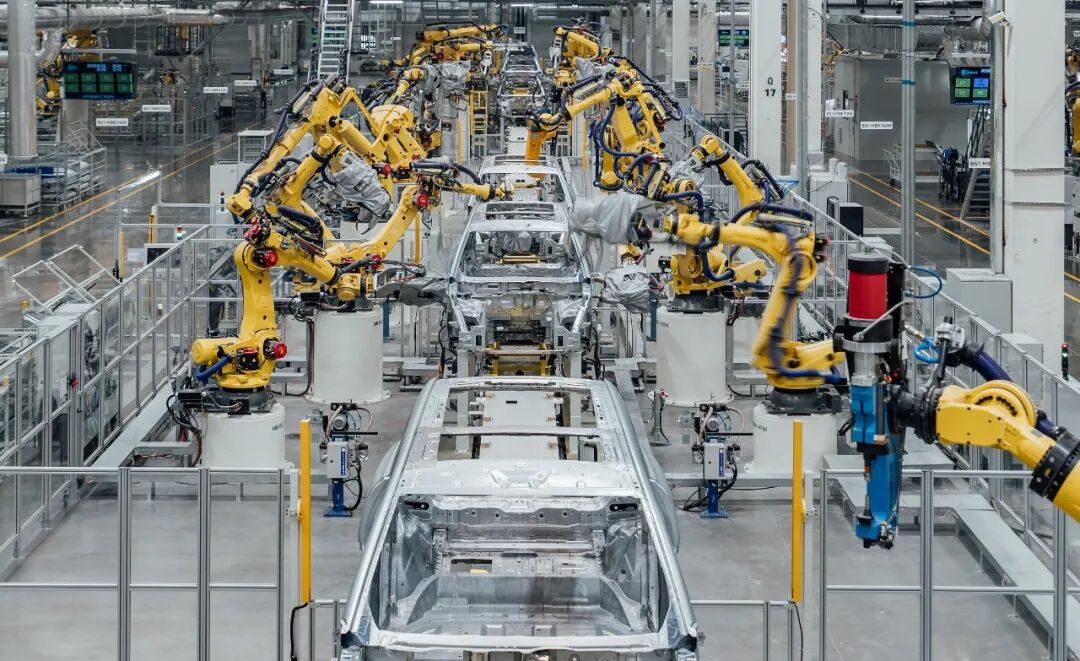
▲ Seres Super Factory
While Seres was breaking through, Changan Automobile, another pillar enterprise in Chongqing’s automobile industry, was also struggling to transform.
In 2017, in the face of the industry’s cold winter, Zhu Huarong, the then president of Changan Automobile, proposed the “Shangri – La Plan”, announcing an investment of 100 billion yuan to fully develop new energy vehicles. This goal seemed “radical” at that time, attracting a lot of doubts and misunderstandings. Immediately afterwards, Zhu Huarong launched the “Beidou Tianshu Plan”, focusing on intelligent R & D.
In 2018, when mainstream automobile enterprises were still hesitating, Changan had already joined hands with Huawei and CATL to create the high – end new energy brand “Avita”.
Facts have proved that Changan’s desperate move was wise. In 2025, thanks to the continuous breakthroughs of the three brands Avita, Deepal, and Changan Qiyuan, the sales volume of Changan’s new energy vehicles exceeded 1.1 million, a year – on – year increase of 51%. In December of the same year, Changan witnessed the offline of its 30 millionth Chinese – brand vehicle, becoming the fastest Chinese automobile enterprise to reach this milestone.
Looking back, in the face of the unprecedented changes in the automobile industry in a century, the reason why Chongqing’s automobile enterprises have transformed so thoroughly and decisively is not only due to their own efforts but also inseparable from the strong promotion of the government.
For example, the leaders of Chongqing met with core enterprises such as Huawei and CATL intensively and carried out in – depth investment promotion cooperation, quickly filling the gaps in the industrial chain such as batteries, chips, and intelligence; to solve the logistics problem, Chongqing opened the “Thousand – mile Light Boat” lithium – battery water transport line, reducing the logistics cost by 25%; for the convenience of automobile enterprises’ testing, Chongqing made use of its 8D magical terrain to build the most complex autonomous driving test field in China and issued the first special license plate for L3 – level autonomous driving.
When automobile enterprises encountered capital problems, the 200 – billion – yuan mother fund established by Chongqing injected more than 13 billion yuan into automobile enterprises such as Avita, Deepal, and Seres.
It can be said that the Chongqing government has exhausted all kinds of methods to create an environment where automobile enterprises dare to explore and try.
By 2025, Chongqing regained the status of “the First City of Chinese Automobiles”, but the significance of this time on the top is completely different. Self – owned brands have made breakthroughs in the high – end market, the transformation of intelligence and new energy has been successful, and the scale of the industrial cluster is moving towards the trillion – yuan mark. Chongqing’s automobile industry has achieved a beautiful V – shaped reversal.
The “Economist” magazine keenly captured this reversal trend and commented:
“Chongqing was once one of the largest automobile cities in the world in the era of fuel vehicles. Its output dropped significantly in 2018. However, in the process of electrification transformation, it quickly rebuilt its advantages, won the reputation of the Chinese automobile city, and surpassed the former world automobile city Detroit in many aspects.”
In other words, the “Economist” is emphasizing that Chongqing is already the world’s first automobile city. And in fact, the first automobile city in China is also the world’s first automobile city.
02 Hard – core in Scientific and Technological Innovation
The strength of Chongqing’s manufacturing industry is also hidden in many “invisible” fields, such as the electronic information industry.
What is not well – known is that one out of every three laptops in the world is made in Chongqing, and the Sichuan – Chongqing region also jointly produces two – thirds of the world’s iPads and one – tenth of the world’s smartphones.
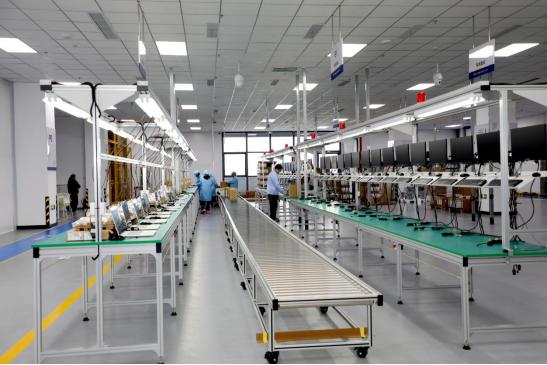
▲
In recent years, the growth of traditional electronic products has slowed down, but new – generation terminals such as robots, drones, and smart homes have been growing rapidly. Chongqing has seized the opportunity in time and incubated a number of hidden champions.
For example, Ruishi Chuangxin, which focuses on high – performance RF front – end chips, Xinlian Microelectronics, which specializes in automotive MCU chips, and Qiteng Technology, which focuses on special robots.
At the beginning of 2026, leading enterprises in embodied intelligence such as Galaxy General Robot and Unitree Technology also successively established branches in Chongqing. When asked about the reason, the answers of the enterprises were surprisingly consistent: They value the advantages of Chongqing’s mature electronic industry cluster.
In addition to the new – generation electronic information manufacturing industry becoming the second pillar industry in Chongqing aiming for a trillion – yuan scale, another more low – key but crucial industry in Chongqing’s manufacturing map is also gaining momentum, that is, advanced materials.
In Chongqing’s early “6 + 1” pillar industry system, materials were just one of many sectors, on a par with industries such as equipment and chemicals.
But in 2023, Chongqing released the “33618” modern manufacturing cluster system. For the first time, advanced materials were on an equal footing with new energy vehicles and the new – generation electronic information manufacturing industry, and were clearly listed as one of the three trillion – yuan – level leading industries.
This “upgrade” of the strategic status is not accidental, but based on Chongqing’s insight into the global industrial chain competition pattern: To truly master the lifeline of the industrial chain, achieve self – control, and break through to the high – end, it is necessary to overcome the upstream material industry.
Looking through the list of China’s imported goods, it can be found that the “choke – points”, such as high – end alloys, carbon fibers, and semiconductor chemicals, are mostly concentrated in the material field.
The lack of one material can hold back an entire industry; the breakthrough of one material can drive the economic take – off of a region.
Material – strong countries such as the United States, Japan, Germany, and South Korea firmly occupy the upper reaches of the global value chain by virtue of their absolute advantages in fields such as high – end photoresists and high – temperature superconducting tapes.
Precisely because materials are so fundamental and crucial, they are called “industrial food” and “the mother of industry”, and are the industry behind all other industries. For China, to continue to develop, the hard nut of advanced materials must be cracked no matter how difficult it is.
Chongqing has unique advantages in developing the advanced materials industry.
A laptop has more than 2000 components,