
From bleaches, disinfectants and detergents to pest sprays and paints, many kitchen cabinets and laundry shelves are stacked with bottles and tins of household chemicals.
Chemicals are ubiquitous in modern life. They are readily available from supermarkets or hardware stores, but can become environmental pollutants if incorrectly stored, used and disposed of.
Prof Stuart Khan, an expert in water quality and treatment at University of Sydney, says there are “thousands of different chemicals” that flow down the shower, sink or toilet and end up in the sewerage system. Wastewater contains low concentrations of all sorts, he says, including herbicides and pesticides used to grow food, detergents and chlorine bleaches used in cleaning, and antibacterial agents and fragrances in personal care products.
Sign up for the Breaking News Australia email
Anything used or disposed of outside, such as paints and oils or petroleum-based solvents, risks ending up in the storm water system. “That’s a problem because storm water can run off into freshwater environments, local creeks and rivers, where if there are high concentrations of some of those chemicals you can have ecological consequences.”
A recent study of indoor dust and soil samples from across Victoria detected trace metals, Pfas (per- and polyfluoroalkyl substances) compounds – commonly referred to as “forever chemicals”, pesticides, products of fossil fuel combustion, and pharmaceuticals (including antibiotics, antidepressants and anti-inflammatories), although most were below toxic thresholds.
How should you safely dispose of chemicals without risking harm to the environment?
Remember the three Ps – pee, poo and paper
“Every drain in the house – kitchen sink, shower, washing machine, as well as the toilet – feeds into the same sewerage system,” says Jess Walker, Melbourne Water’s head of the Western Treatment Plant and sewage transfer.
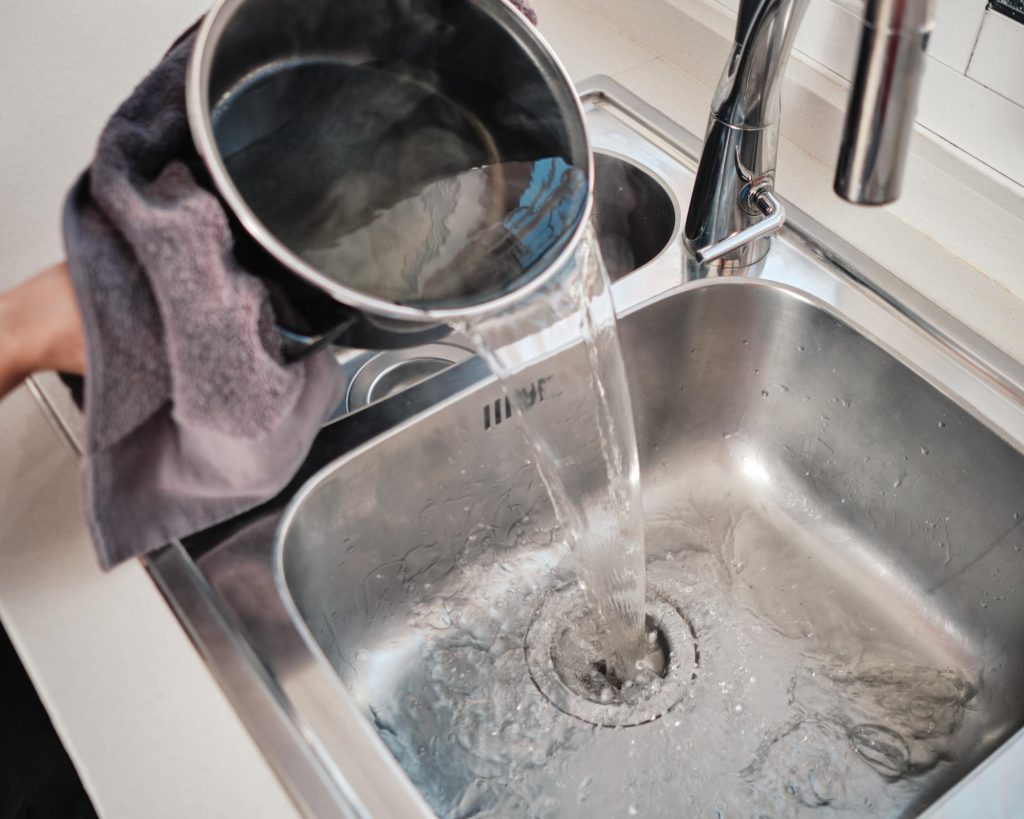
When chemicals – such as fats and oils, paint and solvents or harsh cleaners – are poured down drains or flushed down toilets, they can block pipes and interfere with the natural biological processes used in wastewater treatment.
“Most people probably don’t think much at all about what goes down the drain and where it goes,” Khan says.
He says pharmaceuticals and antimicrobial agents (such as triclosan, an ingredient in a variety of antibacterial soaps and detergents) are not well removed by treatment systems, and can end up in the environment. “We get measurable concentrations of things like paracetamol and aspirin and ibuprofen and many, many other pharmaceutical type chemicals.”
Cooking oils, out-of-date milk or the residues of a roast dinner can contribute to the buildup of fats, oils and grease – known as FOG – in wastewater pipes, and the growth of fatbergs.
When products containing Pfas – such as stain-resistant carpets and upholstery, water-resistant clothing, food packaging and cosmetics – are used and washed, those chemicals can end up in waterways or the environment. “The main problem with Pfas is its environmental longevity,” says Khan. “It’s very, very slow to naturally degrade – potentially hundreds of years for some of these chemicals to degrade in the environment.”
The level of wastewater treatment can also differ depending on where you live. “In Sydney, most of our sewage just goes straight to three big ocean outfalls, Malabar, Bondi and North Head, with quite limited treatment along the way. So there are many chemicals that are barely removed at all.”
Related: Behind this door is the huge fatberg that can’t stop depositing poo balls on Sydney’s beaches
Consumer choices can have an impact at scale, Khan says, like the shift towards phosphorus-free detergents, which has reduced the amount being discharged into the environment.
Ben Armstrong, principal manager environment at Sydney Water, says the only things that should be flushed down the toilet are the “three Ps”: pee, poo and (toilet) paper.
In the sink or shower, it should be just soap suds and water.
For cleaning, the Victorian government’s Detox Your Home program recommends choosing materials that are low-toxic and phosphate free, such as baking soda or fibre cloths for heavy-duty scrubbing, or a mix of vinegar and water for cleaning surfaces and floors.
Khan says washing in hot water – even though it requires more energy – can be an effective way of disinfecting, instead of relying on chlorine-based bleach or ammonia products.
If it’s not rainwater it doesn’t belong in the drain
When you’re working outside, Melbourne Water’s advice is simple: if it’s not rainwater, it doesn’t belong in a storm water drain. “That one rule covers most of what people need to know,” Walker says.
Chemicals washed into gutters or drains find their way into rivers, creeks and oceans, usually without treatment. Some can affect water quality, while others – such as phosphates and nitrogen – can contribute to algal blooms or harm wildlife.
In the garden, Detox Your Home suggests using natural alternatives instead of harsh chemicals. For example, it recommends using compost and mulch instead of synthetic fertilisers, and vinegar, hot water or manual weeding instead of herbicides.
If you’re washing your car, wash it on the grass or take it to a commercial wash.
“Never pour paint, chemicals, herbicides and pesticides or pool water down a stormwater drain or sewer. Take them to an approved collection or disposal point. It protects both your pipes and the waterway at the end of them,” Walker says.
Many local councils offer chemical collections or drop-off points for disposing of paints, petroleum products and common chemicals. Unused medicines can be returned to your local pharmacy.