
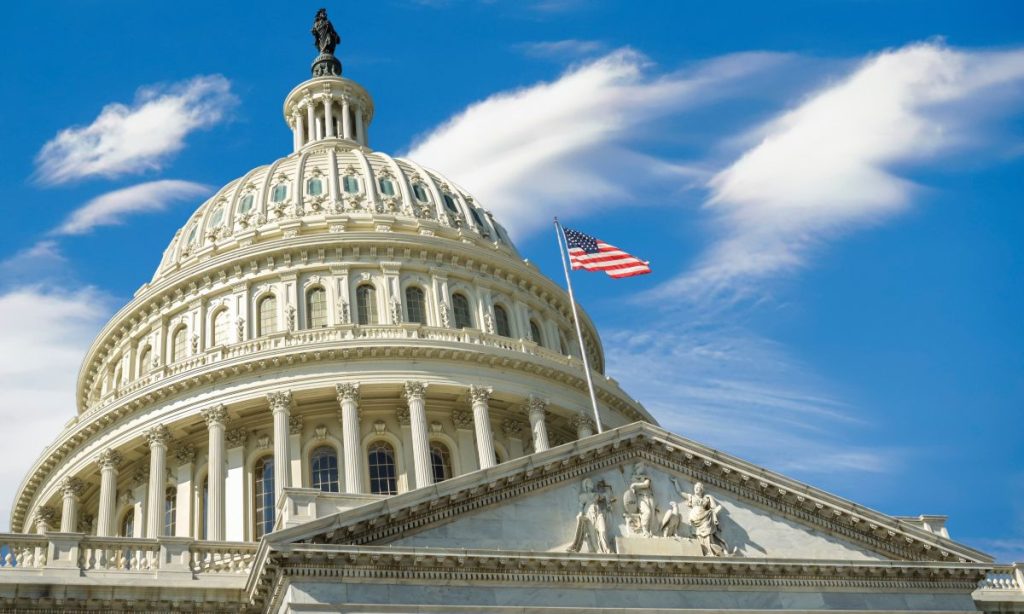
The House Financial Services Committee’s latest oversight hearing on prudential regulators on Thursday (June 4) took note that the banking system is entering a period in which stablecoins, artificial intelligence and digital payments are moving from experimental subjects to supervisory priorities. At the same time, regulators argued that examination frameworks must be refocused on material financial risk rather than procedural shortcomings.
As Federal Reserve Vice Chair for Supervision Michelle Bowman told lawmakers, “The financial system continues to adapt to technological advances, including the rapid evolution of artificial intelligence capabilities and the risks and benefits of its use.” She warned that recent advances in AI have accelerated the identification of cyber vulnerabilities across critical infrastructure, including banking systems.
The hearing brought together Bowman, Office of the Comptroller of the Currency Comptroller Jonathan Gould, National Credit Union Administration Chairman Kyle Hauptman and Federal Deposit Insurance Corporation Chairman Travis Hill.
Stablecoins Move to Payments Infrastructure
Perhaps the strongest area of alignment involved implementation of the GENIUS Act and the development of supervisory frameworks for payment stablecoins.
Gould said the OCC is “working to respond to comments on our GENIUS Act proposal and finalize it.” He argued that the legislation and accompanying regulations would provide safeguards comparable to earlier banking reforms, stating that “the GENIUS Act and our rule will help ensure appropriate consumer protections for stablecoin users.”
Hauptman framed stablecoins primarily as payments infrastructure rather than a crypto asset discussion.
Advertisement: Scroll to Continue
“Stablecoins can make payments faster, cheaper, and more inclusive,” he told lawmakers, adding that widespread adoption could eliminate the familiar concept of waiting multiple business days for payments to settle. He noted that “every day is a business day with stablecoins.”
The NCUA chairman also emphasized the international implications of dollar-denominated stablecoins, arguing that the technology could reinforce the role of the U.S. dollar in global commerce. More than 80% of dollar stablecoin activity occurs outside the United States, according to his testimony.
At the FDIC, Hill described GENIUS Act implementation as “a top priority.” He highlighted proposals covering application requirements, reserve assets, redemption standards and compliance obligations for stablecoin issuers supervised by the agency.
Bowman similarly told lawmakers that the Federal Reserve is developing stablecoin issuer regulations as directed by Congress.
AI Creates Cybersecurity Questions
Artificial intelligence emerged as another major theme, though witnesses generally discussed it less as a productivity tool and more as a source of risk.
Bowman offered the clearest warning, saying that advances in frontier AI models have “dramatically accelerated the identification of cyber vulnerabilities across critical infrastructure, including the banking system,” per her written testimony. While the technology may strengthen defenses, she cautioned that it simultaneously exposes new avenues for cyberattacks.
During the hearing, Rep. Bill Foster, D-Ill., warned of “a wave of fraud driven by artificial intelligence and deep fakes” confronting banks and credit unions. He argued that regulators must remain sufficiently agile and well-resourced to address those threats.
During his opening statement, Foster argued that regulators must prepare not only for AI-enabled fraud schemes but also for risks created by faster-moving financial systems. “Consumers and markets are moving faster than ever with improved access to information, 24-hour banking, and the reduced friction of modern payment systems,” Foster said, while noting that criminals still use “older banking tools such as paper checks for illicit purposes.”
The comments highlighted a challenge facing regulators and financial institutions alike: The modernization of payments may reduce friction for consumers and businesses, but it also reduces the time available to detect and stop fraudulent activity.
Gould said the OCC recently revised model risk management guidance with other banking agencies “to avoid impeding banks’ use of AI” and indicated that regulators are seeking additional feedback on where further guidance may be needed.
The discussion reflected a broader supervisory challenge facing banks: encouraging innovation while ensuring institutions can manage emerging technology risks. Rather than proposing entirely new regulatory structures, witnesses generally favored adapting existing risk-management frameworks to accommodate AI deployment.
Supervision Reform Centers on Risk
Beyond technology, the hearing focused heavily on how regulators conduct examinations and assess risk.
Bowman said a Federal Reserve review found that many supervisory findings were tied to procedural or documentation issues rather than threats to safety and soundness.
Hill echoed that theme, describing FDIC efforts to reform supervision around “material financial risks rather than process-oriented, check-the-box requirements.” He said the agency is reviewing existing supervisory findings and redefining key standards such as “unsafe or unsound” practices.
Gould likewise argued that the OCC is “returning to risk-based supervision rooted in law and emphasizing examiner judgment, not arbitrary checklists.”
The witnesses also highlighted revisions to the CAMELS rating framework, capital requirements and community bank leverage ratio rules, all designed, they said, to better align regulation with actual risk profiles.
Rep. Gregory Meeks, D-N.Y., pressed Gould on chartering and AML standards.
Meeks asked whether an applicant could obtain an OCC charter without demonstrating adequate BSA/AML compliance. Gould did not answer yes or no. He responded that the OCC’s chartering guidelines are “established by statute” and “detailed,” then added: “It’s not as simple as a yes and no.”
When Meeks continued pressing, Gould said he would be “doing a disservice to the members of the committee” if he treated the question as that simple.
Rep. Stephen Lynch, D-Mass., questioned Bowman on crypto access to the banking system.
Lynch raised concern about the convergence of traditional banking and crypto, saying banking has long been built around “safeguards and guardrails” while crypto remains a speculative asset class. He specifically asked whether regulators were looking closely at Kraken after it received limited Federal Reserve payment-system access.
Bowman responded that the Federal Reserve has “a tiered approach” for approving access to the payment system. She said Kraken’s access was approved by the Kansas City Fed for a “limited purpose” and a “limited period of time,” with the 12-month period lapsing early next year. She added that the Fed would use the arrangement to understand how that entity, and similar entities, might use limited access to the payment system.
The hearing made clear that the next phase of prudential regulation will be shaped as much by digital infrastructure as by traditional banking metrics. Stablecoin reserve frameworks, AI governance, cyber resilience and fraud controls occupied a larger share of the discussion than many legacy supervisory topics, reflecting how rapidly the regulatory agenda is evolving.