

Croatia Airlines recorded a net loss of 49.7 million euros during the first half of 2026, up from a loss of 18 million euros in the same period last year. It marks the carrier’s biggest half-yearly loss on record. Its operating loss widened from 21.2 million to 36.8 million euros. Operating revenue increased 12% to 125.4 million euros, supported by an 11% rise in passenger revenue to almost 105 million euros. However, total revenue, which also includes financial income, declined 2% to 129.1 million euros. At the same time, total expenditure increased 19% to 178.8 million euros, while operating expenses grew 22% to 162.2 million euros.
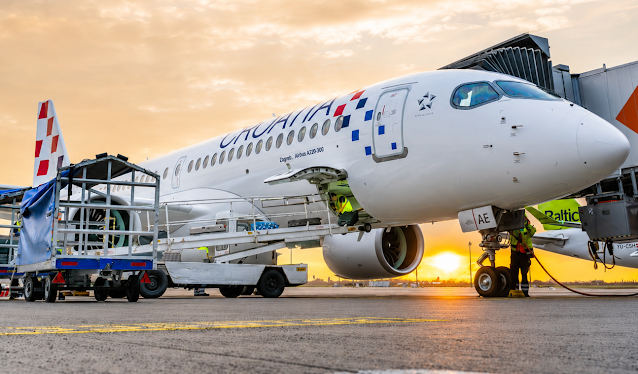
Croatia Airlines said its first-half performance was recorded in a “complex environment”, shaped by both the internal effects of its fleet renewal investment cycle and unfavourable external developments. The airline noted that the introduction of the A220 fleet between 2024 and 2027 entails increased operational and financial costs related to aircraft induction, the adaptation of processes and transitional effects from operating a mixed fleet. It added that these factors were placing planned pressure on profitability. The escalation of geopolitical risks in the Middle East from March, which prompted a rise in jet fuel prices, further weakened the carrier’s operating result.
Cash and cash equivalents stood at 21.6 million euros at the end of June, compared with 11.9 million euros at the beginning of the year. The company received a 35-million-euro cash injection from the Croatian government during the period, while the sale and leaseback of a spare engine generated a further 12.9 million euros. The wider recapitalisation approved by the government amounts to approximately 156 million euros, including the conversion of shareholder loans and another 35-million-euro cash payment planned for early 2027
Despite the weaker financial performance, the carrier handled a record 981.482 passengers during the first half of the year, representing an increase of 15%, or an extra 129.499 travellers, compared with 2025. International scheduled services accounted for 739.470 passengers, up 18%, or 115.371 travellers. The load factor on international services improved three percentage points to 66%, despite a 12% increase in capacity. Domestic scheduled traffic grew by 6%, or by 13.874 passengers, to 228.420. However, the domestic load factor declined by 0.3 percentage points to 64.2%. A further 13.592 passengers travelled on charter services, representing an increase of 2%. Charter operations accounted for 1.4% of the airline’s total traffic. Croatia Airlines’ overall passenger load factor improved by 2.7 percentage points to 66.2%. Passenger numbers fell 2% in June, ending the 21% growth recorded between January and May. Croatia Airlines attributed the reversal partly to a 7% decline in tourist arrivals in Croatia during June, adding that weaker demand prompted competitors to lower fares, which also negatively affected its revenue.
The airline operated 12.631 flights during the six-month period, up 2%, while block hours increased 5% to 17.648. Cargo and mail volumes declined 4.5% to 659 tonnes. Passenger yield declined 4% to 14.7 euro cents per revenue passenger kilometre, with the average gross fare falling 3%.
