
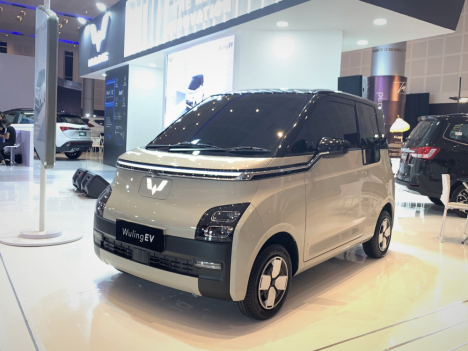
Emissions-based taxation proposed as alternative to protect regional revenue while preserving electric vehicle incentives
The Jakarta provincial government is facing growing criticism over plans to end tax incentives for electric vehicles (EVs), environmental advocates warned the move could undermine efforts to improve the capital’s air quality. They argue that an emissions-based tax on polluting vehicles would generate higher regional revenue while maintaining incentives for cleaner transportation.
Previously, Lusiana Herawati, head of Jakarta’s Regional Revenue Agency (Bapenda), said the province forfeits around Rp2 trillion (approximately US$123 million) in annual revenue by exempting EVs from Motor Vehicle Tax (PKB) and Vehicle Ownership Transfer Fee (BBNKB). Her remarks were widely interpreted as a signal that the government is considering ending the tax incentives.
Environmental concerns
The Committee for Leaded Gasoline Phase-Out (KPBB) strongly opposed the proposal, describing it as a step backward that could reverse Jakarta’s progress in tackling air pollution. KPBB Executive Director Ahmad Safrudin said the capital is already facing an acute and chronic air pollution crisis.
“Air pollution in Jakarta has caused 58.2% of residents to suffer from respiratory illnesses, with medical costs reaching Rp59 trillion in 2025. Motor vehicle emissions have also driven Jakarta’s greenhouse gas emissions to 103.25 million tons per year,” Ahmad Safrudin said in a written statement on Friday, July 24, 2026.
According to KPBB, the key policy to reduce air pollution and greenhouse gas emissions lies in tax incentives for electric vehicles. They noted such incentives are aligned with Jakarta Regional Regulation No. 2/2005 on Air Pollution Control and Governor’s Decree No. 576/2023 on the city’s air pollution control strategy.
Alternative tax proposal
Rather than taxing electric vehicles, KPBB urged the provincial government to implement an emissions tax or emissions excise scheme that had previously been studied by Jakarta’s Environmental Agency.
Under the proposed framework, fossil fuel-powered vehicles that exceed established emissions standards would face taxes or penalties, while low-emission and zero-emission vehicles would continue receiving incentives based on every gram of emissions reduced below regulatory limits.
KPBB estimates the policy could generate up to Rp5.7 trillion (approximately US$350 million) in additional locally generated revenue from high-polluting vehicles. The organization said this would significantly exceed the Rp2 trillion (approximately US$123 million) in revenue the provincial government hopes to recover by taxing electric vehicles.
“Through an emissions excise scheme, environmentally friendly vehicles will continue to be attractive to the public without causing the provincial government to lose regional revenue. It is ironic if the government seeks tax revenue from electric vehicles that help address the air pollution crisis instead of taxing the actual sources of pollution,” Ahmad Safrudin said.