
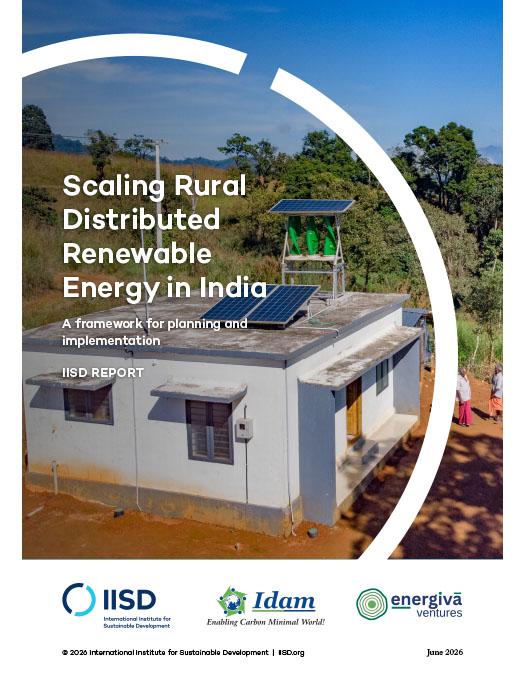
India has achieved near-universal rural electrification, yet many villages continue to face challenges related to reliability, affordability, voltage quality, and access to power for productive uses. As the country pursues its clean energy and net-zero ambitions, DRE offers an opportunity to complement centralized generation while strengthening electricity systems closer to consumers. This report argues that DRE should be planned as part of the distribution system rather than deployed through fragmented, scheme-driven approaches.
Drawing on policy analysis, field studies, and techno-economic assessments of model villages, the study demonstrates that village-level DRE systems can be economically viable across diverse rural contexts. However, system performance and costs are strongly influenced by load patterns, storage requirements, surplus management, and institutional arrangements.
The report proposes a practical framework, centred around Village Energy Plans to help states and distribution companies move from fragmented, scheme-led interventions toward coordinated, planning-led approaches. By aligning village-level renewable energy deployment and local demand patterns, helping advance India’s clean energy, rural development, and net-zero goals, the report provides a practical pathway for improving rural electricity reliability while advancing India’s broader clean energy and net-zero objectives.