
The 46-year-old, whose wealth comes from his stake in the company, has amassed a fortune of $4.7 billion after Chongqing Genori’s shares soared following its Shanghai listing on June 24, according to Forbes.
His wife, Xia Bing, 45, a company director responsible for operational efficiency, has a net worth of about $490 million based on her own holdings.
Founded in 2016, Chongqing Genori raised 1.7 billion yuan ($254.8 million) last week by selling 38.8 million shares at 44.6 yuan each. The retail portion of the IPO was oversubscribed more than 6,000 times, according to a stock exchange filing.
Shen Meng, Beijing-based managing director at boutique investment bank Chanson & Co., said investors are flocking to Chongqing Genori because they see it as a beneficiary of China’s push for self-sufficiency in artificial intelligence and semiconductor manufacturing.
James Wang, head of China strategy at UBS Investment Bank Research, wrote in a Thursday note that he remains positive on the country’s AI hardware suppliers because of “strong earnings momentum, fervent retail participation and fresh capital from new IPOs.”
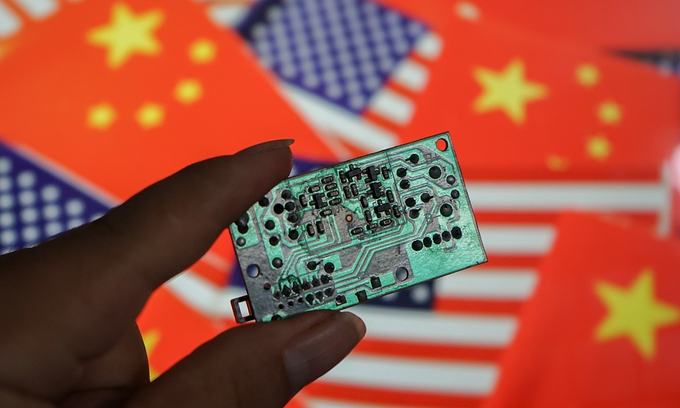
Beijing has accelerated efforts to reduce reliance on foreign technology as the U.S. expands restrictions on advanced chips and chipmaking equipment. Huawei, under semiconductor chief “chip queen” He Tingbo, has emerged as one of the country’s leading companies driving that effort.
 |
|
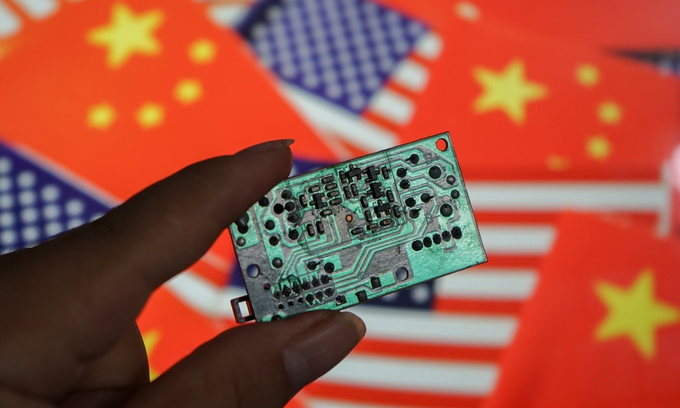
A circuit board containing older-generation chips. Photo by VnExpress/Bao Lam |
Chongqing Genori develops vacuum chamber components used in semiconductor manufacturing equipment. The chambers create contamination-free environments that allow silicon wafers to be processed without interference from airborne particles and impurities.
According to the company’s prospectus, this segment of the semiconductor supply chain has long been dominated by foreign companies. As the U.S. expands restrictions on China’s semiconductor industry to include not only advanced chips but also related equipment, components and after-sales services, Chinese manufacturers increasingly need domestically produced alternatives, the prospectus said.
Wang is a semiconductor industry veteran. After earning a bachelor’s degree in mechatronics from East China Jiaotong University in Jiangxi province, eastern China, he joined a Shanghai glass manufacturer in a sales role before moving into engineering and sales management positions at several domestic semiconductor companies over the following decade, according to the prospectus.