
Close Menu
Simply Invest Asia
  • Home
  • About us
  • Explore industries/sectors
    • Automobile
    • Aviation
    • Banking
    • Biotechnology
    • Chemical & Fertilizer
    • Entertainment and Media
    • Food Processing
    • Healthcare
    • Iron and Steel
    • Leather
    • Mining
    • Oil and Gas
    • Pharmaceutical
  • Explore by countries
    • China
    • Dubai / UAE
    • Hong Kong
    • India
    • Indonesia
    • Japan
    • Malaysia
  • Explore cities
    • Bangkok
    • Beijing
    • Chongqing
    • Delhi
    • Dubai
    • Guangzhou
    • Jakarta
    • Kuala Lumpur
  • Why Asia
Facebook X (Twitter) Instagram Threads
Trending:
  • China • Beijing beefs up strategic coastline surveillance – Intelligence Online
  • Special Report: Indonesia seeks asymmetric deterrence with autonomous submarine
  • India Isn’t Rushing Back to Middle Eastern Oil Despite Hormuz Reopening
  • Japan’s Naphtha Shock: Hormuz Disruption Hits Bathrooms, Chips, and Daily Life
  • Volkswagen Golf R MK8.5 launched in Malaysia – CKD 333 hp hot hatch, RM356k with VAP
  • China has no jurisdiction over Taiwan waters, official says amid EEZ row
  • Expat Families Return to UAE as US-Iran Interim Peace Deal Restores Regional Calm and Confidence
  • HK kicks off Dragon Boat Festival weekend with races, tourism boost
  • Novo Nordisk’s dilemmas and that fine line between science and marketing
  • om Dee Noodles: Egg Noodles and Crispy Pork in Bangkok
  • UK Proposes Basel Trading Rule Adjustments, Confirms 2028 Start
  • eGenesis to Participate at BIO International Convention 2026 Panel on the Future of Xenotransplantation
  • Radial Entertainment and Woodcut Media Team for New True Crime Series ‘World’s Most Evil Women’
  • India pacer added to squad for third ODI against Afghanistan
  • UAE’s Altérra enters Latin America with Peru investment
  • China Sees Inbound Tourism Surge as Dragon Boat Festival Drives More Than Six Hundred Percent Growth in Overseas Bookings Across Guangzhou and Foshan—Here’s Why Global Travellers Are Taking Notice
  • Beyond the outbreak: Child protection strengthened in Delhi’s Kailash Nagar
  • Hong Kong pushes Beijing’s bay area dream as it advances first 5-year plan
Friday, June 19
Facebook X (Twitter) Instagram
Simply Invest Asia
  • Home
  • About us
  • Explore industries/sectors
    • Automobile
    • Aviation
    • Banking
    • Biotechnology
    • Chemical & Fertilizer
    • Entertainment and Media
    • Food Processing
    • Healthcare
    • Iron and Steel
    • Leather
    • Mining
    • Oil and Gas
    • Pharmaceutical
  • Explore by countries
    • China
    • Dubai / UAE
    • Hong Kong
    • India
    • Indonesia
    • Japan
    • Malaysia
  • Explore cities
    • Bangkok
    • Beijing
    • Chongqing
    • Delhi
    • Dubai
    • Guangzhou
    • Jakarta
    • Kuala Lumpur
  • Why Asia
Simply Invest Asia
Home»Explore by countries»Indonesia»In a World Repricing Everything, Indonesia’s Coral Reefs Remain Undervalued
Indonesia

In a World Repricing Everything, Indonesia’s Coral Reefs Remain Undervalued

By IslaJune 15, 20264 Mins Read
Share
Facebook Twitter Pinterest Threads Bluesky Copy Link


Everything is being repriced. Tariffs are weapons, rare earths are leverage, and no one quite agrees on who controls the shipping lanes anymore. But there is one asset that nobody seems to have gotten around to pricing properly. It is not semiconductors or lithium or gas. It is the ocean and more specifically, the living systems beneath its surface that quietly keep the planet running.

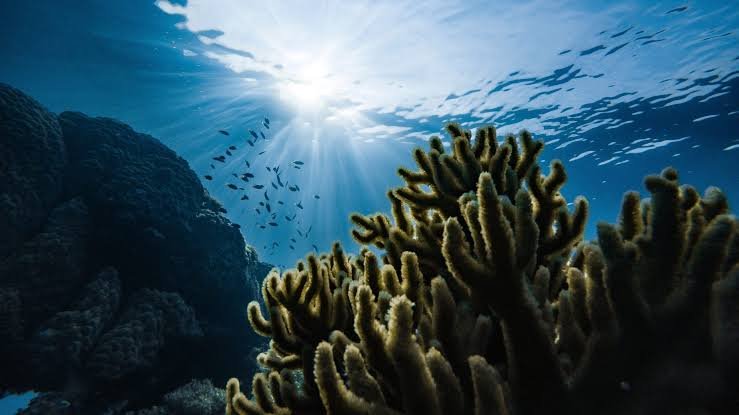
Start with Indonesia. Indonesia’s coral reefs cover an estimated 51,000 square kilometers or approximately 18% of the world’s total reef area and 51% of the region’s reefs. Its seagrasses and mangroves together hold around 3.4 billion tons of carbon which is five times more per unit area than tropical land-based forests and comprising 17% of the world’s blue carbon reservoir.

The country’s blue economy, the largest in Southeast Asia, is valued at $256 billion annually. These ecosystems regulate fisheries, stabilize coastlines, sequester carbon, and sustain the food security of hundreds of millions which the majority of whom live outside Indonesia’s borders.

What passes for compensation is inadequate. In August 2024, the United States and Indonesia signed a $35 million debt-for-nature swap, the first under the US Tropical Forest and Coral Reef Conservation Act dedicated exclusively to coral reefs.

Read More: UNESCO: Coral Reefs might go extinct

Including three earlier swaps in 2009, 2011, and 2014, the cumulative total stands at just under $105 million over fifteen years. Against the scale of the ecological service being rendered, the compensation is not simply inadequate.

The structural failure runs deeper than any single bilateral deal. Global climate finance hit a record $1.9 trillion in 2023, according to Climate Policy Initiative yet just 22% of bilateral climate finance targeted biodiversity co-benefits, leaving marine ecosystems, including the coral systems that anchor the Coral Triangle’s entire food web, effectively outside the financial architecture.

UNEP estimates developing countries need between $310–365 billion annually for climate adaptation through 2035; in 2023, developed nations provided just $26 billion. The gap is not marginal, but systemic.

Two additional failures compound the problem. First, blue carbon has no standardized accounting within the Paris Agreement’s Nationally Determined Contributions framework. Forest carbon anchors sovereign climate pledges: ocean carbon, which sequesters at rates that dwarf terrestrial forests per unit area, remains a footnote. This is not a scientific gap. It is

a political one. Second, analysis by the International Institute for Environment and Development estimates that debt-for-nature swaps could unlock as much as $100 billion globally, yet the mechanism remains fragmented and deal by deal. There is no multilateral instrument that prices the ongoing stewardship of globally critical marine ecosystems at anything approaching market rate.

Read More: The Green Mirage: Rethinking the True Cost of Ecotourism

Meanwhile, the asset is deteriorating. More than half of Indonesia’s protected coral areas are projected to face severe annual bleaching by 2044, which driven overwhelmingly by emissions from countries that have never contributed a dollar to protecting the reef. The costs of degradation are real, measurable, and global. The beneficiaries of conservation are diffuse, wealthy, and unaccountable.

The remedies are well within reach of the institutions that claim to govern the global commons. Multilateral development banks should price natural capital into sovereign credit assessments and countries stewarding critical ecosystems provide quantifiable global public goods, and their fiscal positions should reflect that.

The G20 should establish a standing Coral Triangle Conservation Compact, capitalized by beneficiary nations in proportion to the fisheries, climate stability, and biodiversity services they extract. And the UNFCCC must standardize blue carbon accounting under Article 6 of the Paris Agreement, enabling marine ecosystems to generate tradeable credits on international markets. None of these proposals require new institutions. They require existing ones to do their jobs.

Indonesia’s ancestors crossed the ocean without instruments, navigating by stars and current and accumulated knowledge passed across generations. They understood the sea not as a common to be exploited, but as a system to be read, respected, and returned to in good condition. The current global financial system cannot claim the same.

Everything is being repriced. The ocean is still waiting for its turn.


Muhamad Rifki Maulana

Muhamad Rifki Maulana

Muhamad Rifki Maulana is an Economist at the Central Bank of Indonesia, where his work focuses on regional economic analysis, inflation dynamics, and green economy policy across Indonesia’s regions. He holds a Master of Public Policy from the University of Michigan, with a distinction in Sustainability. He can be reached at muhamad_rm@bi.go.id


Source link

Related Posts

Special Report: Indonesia seeks asymmetric deterrence with autonomous submarine

June 19, 2026

Why Law Enforcement Matters for Indonesia’s Economic Stability

June 19, 2026

Indonesia-Timor Leste Reconciliation: ‘Through Memory Towards Hope’ – The Diplomat

June 19, 2026
Add A Comment
Leave A Reply Cancel Reply

Top Posts

Chinese Wall may stem India tech flows for electronics and automobile

June 1, 2026

Abandoned malls, whispers of nuclear war and young foreigners detained. This is what’s REALLY going on in Dubai… and the chilling warning one taxi driver gave to the Mail’s IAN BIRRELL

April 11, 2026

China Scraps 12,000 Degrees in Biggest Academic Overhaul in Years

June 14, 2026
Don't Miss

China • Beijing beefs up strategic coastline surveillance – Intelligence Online

By IslaJune 19, 2026

China • Beijing beefs up strategic coastline surveillance Intelligence Online Source link

Special Report: Indonesia seeks asymmetric deterrence with autonomous submarine

June 19, 2026

India Isn’t Rushing Back to Middle Eastern Oil Despite Hormuz Reopening

June 19, 2026

Japan’s Naphtha Shock: Hormuz Disruption Hits Bathrooms, Chips, and Daily Life

June 19, 2026
SUBSCRIBE TO OUR NEWSLETTER

Get our latest downloads and information first. Complete the form below to subscribe to our weekly newsletter.


I consent to being contacted via telephone and/or email and I consent to my data being stored in accordance with European GDPR regulations and agree to the terms of use and privacy policy.

Stay In Touch
  • Facebook
  • YouTube
  • TikTok
  • WhatsApp
  • Twitter
  • Instagram
Top Trending

Radial Entertainment and Woodcut Media Team for New True Crime Series ‘World’s Most Evil Women’

By IslaJune 19, 2026

India pacer added to squad for third ODI against Afghanistan

By IslaJune 19, 2026

UAE’s Altérra enters Latin America with Peru investment

By IslaJune 19, 2026
Most Popular

Hong Kong 7s 2026 – BC Rugby News

April 17, 2026

From Podcasting to PR: Josy Anne expands her footprint in entertainment

May 31, 2026

The U.S. Is Pushing Southeast Asia Toward China. The Iran War Made It Worse.

April 9, 2026
Our Picks

Kuala Lumpur: Indian Pavilion at Defence Services Asia 2026 #Gallery

April 20, 2026

China’s Anta mounts India comeback as bilateral ties improve

April 28, 2026

Global Governance: White paper outlines efforts for more just and equitable world – news.cgtn.com

June 17, 2026
SUBSCRIBE TO OUR NEWSLETTER

Get our latest downloads and information first. Complete the form below to subscribe to our weekly newsletter.


I consent to being contacted via telephone and/or email and I consent to my data being stored in accordance with European GDPR regulations and agree to the terms of use and privacy policy.

© 2026 Simply Invest Asia.
  • Get In Touch
  • Cookie Policy
  • Privacy policy
  • Terms & Conditions

Type above and press Enter to search. Press Esc to cancel.

SUBSCRIBE TO OUR NEWSLETTER

Get our latest downloads and information first.

Complete the form below to subscribe to our weekly newsletter.


I consent to being contacted via telephone and/or email and I consent to my data being stored in accordance with European GDPR regulations and agree to the terms of use and privacy policy.