
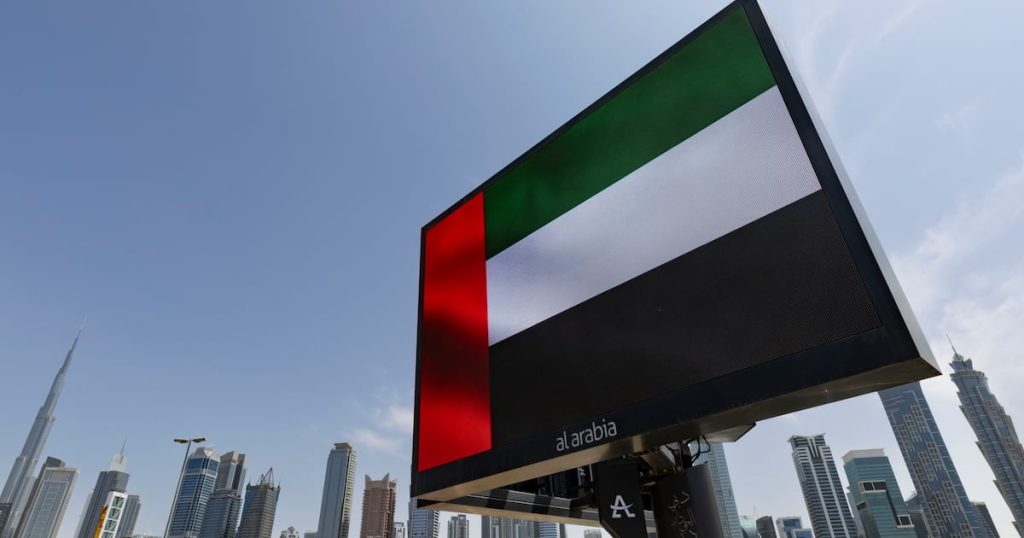
Residents who have built lives and businesses in the UAE over the past decades are confident the nation will continue to prosper in spite of the challenges posed by the Iran war.
People from around the world who call the Emirates home pointed to rising costs and uncertainty fuelled by the conflict, but predicted that the country would emerge from the crisis even stronger – just as it did after the 2008 crash and the Covid-19 pandemic.
Chinese citizen Abbey Wang is organising a visit next month by Emirati businessmen to Hangzhou, where they will attend a digital and AI conference to drive business and investment.
“It’s a good signal that peace may happen. But after these months of war, one thing that’s certain is that we are safe in the UAE and that is what we tell people,” Ms Wang, managing director of the Sino Mena Digital Development Centre in Dubai, told The National.
“For new investors and tourists, security remains a primary concern and it is unlikely that confidence and activity will return immediately in the short term. But as long-term residents, we understand that adaptation is essential.
“Many of us have adjusted our strategies, diversified our plans and made a conscious decision to continue living and working here despite the uncertainties. There remains confidence in bringing the UAE, China, AI and new technologies together despite the war.”
The framework agreement between Iran and the US, which is expected to be signed in Switzerland on Friday, will mark the beginning of 60 days of negotiations aimed at ending the war, as well as the three-month blockade of the Strait of Hormuz.
Adapting to disruption
But residents said they were not holding their breath for a lasting peace, having instead found ways to work around the challenges posed by the conflict.
Last month, as Iran launched missile and drone strikes at Gulf countries, Ms Wang led a two-day video conference for Chinese furniture and appliance manufacturers to display their products and answer questions from UAE businessmen at Expo City Dubai.
“Our point was that there was zero need for a 7,000km flight to China; you can select the products while sitting in the UAE,” said Ms Wang, who has lived in the UAE for 13 years.
“In many ways, we have come to accept that geopolitical tension may remain a part of the regional landscape. Rather than waiting for complete stability, we will focus on building resilience, embracing change and continuing to pursue opportunities.”
Ms Wang said she had received calls from family and friends in China asking about her safety and the availability of food supplies.
“I told them daily life was not affected, that we get Chinese food from the Chinese supermarkets,” she said. “There was some disruption, like there was no guarantee of regular supply of our staples ginger, carrots and garlic from Shandong because the produce came by ship, but that is not critical, and overall our normal life continues.”
Time to rebuild
Suren Swaminathan, chairman of the Sri Lanka Business Council in the UAE, took part in a conference in Dubai last week to rejuvenate trade ties between the two nations.
“The war has been tough on all of us, and we have all adjusted,” he said. “It has been difficult and costly for businesses but it has also been a lesson and an eye-opener because we will now be better prepared.
“For 45 years, this has been my home, and I have always seen how the UAE has bounced back. I was here during the Gulf war in 1990, then in 2008 they said the boom was over when people abandoned their vehicles and left. But the people of the UAE find alternatives and come back stronger.”
He said the path ahead would not be easy, with the travel disruptions having taken a toll on the Emirates’ hospitality and tourism sectors. Some hotels have shut down, while others have temporarily closed for renovation. In some cases, staff were placed on extended leave.
“Business is not as it used to be, but the war mood no longer exists,” Mr Swaminathan said. “Revenue-wise, businesses have been hit, things have become costly, but we will cut down on what we buy and move on.
“I know companies where executives have taken a pay cut so that staff welfare and medical programmes remain in place. In some cases, staff were retrenched, but in many cases they were asked to extend annual leave and will be brought back soon.
“The hospitality industry has been hit, but hotels have adjusted by offering special offers on staycations. Whether the peace deal happens or not on Friday, people in the UAE are finding ways to live with disruption. Now is the time to rebuild.”
Change in sentiment
While uncertainty remains as to whether the war is truly approaching its end, UAE residents believe the challenges will be overcome.
“Hospitality, restaurant and manufacturing businesses have been affected, but the sentiment of people remains strong,” said Suniil Manjjarekar, whose company monitors food safety and hygiene in the health care and hospitality sectors.
“People love Dubai, they love the UAE and will continue to stay and do business here. The supply of raw materials has been affected because the Strait of Hormuz is closed.
“Our business was impacted because restaurants and hotels were affected. But we believe things will calm down. There was fear in people’s minds before, but as everything goes back to normal, people will forget and visitors will return.”
Mr Manjjarekar voiced confidence that everything would return to normal in the Emirates before the end of this year.
“There has been pain, but mark my words: in six months everything will be back to normal. Outside the UAE, people still ask, ‘Is it safe? Is it OK to travel?’ But I have been in the UAE for 28 years, and whether the war is fully resolved or not, we are confident in doing business and living in the UAE.”