
Image: APEC 2025 – Wiki Commons
Diplomatic tensions between China and Japan, triggered by Japanese Prime Minister Sanae Takaichi’s remarks on Taiwan, show little sign of easing in the short term, suggesting that bilateral relations may be entering a ‘new normal’.
Since the beginning of 2026, both sides have engaged in a series of tit-for-tat measures. On January 6, China’s Ministry of Commerce announced tighter export controls on dual-use items to Japan. On February 24, it added 20 Japanese entities to its export control list and placed another 20 on a watchlist. On March 24, an incident in which a member of Japan’s Self-Defense Forces entered the Chinese Embassy in Tokyo with a knife drew widespread international attention. Moreover, Japan’s 2026 Diplomatic Bluebook, released on April 10, has downgraded China’s status from ‘one of the most important neighbouring countries’ to simply ‘an important neighbour’.
How should this series of negative interactions be understood? Were China and Japan unwilling from the outset to improve bilateral relations, or has the current deterioration primarily resulted from Takaichi’s Taiwan-related remarks? Some observers argue that tensions were inevitable from the moment Takaichi became president of the Liberal Democratic Party and later prime minister, suggesting that Beijing never held high expectations for bilateral ties. This interpretation, however, may be overly deterministic.
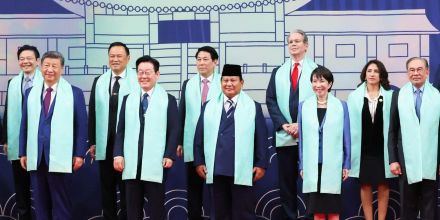
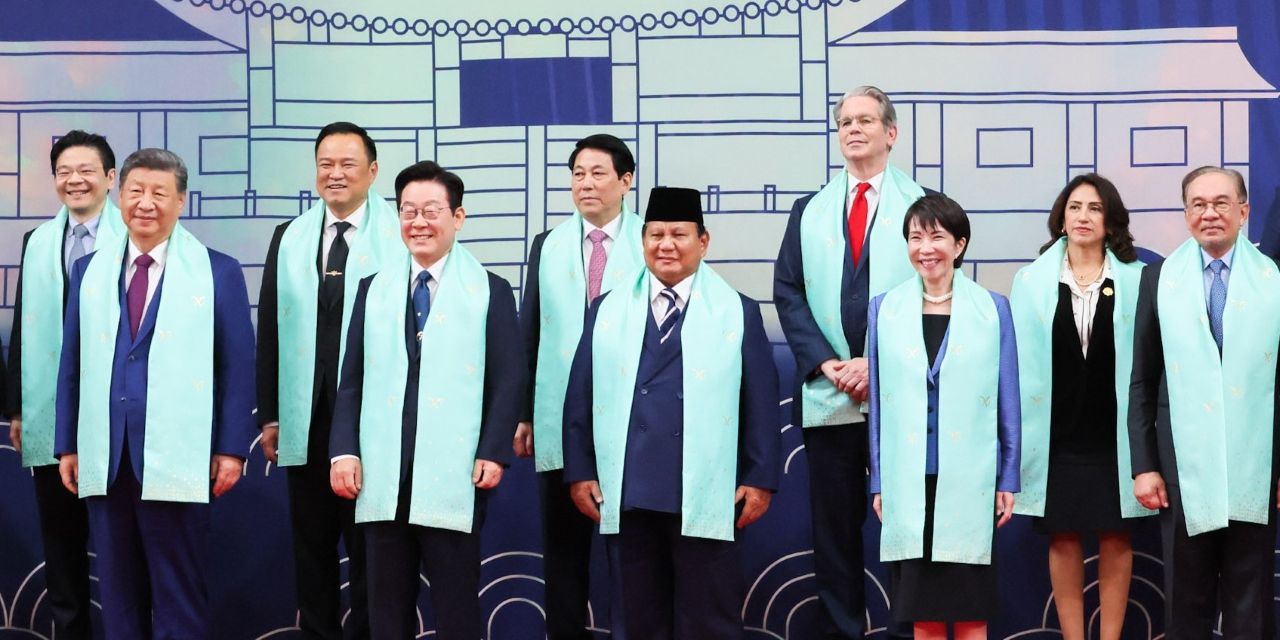
It is true that the Chinese government did not warmly welcome Takaichi’s rise to power, given her previous statements on China-related issues. Nevertheless, Beijing initially adopted a cautious, observant approach. Notably, as Takaichi refrained from actions such as visiting the Yasukuni Shrine or taking an overtly hardline stance on China-related human rights issues, China remained open to high-level engagement. On October 31, 2025, the leaders of both countries met on the sidelines of the APEC Leaders’ Meeting in South Korea, indicating that some diplomatic stability was still achievable at that time.
The strong backlash from Beijing to Takaichi’s Taiwan-related remarks on November 7 can be explained by two factors. First, timing: the remarks came shortly after the leaders’ meeting and, whether intentional or not, were perceived as undermining the diplomatic atmosphere and, importantly, the political standing of China’s leadership. The Chinese Ministry of Foreign Affairs summoned the Japanese ambassador as ‘instructed’ (奉示), indicating that the issue had reached the highest political level. Second, substance: Takaichi’s suggestion that a Taiwan contingency could constitute a situation warranting Japan’s exercise of collective self-defense crossed what Beijing considers a clear red line. While Japan may have contingency planning in place, a sitting prime minister publicly articulating such a position in the Diet was unprecedented.
At first glance, the current situation may resemble the deterioration in China–Japan relations following the 2010 collision near the Diaoyu/Senkaku Islands. However, the present episode is likely to have a deeper and more prolonged impact. Three structural factors help explain why.
First is the centrality of the Taiwan Question. Unlike the territorial dispute over the Diaoyu/Senkaku Islands, where China has, at least in principle, acknowledged the existence of a dispute, the Taiwan Question is framed strictly as an internal matter. From Beijing’s perspective, external involvement constitutes interference in domestic affairs. In this sense, Taiwan has become, and is likely to remain, a key barometer not only for China–Japan relations but also for China’s broader foreign relations. A country’s position and actions on Taiwan are increasingly viewed as a test of whether it respects China’s core interests and adheres to prior political commitments. Against this backdrop, Takaichi has not only refrained from retracting her remarks but has also emphasized Japan–Taiwan cooperation in various settings, suggesting limited room for policy flexibility.
Second is the erosion of political communication channels. In the past, when bilateral relations faced difficulties, influential Japanese politicians with strong ties to China often served as intermediaries. During the administrations of Shinzo Abe and Fumio Kishida, envoys carrying personal letters from the prime minister frequently visited China to facilitate dialogue. Figures from Komeito, then a coalition partner of the LDP, also helped maintain communication. Today, however, many such political actors have exited the stage.
At the same time, a tougher stance toward China has gained greater domestic legitimacy in Japan. Politicians advocating engagement or dialogue risk being labeled ‘pro-China,’ and some reportedly lost seats in the recent lower house election partly due to such perceptions. As a result, both within the ruling coalition and across opposition parties, there are fewer figures willing, or politically able, to actively engage with China.
Third, there is a lack of clear catalysts for improvement. In the short term, there appear to be few immediate opportunities for a diplomatic breakthrough. The Asian Games to be held in Aichi-Nagoya this summer may provide a platform for people-to-people and sports exchanges, which could gradually improve the atmosphere from the bottom up. However, meaningful progress in bilateral relations ultimately depends on high-level political initiative, and such momentum is currently lacking.
One potential opportunity lies in the APEC Leaders’ Meeting scheduled for November in Shenzhen. Drawing on the precedent of the 2014 meeting between Shinzo Abe and Xi Jinping in Beijing, Japan may seek a similar summit. If realized, this could serve as an important turning point. Yet, given the intensity of current tensions and shifts in Japan’s domestic political environment, arranging such a meeting may prove more difficult than in 2014.
China has repeatedly called on Takaichi to retract her remarks on Taiwan. Given Japan’s current political climate, such a retraction appears unlikely. That said, there may still be room for diplomatic manoeuvre. Notably, Chinese Foreign Ministry spokespersons have repeatedly urged Japan to ‘honestly, accurately and fully articulate’ its so-called consistent position on Taiwan, suggesting a possible precondition for resuming meaningful dialogue.
Even so, a window of opportunity remains, provided both sides are willing to stabilize relations. Expanding channels for non-governmental exchange could play a constructive role. More balanced and rational voices need to be heard across borders, rather than allowing emotionally charged narratives to dominate.
At present, however, mutual perceptions are increasingly shaped by negative feedback loops. On the Chinese side, government-issued travel and study warnings have significantly affected public willingness to visit or study in Japan, which might be termed a ‘government-driven’ constraint. On the Japanese side, media portrayals that emphasize negative aspects of China influence public attitudes and discourage engagement; these dynamics can be understood as ‘market-driven’, reflecting the commercial logic of media competition.
At the leadership level, while Tokyo continues to express openness to dialogue, concrete signals remain limited. For example, although Emmanuel Macron had previously signaled France’s intention to invite the Chinese leader to the G7 summit, Japan expressed concerns about such a move; ultimately, during Macron’s visit to Japan, the French government indicated that it would not extend an invitation to the Chinese leader. Yet one might argue that, had Japan not expressed concerns but instead actively supported the invitation, and had China accepted it,, this could have created an opportunity for high-level engagement between China and Japan.
Similarly, in the case of the Self-Defense Forces incident at the Chinese Embassy, neither Prime Minister Takaichi nor the Minister of Defense, Shinjiro Koizumi, responded promptly or substantively. The latter described the incident merely as ‘regrettable’ several days later. Such restrained reactions, while perhaps intended to de-escalate, may also limit the ability to transform a crisis into an opportunity for diplomatic recalibration.
Related articles:
Takaichi and the New Sino-Japanese Cold: When History Becomes the Amplifier (3-minute read)
Strategic Stability without Illusions: Rethinking Taiwan in an Era of Coercion and Constraint (3-minute read)
Japan Stumbles: The Taiwan Fiasco (3-minute read)