
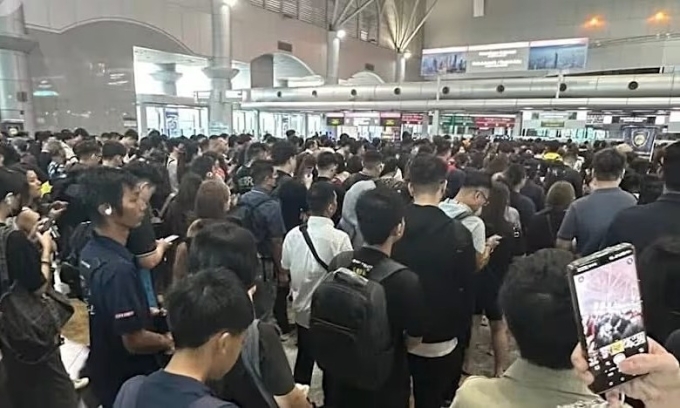
All computer-based immigration systems went down for about five hours, between 4:30 a.m. and 9:30 a.m., forcing officers to clear travelers by hand at the peak of the morning rush, The Star reported. It was the second nationwide breakdown in five weeks, following a similar crash that stranded travelers for about two hours on April 23, and the latest in a run of failures at Malaysia’s borders.
A multi-day autogate outage hit the two Johor crossings with Singapore in January, and a nationwide autogate failure in July 2025 left more than 380,000 foreign travelers stranded, according to Malay Mail.
The January failure struck just as Malaysia launched its Visit Malaysia 2026 tourism campaign, prompting Prime Minister Anwar Ibrahim to tell border authorities the breakdowns “must not happen again,” Asia News Network reported.
Immigration Department director-general Zakaria Shaaban told The Star the latest fault was traced to the data center running the Malaysian Immigration System (MyIMMs). He said the system had been restored after rectifying work and had not been hacked, but warned that the roughly 30-year-old platform could fail again.
“The MyIMMs system is old and I cannot ensure that such a problem will not recur,” he told The Star. “Problems are bound to happen.”
A replacement, the National Integrated Immigration System (NIISe), is due to take over from MyIMMs by 2028, and Zakaria said disruptions could continue until it is fully running. “We will endure them until the NIISe system is ready,” he said.
 |
|
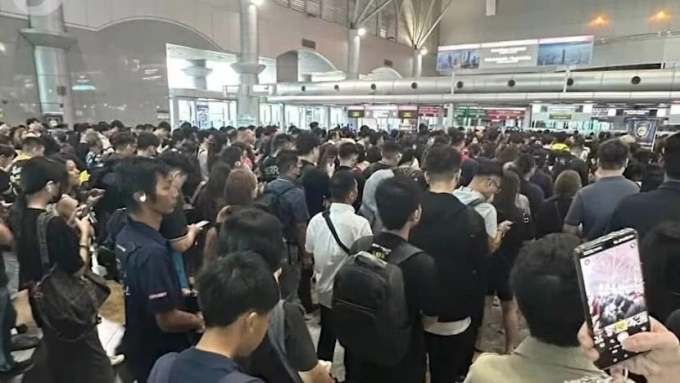
Thousands of people are stuck at border checkpoints between Malaysia and Singapore on May 28, 2026. Photo courtesy of Facebook/Malaysia-Singapore Border Crossers |
Home Minister Saifuddin Nasution Ismail said earlier in May, during a visit to Johor, that the new system’s vendor had been ordered to prepare contingency plans ahead of the Johor Bahru-Singapore Rapid Transit System Link, the cross-border rail line due to open in 2027, The Star reported.
The outage hit most of Malaysia’s 114 immigration checkpoints, which span 56 sea, 30 land and 28 air entry points, a Home Ministry official told The Star. The worst congestion built at the two land crossings into Singapore during peak hours, as tens of thousands of Malaysians who commute to jobs in the city-state tried to get across. Videos and images of the snaking queues spread quickly on social media, AsiaOne reported.
“We had to redeploy all our personnel to man manual counters at the bus halls, motorcycle and vehicles lanes,” the official said. “Not only were our autogates down, even our facial recognition systems were also out.” Extra security personnel were deployed to keep order, the official added.
The crash landed in an already strained travel window. Singapore’s Immigration and Checkpoints Authority had warned on May 22 to expect very heavy traffic at the Woodlands and Tuas checkpoints between May 26 and June 28, a stretch spanning Hari Raya Haji on May 27, Vesak Day on May 31 and the June school holidays.
The authority said it had tightened security checks at all checkpoints since Feb. 28 because of the heightened global security environment, and urged travelers to cross during off-peak hours such as early mornings and late evenings.