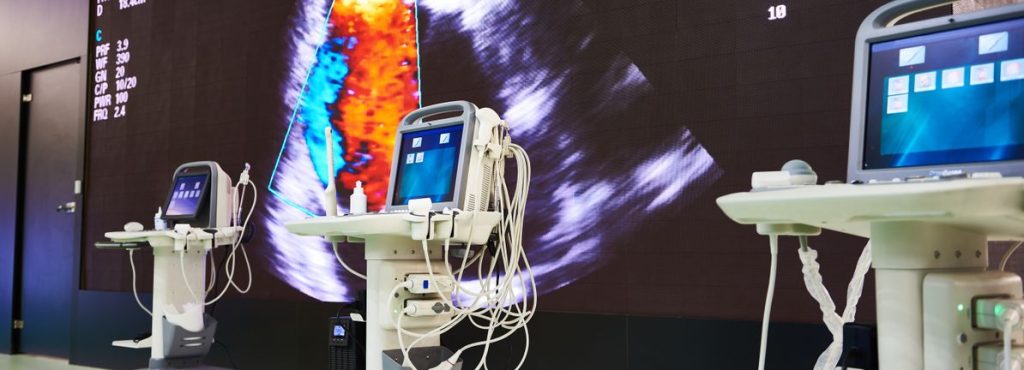
GE HealthCare Technologies (NasdaqGS:GEHC) has launched a digital integration between its bkActiv ultrasound system and Medtronic’s Stealth AXiS surgical navigation platform.
The combined solution is now commercially available for neurosurgical procedures, offering real time imaging support in cranial surgery.
The integration is designed to address brain shift during operations, a key challenge that can affect surgical accuracy.
For investors watching GE HealthCare at a share price of $73.18, this move adds a concrete product milestone to the story. The stock is up 4.0% over the past week and 16.8% over the past year, while year to date performance shows an 11.6% decline. This mix of returns sets the backdrop for assessing how new operating room technology could influence sentiment around NasdaqGS:GEHC.
The new integration targets a specialized but important corner of hospital capital spending: advanced neurosurgical imaging. As hospitals evaluate systems that can improve workflow and intraoperative visibility, this type of solution may help shape how GE HealthCare is viewed within the broader market for surgical technologies. Readers can watch how adoption and clinical feedback around this platform evolve alongside future company updates.
Stay updated on the most important news stories for GE HealthCare Technologies by adding it to your watchlist or portfolio. Alternatively, explore our Community to discover new perspectives on GE HealthCare Technologies.
NasdaqGS:GEHC Earnings & Revenue Growth as at Apr 2026
This integration ties GE HealthCare more closely into the neurosurgical workflow by pairing its bkActiv intraoperative ultrasound with Medtronic’s Stealth AXiS navigation system, which now has FDA clearance for cranial procedures. For you as an investor, that matters because it links GE HealthCare equipment directly to an established neurosurgery platform that many hospitals already use, potentially lowering friction for adoption. The plug and play design, real time visualization during brain shift, and workflow tools like sterilizable controls and Doppler imaging all support a use case that is tightly embedded in the operating room rather than a stand alone device sale. Over time, this type of integration can influence how hospitals allocate capital between GE HealthCare, Medtronic and other large equipment suppliers such as Siemens Healthineers and Philips, particularly in high acuity neurosurgical suites where reliability and interoperability carry weight.
The news supports the narrative theme that new high impact imaging products and partnerships can expand GE HealthCare’s presence in procedure centric settings, especially where advanced visualization is important.
It also raises execution risk, as success depends on how well GE HealthCare and Medtronic coordinate product updates, regulatory pathways and commercial efforts across two different organizations.
The integration into a Medtronic owned navigation platform may not be fully reflected in earlier narrative assumptions that focused more on GE HealthCare’s own installed base and internal product pipeline.
Integrating tightly with Medtronic’s system increases reliance on a partner’s platform, so any change in that relationship, pricing, or product roadmap could affect the value GE HealthCare ultimately captures from bkActiv.
Analysts have flagged that GE HealthCare’s debt is not well covered by operating cash flow, and expanding complex surgical offerings can add investment needs that put more focus on cash generation and capital discipline.
If neurosurgeons find that real time ultrasound during brain shift improves confidence in tumor resections and other cranial work, that could support stronger positioning for GE HealthCare in a premium segment of the operating room market.
The plug and play approach with established Stealth AXiS workflows may lower implementation friction, giving GE HealthCare an avenue to place more equipment and related services into hospitals that already use Medtronic systems.
From here, watch for concrete signals that hospitals are adopting the combined bkActiv and Stealth AXiS solution, such as management commentary on installed base, neurosurgery use cases, or references during upcoming earnings calls. It is also worth tracking how GE HealthCare positions this neurosurgical offering relative to imaging and surgical solutions from Siemens Healthineers and Philips, and whether further product announcements expand the Medtronic alliance into additional procedures or regions over time.
To stay up to date on how the latest news impacts the investment narrative for GE HealthCare Technologies, head to the community page for GE HealthCare Technologies to follow the top community narratives.
This article by Simply Wall St is general in nature. We provide commentary based on historical data and analyst forecasts only using an unbiased methodology and our articles are not intended to be financial advice. It does not constitute a recommendation to buy or sell any stock, and does not take account of your objectives, or your financial situation. We aim to bring you long-term focused analysis driven by fundamental data. Note that our analysis may not factor in the latest price-sensitive company announcements or qualitative material. Simply Wall St has no position in any stocks mentioned.