
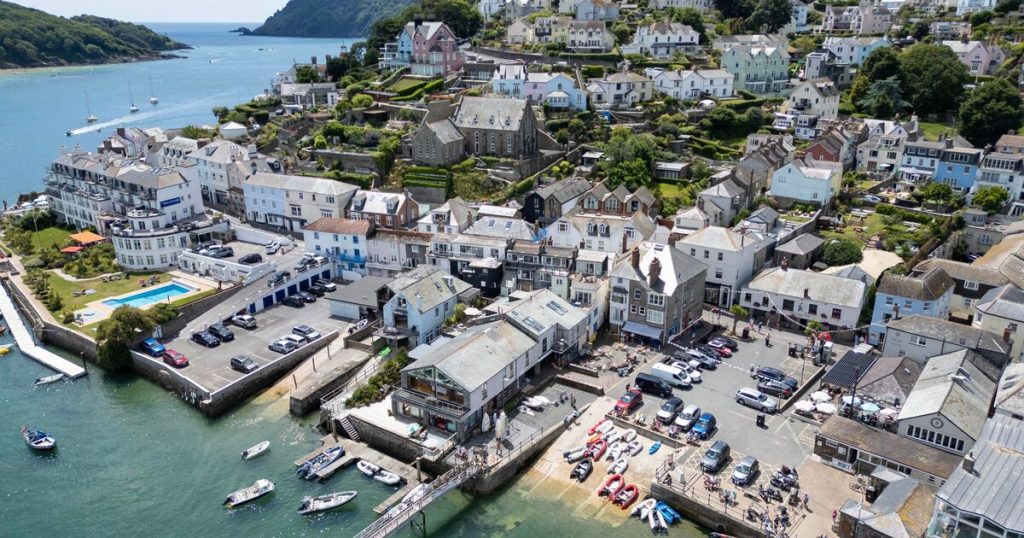

I visited the pretty seaside town known as one of the UK’s most expensive (Image: Jonathan Buckmaster)
One pretty British seaside town was compared to Dubai for its eye-watering house prices and booming second home market. But after visiting the glamorous Devon hotspot, I quickly understood why people are willing to pay so much to be there.
Salcombe was already hugely popular before the pandemic, but Covid sent demand into overdrive as wealthy buyers fled cities in search of fresh air and a slower pace of life. “It was a feeding frenzy,” Blair Stewart from Strutt and Parker told the Daily Mail. “Everybody was trying to bail out of London and they came down here on holiday and woke up to how beautiful it is.”
Comparing it to the UAE, he said the agency saw a 25% price increase on second homes in 2020. “I don’t know anywhere else in the UK that experienced a situation like this, the nearest thing I can compare it to is the property buzz in Dubai when I worked there.”
Read more: The pretty little UK seaside town with Britain’s ‘best crab sandwiches’
Read more: Tiny English village is one of UK’s ‘poshest villages’ — it’s postcard perfect

Sandy beaches near Salcombe (Image: Jonathan Buckmaster)
So last summer I went to the fancy seaside town, also known as the most expensive seaside town in the UK, to see what the hype was about.
Straight away, it was easy to see the appeal. The water looked almost tropical, shimmering turquoise, while the sandy beaches and rolling green hills made the whole place feel postcard-perfect.
Most shops sold locally produced goods, so you can bring home a slice of Devon. The restaurants and cafes served up fresh yet hearty dishes, like the Crab Shed, where you can devour a bursting crab sandwich and piping hot chips.
I thought the town would be absolutely rammed, packed with cars, and full of influencers in the wild – reports say the small community of 2,000 swells to 20,000 during tourist season – so I expected tourists may not be welcomed with open arms.
Salcombe is also often said to have one of the highest concentration of second homes in the country, at around half the housing stock, so South Hams council were one of the first to introduce double council tax for second homes to try and appease residents.

Island Street is full of independent shops (Image: Jonathan Buckmaster)
But we felt welcomed by everyone we spoke to and were assured it’s not so tight-knit that outsiders are not welcomed. Harbour Master Cameron Sims-Stirling said tourism was a “huge part of our everyday living, and keeps us in jobs all year around here”.
Mike Wrigley, who worked in one of the few remaining boat yards on Island Street, said it was “swings and roundabouts” and that “it’s not so much the tourism that’s causing the problem, it is the second homes side of things”.
He said in season, it was nice when the crowds “make the place feel alive again”, and it only really got too much in July and August during the school holidays.
I left thinking I would go back in shoulder season, but only for a couple of days, or as a day visit. It is definitely expensive, but you cannot argue with its beauty.