
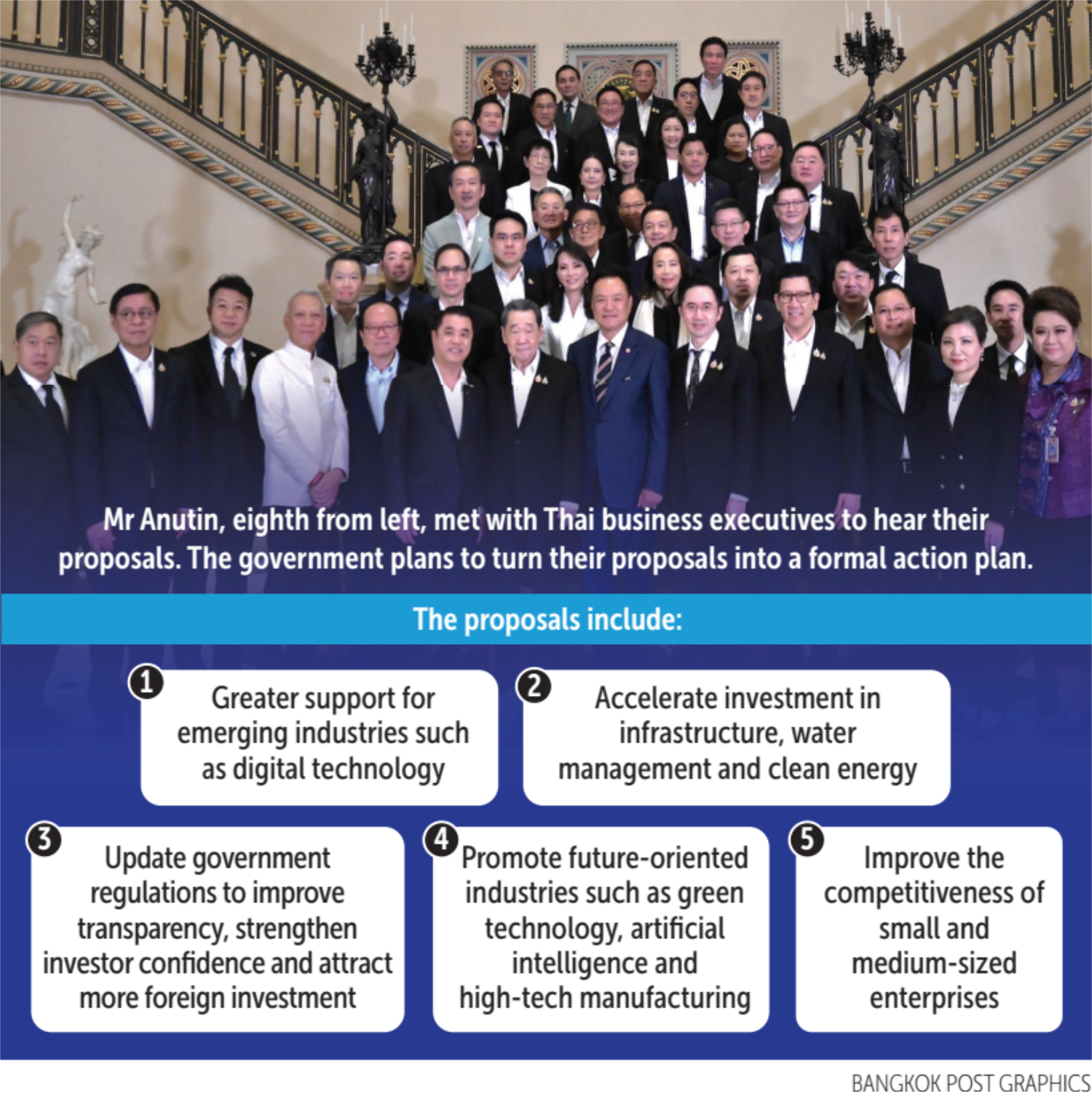
While economists and industry leaders say the proposals by executives to Prime Minister Anutin Charnvirakul on May 15 are practical and should be implemented, they noted more needs to be done by the government to ensure sustainable growth, calling for structural reform focusing on improving small business competitiveness.
Structural reforms
Amonthep Chawla, chief economist at CIMB Thai Bank, said the proposals cover both short-term economic stimulus and long-term growth initiatives, which are reasonable and feasible for the government to implement.
Stimulus measures such as the co-payment scheme support domestic consumption amid sluggish demand, primarily caused by the impact of the war in Iran, he said.
Yet the Thai economy still requires structural reforms to sustain long-term growth, said Mr Amonthep.
Regarding long-term expansion, he said growth depends on both domestic direct investment and foreign direct investment, as well as continued support from the Board of Investment.
In particular, support for infrastructure-related investment should include workforce skill development and the upgrades for small and medium-sized enterprises (SMEs), paving the way for long-term economic sustainability.
SMEs remain a major concern as the segment faces mounting challenges and vulnerabilities stemming from both structural problems and liquidity constraints, said Mr Amonthep.
“The traditional trickle-down approach to SME development, whereby large corporations support smaller businesses, may no longer be as effective as it once was. The government should introduce new and targeted SME development policies to help revive and strengthen businesses,” he noted.
The government issued a 400-billion-baht emergency loan decree, allocating 200 billion for short-term stimulus and 200 billion for investment, which Mr Amonthep described as reasonable because it supports both short-term recovery and long-term growth.
Economic growth in the second quarter this year is vulnerable despite a 2.8% expansion in the first quarter year-on-year, driven mainly by electronics exports, as the recovery has not been broad-based, he said.
Domestic consumption weakened as living costs rose from higher energy prices, pressuring economic growth in the second quarter on both a year-on-year and quarter-on-quarter basis, noted Mr Amonthep.
“Household income may be insufficient to support domestic consumption in the second half of the year, despite the government’s co-payment scheme,” he said.
Supak Lailert, president of the Association of the Thai ICT Industry, said the government should establish a clearer national IT framework and more centralised IT procurement, instead of the current fragmented approach.
The authorities should give preference to domestic service providers in order to build long-term sustainability in technology adoption, rather than overdependence on foreign technologies and overseas vendors, he said.
Focus on SMEs
Independent economist Aat Pisanwanich said Mr Anutin’s meeting with chief executives who oversee businesses accounting for as much as 70% of the country’s GDP presents a positive image, showing he is open to the views of business leaders who have significant influence on the national economy.
However, Mr Aat suggested the premier also hold forums to hear from Thai SMEs, who have been severely affected by the influx of cheap imported goods.
Thailand has around 3 million businesses, most of which are SMEs, while there are roughly 5,000 large corporations. SMEs contribute around 30% of the country’s GDP.
Thai SME products are unable to compete in both online and offline markets because of high production costs, including raw materials, wages, fuel and electricity costs, he noted.
In addition, Thai workers face skill gaps in certain areas, making Thai products uncompetitive on price with imported goods, particularly those from China.
Mr Aat proposed the government introduce regulations to ensure Thai SMEs can remain competitive, similar to measures adopted by other Asian nations.
For example, Indonesia barred certain Chinese online platforms from operating in the country, while India barred Chinese online platforms completely.
Given Thailand’s close relationship with the mainland, banning Chinese online platforms outright could prompt retaliatory measures against Thai agricultural exports, he noted.
An alternative is imposing requirements for these platforms to ensure a minimum of 30% of products sold online are Thai-made, said Mr Aat.
In addition, foreign investors operating in Thailand should be required to source at least 30% of their raw materials from Thai SMEs, he noted.
AGRICULTURAL REJIG
Poj Aramwattananont, chairman of the Thai Chamber of Commerce, called for urgent reforms to the country’s agricultural sector to increase yields, lift farmer incomes, reduce production costs and stabilise product prices for more than 30 million farmers and their families.
The chamber also urged the government to promote the adoption of technology and innovation to upgrade the agricultural supply chain, comprising production, water management, technology integration, marketing and value creation, aiming to ensure sustainable incomes and long-term competitiveness for Thai farmers.
Ongart Kittikhunchai, president of the Thai Food Processors’ Association, said the government, academics and businesses are all aware of the necessary actions required to reform the agricultural sector.
He highlighted the importance of infrastructure, particularly water management, while addressing fundamental issues such as fertiliser and seed varieties and quality.
Infrastructure projects such as irrigation systems require investment at the national level and should be integrated rather than implemented on a localised basis, said Mr Ongart.
“Thailand needs a comprehensive water management system that serves all sectors, including households, industry and agriculture. We face persistent challenges from both flooding and drought,” he said, adding Thailand already has a master plan for water management that requires effective execution.
Moreover, Mr Ongart suggested addressing Thailand’s heavy reliance on imported fertiliser, noting the sector is dominated by a small number of firms.
“We must support the development of local fertiliser production and further liberalise the sector to reduce monopolistic practices,” he said.
If the Middle East conflict continues, Thailand may face a fertiliser shortage as early as June, noted Mr Ongart.
Thailand needs to invest in seed R&D, which requires government support because of the large amount of capital investment involved, he said.
“Seeds are crucial for agriculture, but Thailand lacks plant breeders,” said Mr Ongart.
“We have not provided sufficient support for technological advancement in this field because it needs substantial investment.”
Despite these challenges, he said there is progress in Thailand’s agricultural and food sectors, particularly through the adoption of advanced technologies by large agribusinesses.
“Large companies can utilise advanced technologies and machinery in their operations as these have become more affordable and accessible,” said Mr Ongart, advising independent farmers to form groups and hire providers of agricultural technologies such as drones to service them.
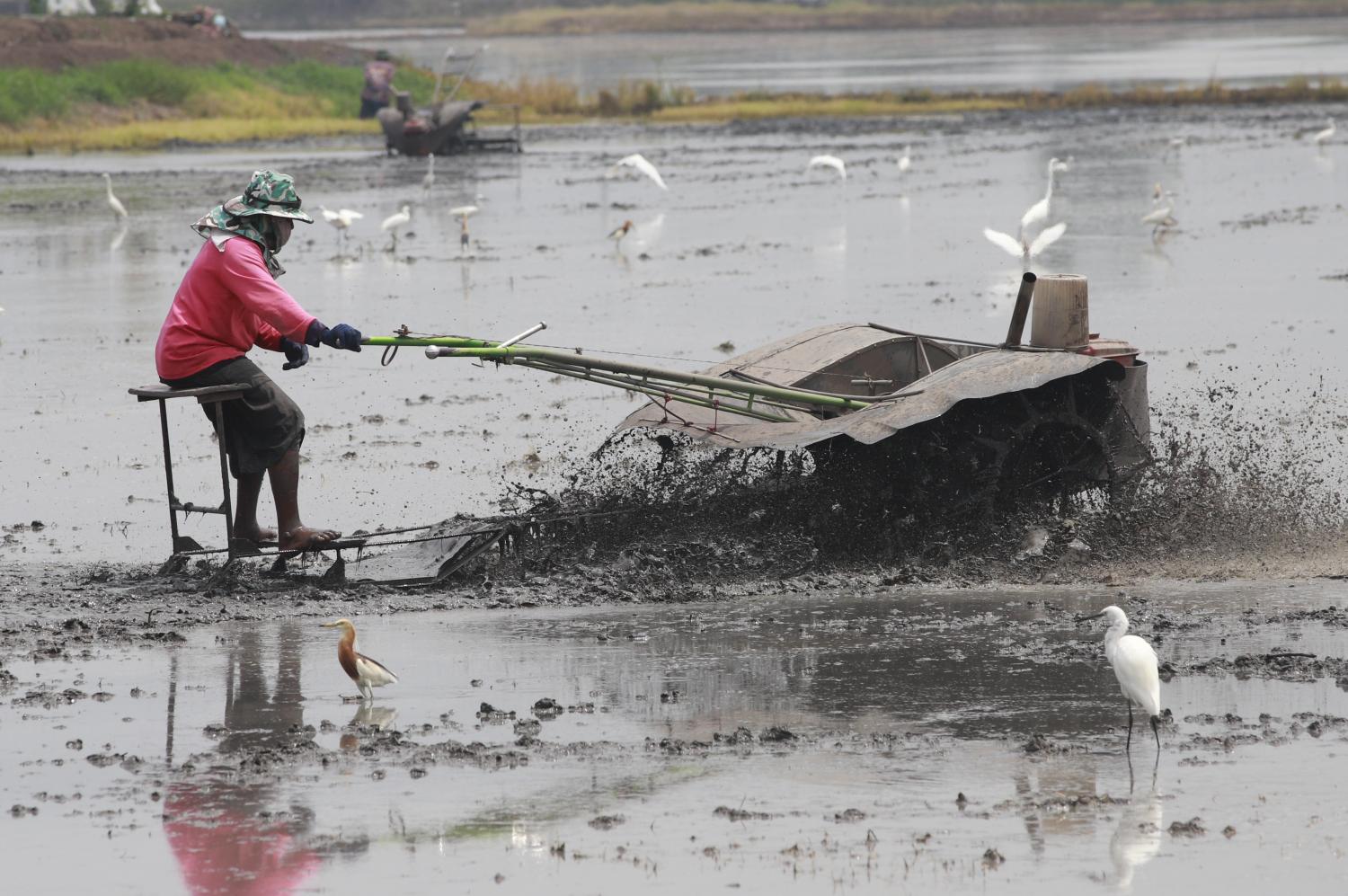
A farmer is ploughing the rice field. Mr Poj says the goverment should make urgent reforms to the country’s agricultural sector. PATTARAPONG CHATPATTARASILL
WELLNESS GOAL
Dr Chumrurn Sorapipatana, deputy chief executive and chief administrative officer of MedPark Hospital, said the government pledged to increase medical tourism among high-spending visitors, so it should invest more in marketing and attract more direct flights from diverse potential markets.
The Middle Eastern medical tourism market was already slowing before the US-Iran war began, as governments in the region reduced subsidies for patients seeking treatment abroad, he noted.
According to MedPark, roughly 40% of its patients are foreigners, including those from Myanmar, Bangladesh, the US, the UK and the Middle East, while 60% are Thai patients.
Thailand must target other potential markets such as Indonesia and Central Asia by encouraging more direct flights, as these markets may be less affected by conflict, said Dr Chumrurn.
The country must also develop safe and convenient transport links between airports, hospitals, accommodation and tourist attractions, he noted.
These patients do more than spend time in hospitals during their stays, visiting attractions across Thailand during their time here, said Dr Chumrurn.
In addition, Thailand should facilitate medical tourist visa applications, ease the process for importing medical products and equipment, and offer additional tax incentives, he said.
Florent Schlit, expat and international business development manager at MedPark, said foreigners with illicit intentions sometimes enter the country by applying for medical tourist visas, then fail to attend treatment at hospitals, which is an issue authorities may want to review.
Dr Chumrurn said due to its diversified patient base, the hospital was less affected by the Middle East conflict compared with other hospitals. MedPark aims to increase the share of international patients to 50%.
Most Middle Eastern patients require specialised medical treatment, which aligns with MedPark’s strategy of positioning itself as a high-acuity, multi-speciality medical centre, he noted.
BIOFUEL POWER
The government should earmark 50 billion baht from its emergency loan package to strengthen Thailand’s biofuel system, lifting clean energy usage and reducing reliance on fossil fuels, said Chaiwat Kovavisarach, chief executive and president of Bangchak Corporation.
Investment in ethanol and methyl ester production would represent sound usage of the 200 billion baht allocated for the energy transition under the government’s 400-billion emergency loan decree, he noted.
The decree has been criticised for breaching constitutional provisions, particularly Section 172, which permits executive action only in cases of unavoidable urgency.
Regardless of the legal debate, the government must start seriously considering its priorities in clean energy policy, Mr Chaiwat said.
Ethanol, derived from sugar cane and cassava, can be blended with gasoline to produce gasohol, while methyl ester from palm oil can be mixed with diesel to create biodiesel.
Both fuels help reduce oil consumption and support efforts to cut carbon dioxide emissions.
He suggested the government subsidise costly methyl ester and support plans to expand sugar cane and palm oil output, making biofuels more competitive with fossil fuels.
This policy would benefit a wide range of stakeholders — from farmers and agro-processing businesses to biofuel producers, retailers and motorists, said Mr Chaiwat.
Biofuel development also offers greater economic returns for local businesses compared with electric vehicles, batteries and solar panel systems, which rely heavily on imported equipment, he noted.
Waste from ethanol production, such as bagasse, molasses and cassava peels, can be converted into biomass and biogas for power generation, while bagasse can also be used to produce second-generation biofuels such as sustainable aviation fuel (SAF).
Bangchak is expanding its refinery and biofuel production capacity, including ethanol, biodiesel and SAF.
Thai energy authorities are preparing to make gasohol E20 and biodiesel B20 — blends containing 20% ethanol and methyl ester respectively — the primary fuels for oil-powered vehicles, a move that can be implemented immediately as some car models are already compatible.
Beyond fuels, Mr Chaiwat highlighted the potential of biofuels to be developed into oleochemicals, used in soaps, detergents, lubricants and cosmetics, as well as raw materials for biopharmaceuticals and biodegradable plastics.
He said these industries could contribute significantly to the Thai economy.
Mr Chaiwat unveiled his proposal after participating in a recent state-private sector meeting, where the government sought input from business leaders on strategies to restore and develop the economy.
BIG VOICES
The proposals from that meeting may not lead to successful outcomes for SMEs, as large companies dominated the suggestions, said Tanit Sorat, vice-chairman of the Employers’ Confederation of Thai Trade and Industry.
“While SMEs are often at the heart of efforts to ease economic problems, the participants at the meeting were mostly magnates,” he said.
Chief executives whose companies are among 1,700 firms listed on the Stock Exchange of Thailand represent a very small portion of Thai companies, said Mr Tanit.
However, government spokeswoman Rachada Dhnadirek said executives at the meeting pushed the need to improve the competitiveness of SMEs and ensure economic growth benefits for local communities, rather than being concentrated in major cities.
The majority of the members of the Federation of Thai Industries are SMEs, and the federation was present at the meeting, said Ms Rachada.
Yet Mr Tanit is not confident the small voices of SMEs will be heard by policymakers.
“I think the meeting was incomplete. The government should have invited small businesses,” he said.
Proposals such as greater use of artificial intelligence and a focus on wellness tourism may not be fully understood by many businesses and people, said Mr Tanit.
The most urgent issue that requires thorough discussion is businesses’ inability to access loans as banks maintain strict lending criteria, he said.
Mr Tanit is afraid many ideas discussed at the meeting were only to “look good on paper”, aiming to build a positive image for the government.
He noted media reports that participants were given about three minutes to air their views.
“That’s not enough,” said Mr Tanit.
Ms Rachada said the government will establish a Joint Public-Private Sector Committee to track implementation of the action plan and conduct a review within six months.