
One of the UAE’s most celebrated public holidays is just around the corner, meaning it’s time to start planning how to spend your time off work.
Eid Al Adha is the second of the two main festivals of Islam, after Eid Al Fitr, and falls in the twelfth and final month of the Islamic calendar.
When is Eid Al Adha 2026 in the UAE?

The Eid Al Adha festival will begin on Dhu Al Hijjah 9 with Arafat Day before rolling into Dhu Al Hijjah 10, 11 and 12.
We now know for certain that, in 2026, this means that Arafat Day will be on Tuesday May 26, while Eid Al Adha falls on Wednesday May 27, Thursday May 28 and Friday May 29.
However, despite the UAE law establishing Arafat Day and Eid Al Adha as official public holidays, the length of time you’ll have off work depends on whether you work in the public sector or the private sector.
Private sector employees will enjoy a six-day break starting from Tuesday May 26 with the final day off rolling into the official weekend on Sunday May 31.
Meanwhile, the public sector will enjoy a nine-day break with the first day off being on the official UAE weekend from Saturday May 23 through to Sunday May 31. This is because Monday May 25 is part of the public sector’s Eid Al Adha public holiday.
School children will also get the same nine days off for the holiday.
You might also like: Here’s when you can expect three Eid holidays in one year (yes, three)
Since the start of January 2025, a new public holiday law is now in place, which means that some public holidays may be carried over to a weekday if they fall on a weekend.
However, this change in the law does not apply to either Eid Al Fitr or Eid Al Adha, so we shouldn’t expect extra days off for any Eid Al Adha dates that take place on a Saturday or a Sunday.
What is Arafat Day?
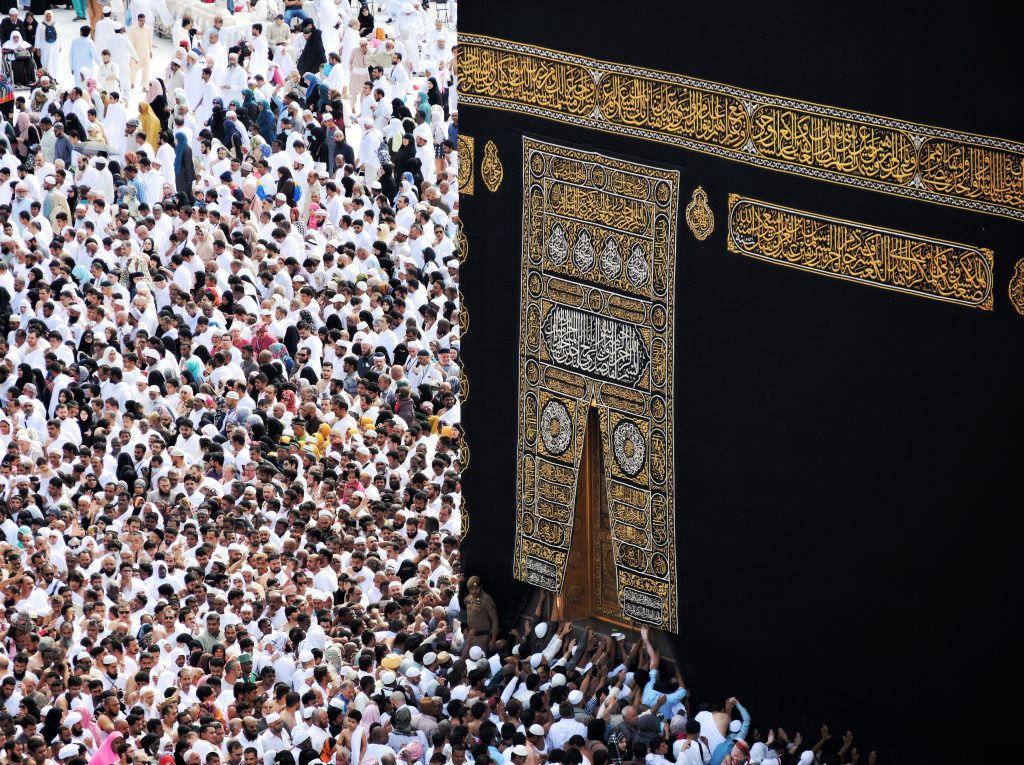
Arafat Day, also known as the Day of Arafah, holds great significance for Muslims around the world. It falls on the ninth day of the Islamic month of Dhu Al Hijjah, roughly 70 days after the end of Ramadan and just one day prior to the festival of Eid Al Adha.
Arafat Day commemorates a key event in the Islamic pilgrimage of Hajj and marks a day of spiritual reflection, unity, and supplication.
Typically, Muslims all around the world, who are not in Mecca doing the pilgrimage, will fast on Arafat Day. It is not mandatory, but it is preferred.
What is Eid Al Adha?
Eid Al Adha is one of two major festivals for Muslims (the first one being Eid Al Fitr). The Muslim festival of Eid Al Adha marks the conclusion of the pilgrimage to Mecca.
The holiday gives Muslims the chance to come together with their community and celebrate with feasts and family time.
Early in the morning of Eid Al Adha, Muslims start the day off with a morning prayer either at home or at the nearest mosque.
It is also a custom among the community to exchange gifts and donate to charitable causes during the festivities. Most Muslims tend to spend most of their first day at home or with their relatives.
During the Eid Al Adha holiday, Dubai will celebrate in multiple ways, including exciting activities, firework shows, live music and so much more across the city.
Why do public holidays change in the UAE every year?
Islamic holidays use the Hijri calendar, which is based on the cycles of the moon, unlike the more widely used Gregorian calendar, which is based on the sun.
The lunar calendar is used predominantly by Muslims around the world to determine the dates of religious events and observances.
This fundamental difference impacts how the calendar operates and why Islamic dates shift annually in relation to the Gregorian calendar.
The Hijri calendar is about to 10 to 12 days shorter than the Gregorian calendar, which is why events like Ramadan, Eid Al Fitr and Eid Al Adha change date every year.
Days off in Dubai
UAE public holidays 2026: All the predicted days off revealed
The dates to know
UAE public holidays law explained: What happens if a day off is on a weekend
The law has now changed
Everything you need to know about annual leave in Dubai
Know your rights