


Journalist, Lianhe Zaobao
The cost of living in Hong Kong is notoriously high, and some Hong Kongers are choosing to move to cities in the Greater Bay Area in mainland China to live and work, in pursuit of a more manageable pace and quality of life. Lianhe Zaobao journalist Tai Hing Shing finds out more.
(Edited and refined by Candice Chan, with the assistance of AI translation.)
For most of her life, Sister Chun, 66, lived in public housing in Hong Kong. After retiring two years ago, she heard from friends that buying property in Zhongshan, a prefecture-level city in Guangdong, was very affordable and conveniently connected by transport. She joined a weekend property-viewing tour to Zhongshan and immediately fell in love with the place, deciding to move there with her husband.
With her savings of HK$800,000 (US$102,000), Sister Chun bought a 100-square-metre, three-bedroom flat in Sanxiang town, Zhongshan — three times more spacious than her home in Hong Kong. At first, she worried she might not adapt, but after settling in, she found that Cantonese was widely spoken, the produce in the wet markets was fresh and inexpensive, and there were even Hong Kong-style cha chaan teng cafés downstairs. The familiar dialect and flavours made her feel very much at home, and she found her quality of life greatly improved.
For elderly Hong Kong residents, one major concern about moving to mainland China is healthcare. However, Sister Chun told Lianhe Zaobao (LHZB) that medical resources between Guangdong and Hong Kong are now increasingly integrated. Some hospitals in Zhongshan accept Hong Kong elderly healthcare vouchers, making treatment both cheaper and more convenient.
Sister Chun begins each morning with a walk around her residential estate and spends her free time having tea and conversations with fellow Hong Kongers who have also retired in Zhongshan. She praises Zhongshan as an ideal place for a peaceful retirement life. In particular, after the Shenzhen–Zhongshan Link — the massive cross-sea infrastructure project connecting Shenzhen and Zhongshan — opened in 2024, it takes her just over an hour to return to Hong Kong to visit her children, allowing her to escape Hong Kong’s crowded living conditions without being far from her family.
Shenzhen was the most popular choice, followed by Guangzhou and Zhongshan.

Sister Chun’s experience is far from an isolated case. After the Covid-19 pandemic ended in early 2023 and normal travel resumed between Hong Kong and mainland China, coupled with increasingly comprehensive transport infrastructure such as the Hong Kong–Zhuhai–Macau Bridge and the Guangzhou–Shenzhen–Hong Kong Express Rail Link, many Hong Kong residents have been travelling north for shopping, long-term stays and retirement, becoming a new social trend in Hong Kong in recent years.
Greater Bay Area a new hotspot
The Hong Kong government has not publicly released statistics on the number of Hong Kong residents relocating north in recent years. However, according to a 2023 survey conducted by Bank of China (Hong Kong), 46% of respondents were considering purchasing property in mainland Greater Bay Area (GBA) cities for holidays or retirement purposes. Shenzhen was the most popular choice, followed by Guangzhou and Zhongshan.
On mainland Chinese social media platforms such as RedNote and Douyin, posts about “Hong Kong residents flocking to the GBA to buy homes” or Hong Kong bloggers reviewing developments in Zhongshan and Zhuhai frequently attract huge numbers of likes and comments from users seeking more details. On Facebook, a social platform commonly used by Hong Kong people, there are also many discussion groups dedicated to “Hong Kong people living in the GBA”, where members regularly share stories about buying property and living in Zhongshan and Zhuhai.
Hong Kong people buying property in the GBA goes back to the early 1990s. At the time, China’s property market was only beginning to commercialise. Following Deng Xiaoping’s southern tour, economic vitality began to emerge and property investment entered a boom period, and developers in Guangdong province launched many new residential projects aimed at Hong Kong buyers.
Agile Property Group, Country Garden and Clifford Estates were among the major developments popular with Hong Kong buyers in places such as Panyu and Zhongshan. These projects appealed to many Hong Kong residents because of their low prices and spacious suburban-style environments. For example, 80% of buyers in the first phase of Clifford Estates in 1991 were Hong Kong residents. Agile Garden Zhongshan initially marketed itself as “the ideal holiday community for Hong Kong and Macau residents”, with as much as 95% of its units sold to buyers from Hong Kong and Macau, making it a genuine “export-oriented property development”.
Whereas previously the focus was mainly on leisure, holidays and property speculation, in recent years the primary purposes have become owner-occupation, retirement and long-term living.
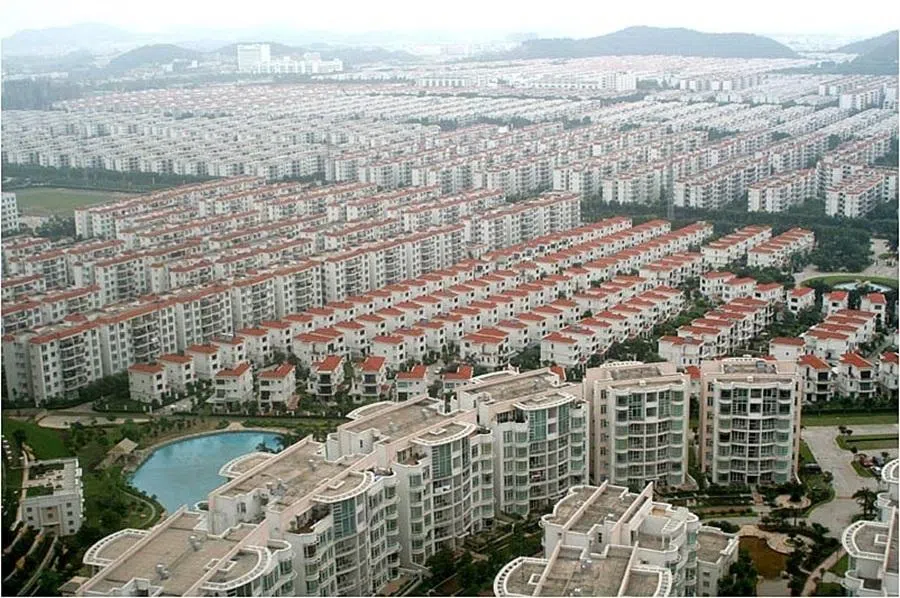
However, mainland property regulations in the 1990s were still underdeveloped, and unfinished projects and scams frequently occurred. In addition, supporting facilities and property management in some estates were poor, construction quality varied, and mainland medical and living facilities were inadequate. As a result, the earlier wave of Hong Kong residents buying homes across the border gradually subsided.
Today, however, Hong Kong people are once again flocking to the GBA to buy property, but their mindset has changed. Whereas previously the focus was mainly on leisure, holidays and property speculation, in recent years the primary purposes have become owner-occupation, retirement and long-term living. Some have even adopted a cross-border working lifestyle, earning money in Hong Kong while living in mainland China.
Working class in Hong Kong, middle class in Shenzhen
Hong Kong writer and travel enthusiast James Akio Hong, 56, is a freelancer who travels around the world. This Lunar New Year, he also chose to purchase property in Shenzhen, becoming one of the growing number of cross-border commuters.
He told LHZB that Shenzhen’s living standards have steadily improved in recent years, while the cost of many goods has fallen because of online shopping. He therefore decided to relocate to Shenzhen and commute between Hong Kong and Shenzhen to better enjoy life.
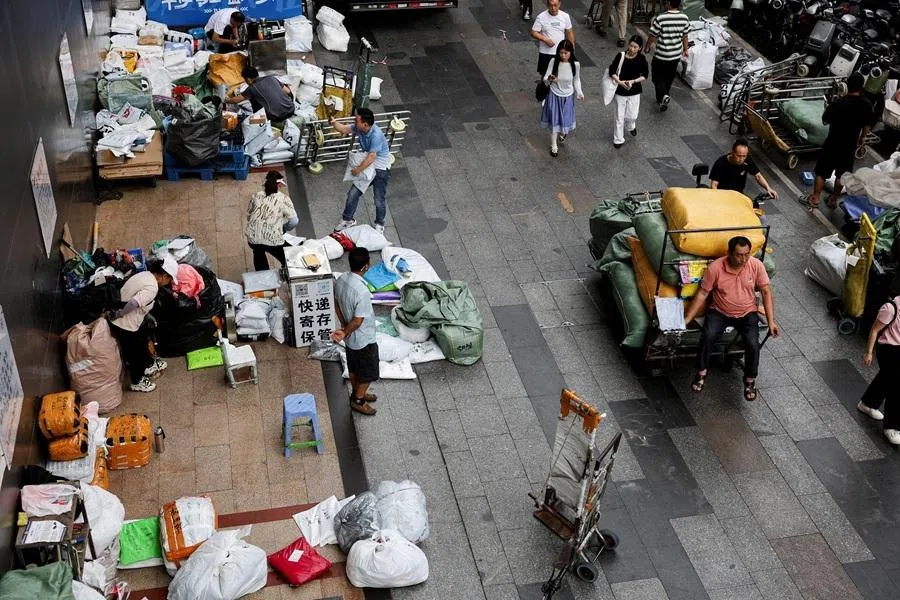
As an example, Hong said that he recently bought a battery in Shenzhen. “In Hong Kong, I would have had to travel several kilometres to a convenience store to buy it. But in Shenzhen, I ordered it online and it arrived at my doorstep within five minutes. It was also very cheap — only 5 RMB (US$0.70).”
… basic retirement expenses over 30 years would total HK$5.4 million. In comparison, the equivalent basic living expenses in Shenzhen over 30 years would amount to only HK$1.5 million.
Using Hong Kong people’s average life expectancy of 85 years as a benchmark, Hong noted that Hong Kong residents generally have nearly 30 years of retirement life. If someone already owns a home and does not need to pay rent, their most basic monthly expenses would still amount to around HK$12,000 to HK$15,000. Ignoring investment returns and inflation, basic retirement expenses over 30 years would total HK$5.4 million. In comparison, the equivalent basic living expenses in Shenzhen over 30 years would amount to only HK$1.5 million.
“In other words, a working-class retirement budget in Hong Kong instantly jumps two social classes and becomes middle class in nearby Shenzhen. You pay the price of scraps of sugarcane but enjoy roast goose-level luxury.”
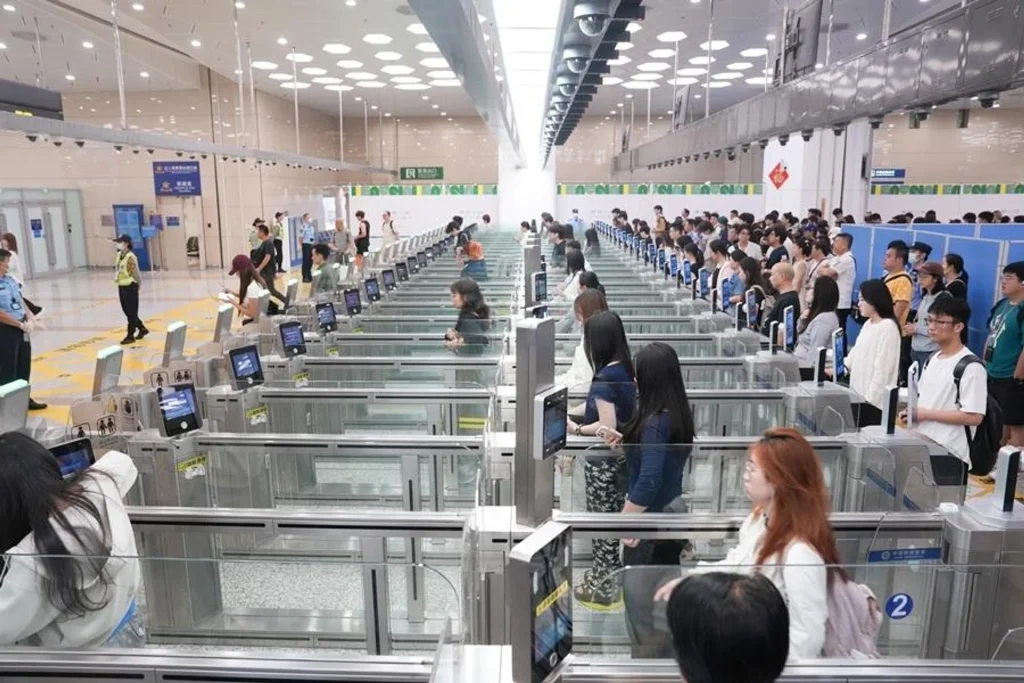
Hong has already decided to maintain this “earning in Hong Kong, living in mainland China” model for the next eight to ten years. He believes that border crossings between Hong Kong and Shenzhen used to be troublesome, often involving queues of half an hour or more, but now many checkpoints operate under the co-location arrangement, making crossings highly efficient. “It only takes about an hour from my home in Shenzhen to the checkpoint, and then back to my home in Hong Kong. Transport is extremely convenient.”
A new kind of ‘northern migration’
The wave of Hong Kong residents relocating north is not limited to people in their 50s and 60s. Gary Lau, 36, is a native Hong Konger who entered the finance industry after university before switching careers a few years ago to become a full-time private tutor teaching mainly online. He too has decided to move to Shenzhen this June.
Speaking to LHZB, Lau explained that while studying at university, he took part in an exchange programme in Shanghai and realised how rapidly the Yangtze River Delta region was developing economically. About ten years ago, after graduation, he worked in Shenzhen and frequently travelled between Hong Kong and Shenzhen. He found Shenzhen’s lifestyle rich and diverse, allowing people to live both fast-paced and slow-paced lives. “Gradually, I realised that instead of reluctantly returning to Hong Kong every time I visited Shenzhen, I might as well seriously consider moving there.”
“Shenzhen is only the starting point. I’d also like to live in Shanghai, Hangzhou or Chengdu to experience different lifestyles.” – Gary Lau, 36, Hong Konger living in Shenzhen
Lau also praised Shenzhen’s flexible cost of living. He said services such as food delivery, online shopping, domestic repairs, laundry and car washing are all extremely mature there, whereas achieving a similar standard of living in Hong Kong would cost much more money. Moreover, he is currently developing his career within the GBA, including promotional work on RedNote, and living in Shenzhen makes it easier to access the mainland market. “Whether it’s meeting different people, filming content or discussing business collaborations, everything is much more convenient.”

However, Lau also noted that while Shenzhen’s roads are usually smooth-flowing, traffic congestion becomes serious during public holidays, major events or severe weather. In addition, Hong Kong and Shenzhen differ in healthcare systems, legal systems and insurance arrangements, meaning Hong Kong residents must adapt to a new environment when living in Shenzhen.
At present, Lau only plans to rent rather than buy property in Shenzhen because the costs are lower and the arrangement is more flexible. “For example, if I live in Shenzhen’s Nanshan district for a year or two and don’t like it, I can simply move elsewhere.” His longer-term goal is to live in different mainland cities in future. “Shenzhen is only the starting point. I’d also like to live in Shanghai, Hangzhou or Chengdu to experience different lifestyles.”
Cross-border retirement an inevitable trend
Hong Kong has one of the world’s longest life expectancies. Lau pointed out that according to Hong Kong government census statistics from several years ago, the median age of Hong Kong’s population was around 50, making population ageing a major issue. He believes many retirees will regard retirement in the GBA as one of their options, and that Hong Kong residents relocating north will become an increasingly significant trend in future.
He added that through his long career as a tutor, he has met many Hong Kong youths in their teens and 20s, some of whom have already graduated. While they believe Hong Kong is a good place, they also do not mind living in Shenzhen or Guangzhou, seeing it as an entirely normal choice.
Combined with broader factors affecting the housing market, property prices in Hong Kong have continued to decline over the past few years, directly affecting transaction volumes in the local real estate market.
Dr Henry Choi, a lecturer in General Education at the Chinese University of Hong Kong, also told LHZB that as Hong Kong’s population ages, buying property across the border will become a major medium- to long-term trend. In particular, private housing prices in Hong Kong are beyond the reach of ordinary salaried workers. Many Hong Kong people who missed the post-2008 global financial crisis property downturn have found home ownership increasingly unattainable, making property purchases in the GBA their only option. “Some Hong Kong cultural figures I know have already bought homes in the GBA for retirement, while many Hong Kong migrants I know choose to work in Hong Kong while renting homes in Shenzhen.”
Choi added that Hong Kong people born in or after the 1990s, much like mainland Chinese citizens, are no longer part of a “home-buying generation”. They no longer regard property ownership as a life goal, but instead pursue balanced lifestyles focused on consumption, travel and entertainment.
For Hong Kong’s younger generation, the GBA offers cheap and diverse dining, leisure and entertainment options. If Hong Kong industries fail to innovate and adapt quickly, their prospects may become increasingly bleak.
Academic: Hong Kong needs to retain people and spending power
Gordon Fan, a lecturer at a Hong Kong tertiary institution, told LHZB that the growing number of Hong Kong people choosing to live and reside in mainland China is causing local consumption power and part of the housing demand to shift outward, bringing certain impacts to Hong Kong society. The retail sector has been among the hardest hit. “Hong Kong residents mainly go to the mainland for lifestyle-related consumption, which has weakened weekend and holiday business for Hong Kong’s retail and food-and-beverage sectors, leading to operational difficulties and even waves of shop closures.”
He pointed out that the GBA’s high-quality living environment and relatively affordable housing prices have also encouraged many working and retired Hong Kong residents to buy homes there, reducing demand for renting or purchasing property in Hong Kong. As a result, Hong Kong property prices have begun to face downward pressure. Combined with broader factors affecting the housing market, property prices in Hong Kong have continued to decline over the past few years, directly affecting transaction volumes in the local real estate market.
Hong Kong government should also continue facilitating cross-border living by promoting deeper integration of healthcare and welfare policies within the GBA. — Gordon Fan, a lecturer at a Hong Kong tertiary institution
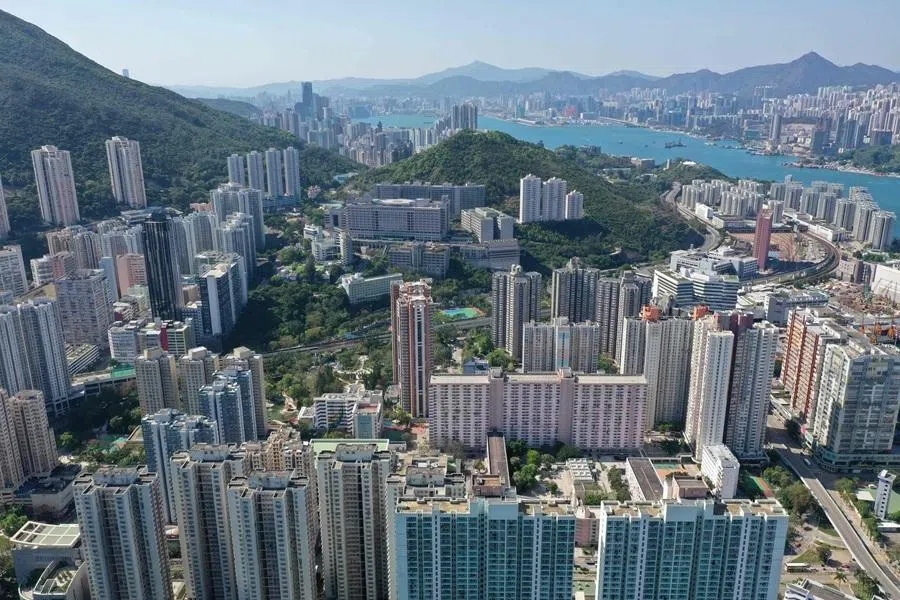
Only recently have Hong Kong property prices begun to recover, aided by stimulus measures such as the removal of cooling measures and increased housing demand driven by talent-attraction schemes.
Nevertheless, Fan stressed that the trend of Hong Kong residents buying property and living in the GBA is an inevitable result of deeper integration within the Guangdong–Hong Kong–Macau GBA, symbolising an expansion of Hong Kong people’s living sphere. Hong Kong residents should view this phenomenon with a positive and open attitude. The Hong Kong government’s most urgent task, he argued, is to improve local living conditions and residential space by accelerating land supply — for example, by advancing development of the Northern Metropolis, providing high-quality residential environments and optimising community facilities to improve living conditions for residents.
He added that the Hong Kong government should also continue facilitating cross-border living by promoting deeper integration of healthcare and welfare policies within the GBA, such as expanding the scope of elderly allowance schemes for use in the GBA so that Hong Kong residents living on the mainland can continue to enjoy high-quality medical and elderly care services. At the same time, “the authorities should also strongly encourage local retail and food-and-beverage industries to develop in higher value-added and more distinctive directions, using unique Hong Kong cultural experiences to attract both tourists and local residents to spend within Hong Kong.”