
Close Menu
Simply Invest Asia
  • Home
  • About us
  • Explore industries/sectors
    • Automobile
    • Aviation
    • Banking
    • Biotechnology
    • Chemical & Fertilizer
    • Entertainment and Media
    • Food Processing
    • Healthcare
    • Iron and Steel
    • Leather
    • Mining
    • Oil and Gas
    • Pharmaceutical
  • Explore by countries
    • China
    • Dubai / UAE
    • Hong Kong
    • India
    • Indonesia
    • Japan
    • Malaysia
  • Explore cities
    • Bangkok
    • Beijing
    • Chongqing
    • Delhi
    • Dubai
    • Guangzhou
    • Jakarta
    • Kuala Lumpur
  • Why Asia
Facebook X (Twitter) Instagram Threads
Trending:
  • Chemical Waste Market Analysis By Application, Type,
  • RADIANT LOGISTICS EXPANDS HONG KONG OPERATIONS AND ESTABLISHES NEW PRESENCE IN SHENZHEN
  • Lack of storage, processing leads to 5.42% tapioca loss in N
  • Dubai Marina Fire: 50-Storey Building Goes Up in Flames
  • Passenger numbers at Dubai airport fall 66 per cent amid Iran war – The Independent
  • China reports surge in payment by overseas individuals during May Day holiday-Xinhua
  • Baykar signs first export deal for fighter drone with Indonesia
  • Maria Kovalchuk’s sheer number of injuries after Dubai attack
  • Hong Kong Touts Events Calendar, Connectivity in Cruise Hub Drive – Cruise Industry News
  • India’s politics of fear and division
  • Malaysia seeks to charge 2 over US$278 million Arm semiconductor deal
  • Guangzhou Automobile Group Boosted by Surging New Energy Vehicle Sales in April 2026
  • There are still 211 Kumuh RW in Jakarta, Pramono: It has decreased by 52 percent 
  • Even in Japan, robots are a long way from being fully-fledged carers – here’s why
  • Iran denies strikes on UAE and warns of devastating response | Ukraine news
  • Gauze dragon returns to HK after nearly half a century
  • Sculpture in middle of ‘Mirror of the Sky’ China lake criticised for disrupting serene beauty
  • Indonesia eyes e-commerce ban for under-16s: minister to AFP
Wednesday, May 6
Facebook X (Twitter) Instagram
Simply Invest Asia
  • Home
  • About us
  • Explore industries/sectors
    • Automobile
    • Aviation
    • Banking
    • Biotechnology
    • Chemical & Fertilizer
    • Entertainment and Media
    • Food Processing
    • Healthcare
    • Iron and Steel
    • Leather
    • Mining
    • Oil and Gas
    • Pharmaceutical
  • Explore by countries
    • China
    • Dubai / UAE
    • Hong Kong
    • India
    • Indonesia
    • Japan
    • Malaysia
  • Explore cities
    • Bangkok
    • Beijing
    • Chongqing
    • Delhi
    • Dubai
    • Guangzhou
    • Jakarta
    • Kuala Lumpur
  • Why Asia
Simply Invest Asia
Home»Explore by countries»Japan»Even in Japan, robots are a long way from being fully-fledged carers – here’s why
Japan

Even in Japan, robots are a long way from being fully-fledged carers – here’s why

By IslaMay 6, 20265 Mins Read
Share
Facebook Twitter Pinterest Threads Bluesky Copy Link


The robot pauses at the edge of the room as an engineer checks its sensors. Then, with a soft mechanical hum, this humanoid machine begins to move. It lifts a mannequin from a bed, slowly and carefully. The engineers hold their breath.

I am in a robotics lab in Tokyo, Japan, as part of my Wellcome research fellowship. The engineers have repeated this test hundreds of times over several weeks, with mixed results.

Japan has one of the world’s oldest populations, and a strained health and care workforce. It has also long been the global leader in the development and deployment of care robots.

While other countries are exploring robotic technologies, Japan stands out for the size of its investment over several decades, and the strong link between innovation and national policy.

Government-led initiatives such as Society 5.0 and Moonshot promote a “super-smart” society in which, by 2050, robots could be integrated into everyday life. One early example is the impending trial of humanoid baggage handlers at Tokyo’s Haneda airport.

My research assesses what the introduction of robots means for care in Japan. This includes ethical and societal questions about affordability, privacy risks, data management and safety – and what the Japanese public thinks about these technologies.

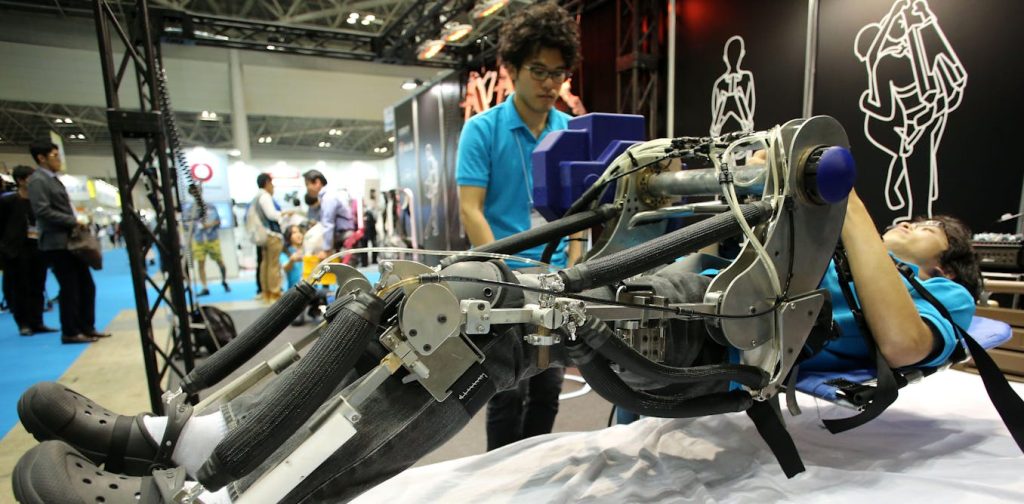
In a care sector that is globally under pressure, different types of robot – from humanoid and pet-like “companions” to more straightforward mechanical aids – could prove useful. Some help lift people, reducing physical strain on care workers. Others remind a patient to take medication, support rehabilitation exercises, and monitor their vitals.

However, my research shows there is still a big gap between staged robotic demonstrations and everyday reality.

Uniquely human skills

Many of the robots I observed were tested in carefully controlled environments. Floors were cleared, lighting was adjusted, engineers stood nearby ready to step in. In some cases, the robots’ actions were partly, if not entirely, controlled from a distance.

In contrast, real care environments are busy, unpredictable and crowded. People move suddenly. Their needs change from moment to moment. Technologies that work well in labs still struggle in these settings.

A carer can notice a change in someone’s mood and adjust how they speak. They can offer comfort without being asked. These are uniquely human skills. As one family caregiver put it: “The promise of robotic care is practical, but the experience of care is emotional – that’s where the tension lies.”

Video: Reuters.

Some family carers and professional careworkers welcomed the idea of robotic assistance, especially for physically demanding tasks like lifting. Others worried that too much reliance on machines could make care feel impersonal.

“To some older adults, these technologies are helpful tools,” said one careworker. “To others, they feel confusing, frustrating – a glimpse of a future they never asked for.”

Such perspectives are often missing from media narratives that focus on robot success stories. In Japan, these are shaped by government strategies and economic priorities. Innovation is never neutral, reflecting political agendas about how society should respond to ageing and labour shortages.

The challenges over care that societies face are not only technical but social, ethical and cultural. They raise questions about what care should be, how it is valued, and what kind of future we want. “Among families and caregivers, hope and hesitation sit side by side,” a technology developer told me. “Efficiency is often welcome, but not at the cost of losing the human touch.”

The future for care?

While Japan has been successful in exporting socially assistive robots such as Paro (a therapeutic robotic that resembles a baby seal) and the humanoid Pepper, China is rapidly expanding the market with more affordable, mass-produced technologies and humanoid innovation.

However, we are still a long way from the vision of care robots feeding, washing and otherwise supporting people in the way human carers do every day. Participants in my research, including technology developers, all agreed that robots should never fully replace human carers.

Technologies that assist with lifting, mobility and routine monitoring are the most likely to become widely used and ethically and socially accepted. In these areas, robots can complement human care rather than try to replace it.

Care is, at its core, a deeply human activity, not just a series of programmable tasks. It relies on relationships, trust and mutual understanding. Robots may support these processes, but they cannot replace them.

Additionally, some technologies are likely to remain expensive, available mainly to well-funded care homes or private users. This raises issues about access to good-quality care.

Care robot developments in Japan show what can be achieved through sustained investment and political support. But they also shed light on the large amount of work needed to ensure responsible research and innovation practices in this area.

The real question is not just what robots can do. It is what kind of care we want in the future – and how technology can support it without deepening inequalities, limiting access to good-quality care, and losing the power of human touch.


Source link

Related Posts

Heavy metal diplomacy: Australia and Japan strike deals on minerals, energy and defence

May 6, 2026

Beijing’s Doghouse Diplomacy Shuts Japan Out Further

May 6, 2026

ANA Plans to Retire Boeing 777 Fleet After Japan Airlines

May 6, 2026
Add A Comment
Leave A Reply Cancel Reply

Top Posts

Abandoned malls, whispers of nuclear war and young foreigners detained. This is what’s REALLY going on in Dubai… and the chilling warning one taxi driver gave to the Mail’s IAN BIRRELL

April 11, 2026

Dubai food conglomerate IFFCO set to go into provisional liquidation – Financial Times

May 3, 2026

Asian Angle | Why Japan-China ties can benefit from promoting people-to-people exchanges

May 3, 2026
Don't Miss

Chemical Waste Market Analysis By Application, Type,

By IslaMay 6, 2026

Chemical Waste MarketThe Chemical Waste Market reached a valuation of 10.78 billion in 2026 and…

RADIANT LOGISTICS EXPANDS HONG KONG OPERATIONS AND ESTABLISHES NEW PRESENCE IN SHENZHEN

May 6, 2026

Lack of storage, processing leads to 5.42% tapioca loss in N

May 6, 2026

Dubai Marina Fire: 50-Storey Building Goes Up in Flames

May 6, 2026
SUBSCRIBE TO OUR NEWSLETTER

Get our latest downloads and information first. Complete the form below to subscribe to our weekly newsletter.


I consent to being contacted via telephone and/or email and I consent to my data being stored in accordance with European GDPR regulations and agree to the terms of use and privacy policy.

Stay In Touch
  • Facebook
  • YouTube
  • TikTok
  • WhatsApp
  • Twitter
  • Instagram
Top Trending

There are still 211 Kumuh RW in Jakarta, Pramono: It has decreased by 52 percent 

By IslaMay 6, 2026

Even in Japan, robots are a long way from being fully-fledged carers – here’s why

By IslaMay 6, 2026

Iran denies strikes on UAE and warns of devastating response | Ukraine news

By IslaMay 6, 2026
Most Popular

Cathay/HSBC Hong Kong Sevens: record single-day crowd party to gripping men’s quarter-finals

April 18, 2026

CATHAY/HSBC HONG KONG SEVENS KICK OFF 50TH ANNIVERSARY CELEBRATIONS IN STYLE

April 18, 2026

SUSE eyes deeper India push as CEO flags growth, open-source demand

April 22, 2026
Our Picks

Yuan Financing in Hong Kong Rises as Global Firms Tap Offshore Market – News and Statistics

April 9, 2026

Ghana’s local automobile assembly industry faces collapse – Automobile Assemblers

May 4, 2026

Kuala Lumpur crash kills Bangladeshi, 1 other

April 11, 2026
SUBSCRIBE TO OUR NEWSLETTER

Get our latest downloads and information first. Complete the form below to subscribe to our weekly newsletter.


I consent to being contacted via telephone and/or email and I consent to my data being stored in accordance with European GDPR regulations and agree to the terms of use and privacy policy.

© 2026 Simply Invest Asia.
  • Get In Touch
  • Cookie Policy
  • Privacy policy
  • Terms & Conditions

Type above and press Enter to search. Press Esc to cancel.

SUBSCRIBE TO OUR NEWSLETTER

Get our latest downloads and information first.

Complete the form below to subscribe to our weekly newsletter.


I consent to being contacted via telephone and/or email and I consent to my data being stored in accordance with European GDPR regulations and agree to the terms of use and privacy policy.