
Japan is increasingly being sidelined at cultural and economic events in China. At an international film festival held in Beijing in April, organizers dropped an annual program that had introduced Japanese films to Chinese moviegoers.
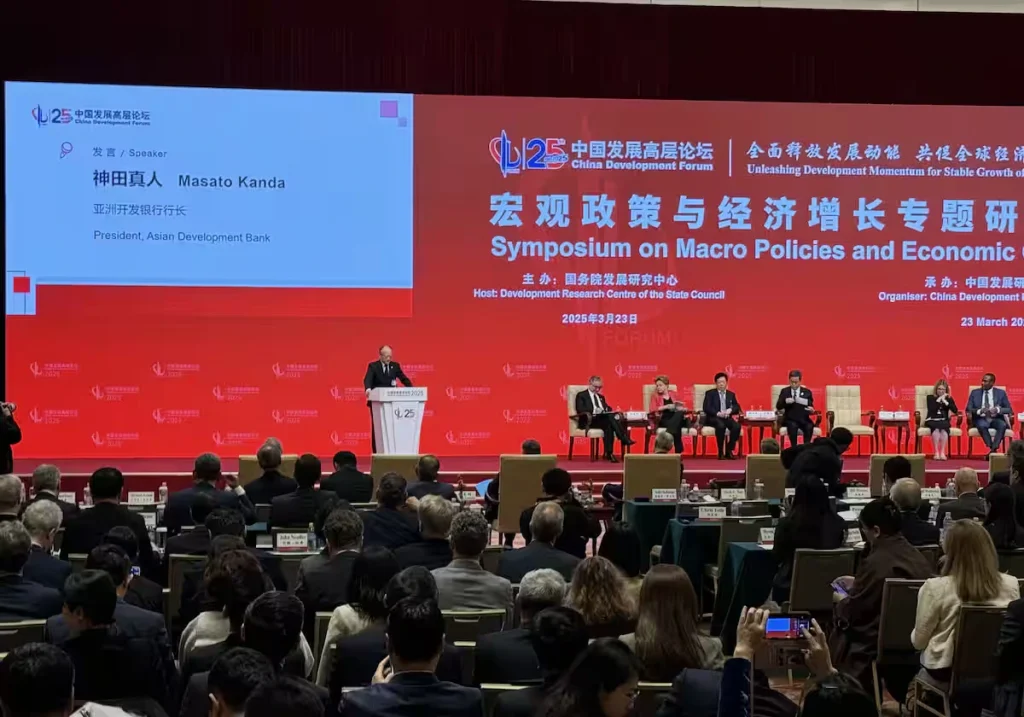
At a Chinese government-hosted economic forum, meanwhile, senior executives from Japanese companies—once regular participants—were nowhere to be seen.
Beijing has stepped up pressure on Tokyo since Prime Minister Sanae Takaichi’s remarks in the Diet last November over a possible Taiwan contingency. But the chill in bilateral relations is now spreading across a widening range of fields.
Japan Off the List
The Beijing International Film Festival, hosted by the municipal government and others, was held from April 16 to 25. Yet Japan Film Week, a related event held annually alongside the festival, did not take place this year. No reason was given, though the deterioration in bilateral relations is believed to have been a factor.
Japan was also absent from the China Development Forum, a high-level economic gathering hosted in Beijing by the government in late March and attended by corporate leaders from China and abroad.
Not a single Japanese corporate executive appeared on the list of participants released by the organizer. Last year, executives from companies including Hitachi and Mizuho Financial Group attended the forum.
The South China Morning Post, a Hong Kong-based English-language newspaper, suggested that the wholesale exclusion of Japanese executives was linked to continuing diplomatic friction between China and Japan.
Not Accidental
The snub does not appear to be accidental. In late March, the Boao Forum for Asia, a China-led international organization, held its annual conference in Boao, Hainan Province. The forum brings together political and business leaders from Asia and beyond to discuss economic cooperation and other pertinent issues. There, too, no top executives from Japanese companies appeared on the list of participants.
A dialogue session between Japanese and Chinese business figures was also skipped this year. Last year’s session had included Cheng Yonghua, China’s former ambassador to Japan, and Yuji Miyamoto, Japan’s former ambassador to China.

“Since Prime Minister Takaichi’s Diet remarks in November, even local government officials who once readily met visiting Japanese corporate leaders have become unreachable,” said a Japanese business source in Beijing.
A joint business delegation to China, led by the heads of Keidanren and the Japan-China Economic Association, decided to postpone its visit to Beijing scheduled for January. The delegation continued to explore options, but the trip never materialized.
The delegation had visited China every fiscal year since 1975, except during the COVID-19 pandemic. Even in 2012, when bilateral ties deteriorated sharply after Japan nationalized the Senkaku Islands, a visit originally scheduled for September that year was postponed but eventually took place the following March.

The Doghouse Tactic
Among diplomats in Beijing, one phrase is now making the rounds: “doghouse diplomacy.”
The “doghouse” is a metaphor for being punished after doing something wrong. In an article last December, The Economist used the term to describe China’s practice of penalizing countries it believes have crossed its red lines—often as a warning to others.
The current effort to sideline Japan, including Beijing’s call for Chinese citizens to refrain from visiting the country, fits neatly into that pattern.
But Japan is not the first to find itself in China’s doghouse. Canada, whose ties with Beijing deteriorated after the 2018 arrest of a senior Huawei executive, has also been subjected to similar treatment.
“I feel sympathy for Japan right now,” said one Beijing-based diplomat from an Asian country. “Any country can find itself singled out by China.”
A source familiar with Japan-China relations described the moves to exclude Japan as standard fare for Beijing. “This is how China operates,” the source said. “Japan has no choice but to endure it with strategic patience.”
Tokyo will need to take the long view in responding to the pressure, the source added
RELATED:
Author: Shohei Mitsuka, The Sankei Shimbun
(Read this article in Japanese)