
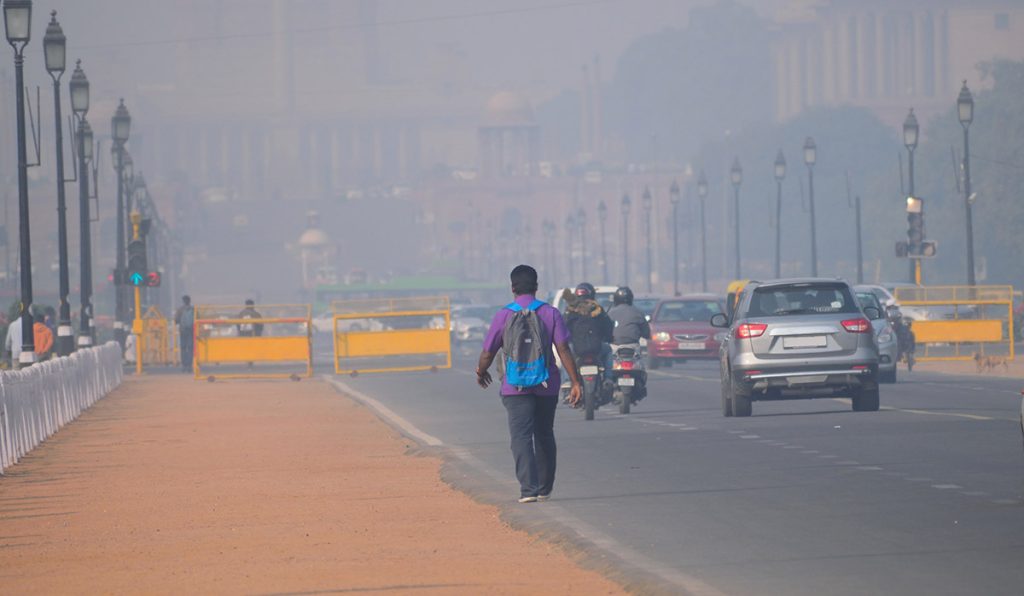
On Earth Day 2026, themed “Our Power, Our Planet”, the spotlight is on the role each of us plays in shaping a sustainable future. While air pollution is often seen as a policy or technological challenge, its solutions lie just as much in everyday choices. In India, improving air quality will depend not only on systems and infrastructure, but on empowering citizens to become active participants in the air they breathe.
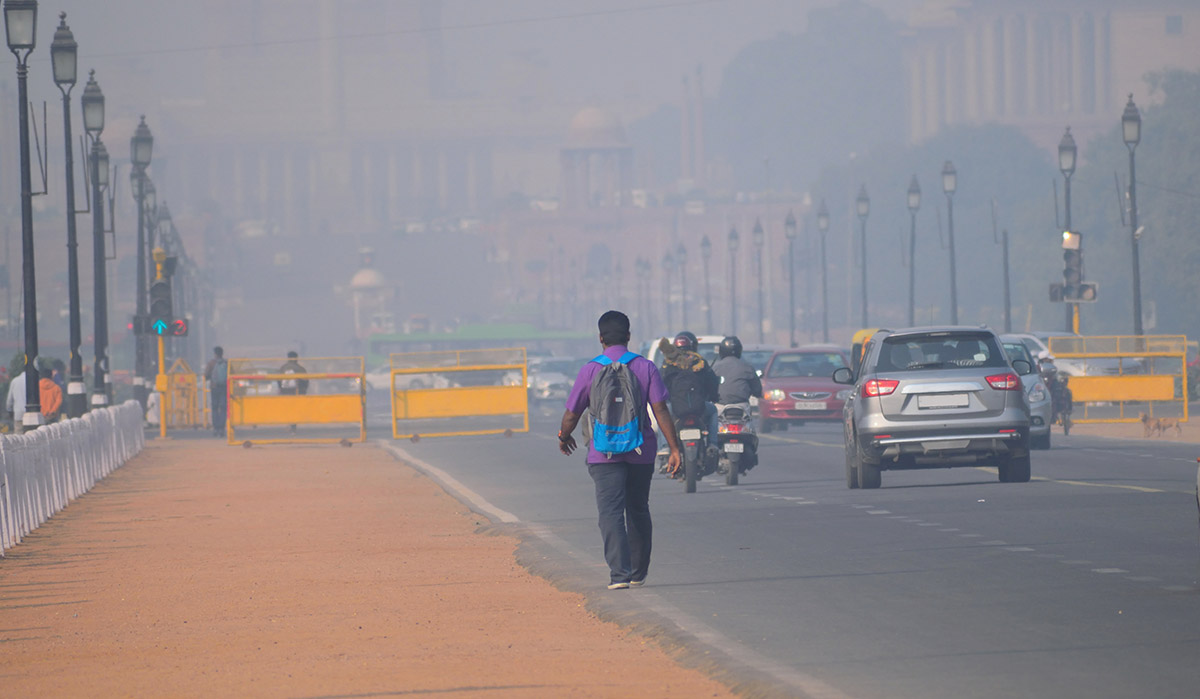
Air pollution in India is often framed as a problem of policy failure, industrial emissions, or vehicular growth. While all of these are undeniably important, such a framing risks overlooking a powerful and immediate lever for change, citizens themselves. Clean air does not begin in government notifications or technological breakthroughs; it begins at home, in everyday decisions made by millions of people. If India is to meaningfully improve its air quality, the conversation must shift from seeing citizens as passive recipients of policy to recognizing them as active participants in shaping the air they breathe.
The scale of India’s air pollution challenge is staggering. A large share of the population continues to be exposed to pollutant levels exceeding national standards, with serious implications for public health. Global estimates suggest that millions of deaths each year are linked to air pollution, and India bears a disproportionate burden of this crisis. Yet, what makes the issue particularly complex is the diversity of pollution sources. It is not just tailpipes and smokestacks; it is also the dust from roads, the burning of waste, emissions from households, and a range of small, diffuse activities that collectively degrade air quality.
Research led by The Energy and Resources Institute (TERI) has been instrumental in unpacking this complexity. Through source apportionment studies and emission inventories across multiple cities, TERI has shown that urban air pollution is highly localized and context specific. In some cities, road dust emerges as a dominant contributor to particulate pollution, sometimes accounting for a substantial share of PM10 levels, while in others, residential fuel use or waste burning plays a more prominent role. These findings challenge simplistic narratives and emphasize an important truth: effective solutions must be rooted in local realities.
At the same time, TERI’s work also highlights the interconnected nature of air pollution. Pollutants do not respect administrative boundaries. Regional influences, including agricultural burning and rural fuel use, often shape urban air quality, particularly in densely populated airsheds like the Indo-Gangetic Plain. This means that while city-level action is critical, it must be complemented by broader regional strategies. However, even within this complex web of sources and influences, the role of citizen behaviour stands out as both significant and actionable.
Many of the activities that contribute to air pollution are deeply embedded in daily life. The choice to drive a short distance instead of walking, the practice of burning leaves or household waste, the use of inefficient appliances, or the handling of construction materials without dust control, these may seem like minor, isolated actions. Yet, when multiplied across millions of households and neighbourhoods, their cumulative impact is enormous. Unlike large infrastructure projects or industrial transitions, which require time and capital, behavioural changes can be implemented immediately and at relatively low cost.
This is precisely why initiatives such as TERI’s Clean Air Project in Indian cities place strong emphasis on public engagement and awareness. By working with communities, schools, and local institutions, such efforts aim to translate scientific insights into everyday action. They recognize that data alone does not clean the air; people do. When citizens understand where pollution comes from and how it affects their health, they are more likely to adopt cleaner practices and demand accountability from local authorities.
The household, in this context, becomes the first and most important site of intervention. Indoor air pollution remains a serious concern, particularly in homes that rely on polluting fuels or lack adequate ventilation. Transitioning to cleaner energy sources, improving ventilation, and adopting energy-efficient appliances can significantly reduce exposure to harmful pollutants indoors while also contributing to lower emissions overall. Equally important is the need to eliminate practices such as open waste burning, which continues to be a persistent source of urban air pollution despite being both preventable and illegal in many areas.
Beyond individual households, the neighbourhood offers a powerful scale for collective action. Simple, locally driven measures, better waste segregation, composting, dust control at construction sites, maintenance of green spaces, and promotion of shared mobility, can deliver tangible improvements in air quality. TERI’s work on local air quality management plans reinforces the idea that solutions must be tailored to the specific conditions of each city and even each neighbourhood. There is no universal template; what works in one context may not work in another.
At the heart of these efforts lies the question of awareness. For too long, air pollution has been treated as an invisible problem, noticed only when it reaches extreme levels. By investing in awareness campaigns, citizen workshops, and school programmes, institutions like TERI are helping to make the invisible visible. This shift is crucial because awareness is the first step towards both behavioural change and civic engagement. An informed citizen is not only more likely to adopt cleaner practices but also more likely to hold institutions accountable.
Technology, often seen as the primary solution to air pollution, must be understood in this broader context. Innovations such as electric vehicles, real-time air quality monitoring, and cleaner industrial processes are essential, but they are not sufficient on their own. Without corresponding changes in behaviour, their impact can be limited. Promoting electric vehicles, for instance, will have only partial benefits if it does not also reduce the overall dependence on private transport. Similarly, air purifiers may offer temporary relief indoors, but they do little to address the sources of pollution outside.
The path forward, therefore, lies in integrating technological solutions with behavioural change. Data and science must inform not only policy but also everyday decisions. Citizens must be empowered with information, supported by local institutions, and encouraged to participate actively in clean air initiatives. This requires a shift in how air pollution is communicated and addressed, from a top-down, technocratic approach to a more inclusive, participatory model.
Ultimately, clean air is a shared responsibility. Governments and industries have a critical role to play, but they cannot succeed in isolation. The everyday actions of citizens, multiplied across millions of homes and communities, hold the potential to either undermine or reinforce policy efforts. TERI’s body of work offers a clear message: when scientific evidence is combined with citizen engagement, meaningful change is possible.
India’s air pollution crisis is undoubtedly complex, but it is not unbeatable. The solutions are not confined to laboratories or policy documents; they exist in the choices people make every day. Clean air, quite simply, starts at home. And if that idea takes root across households and neighbourhoods, it could well define the future of India’s air quality.