
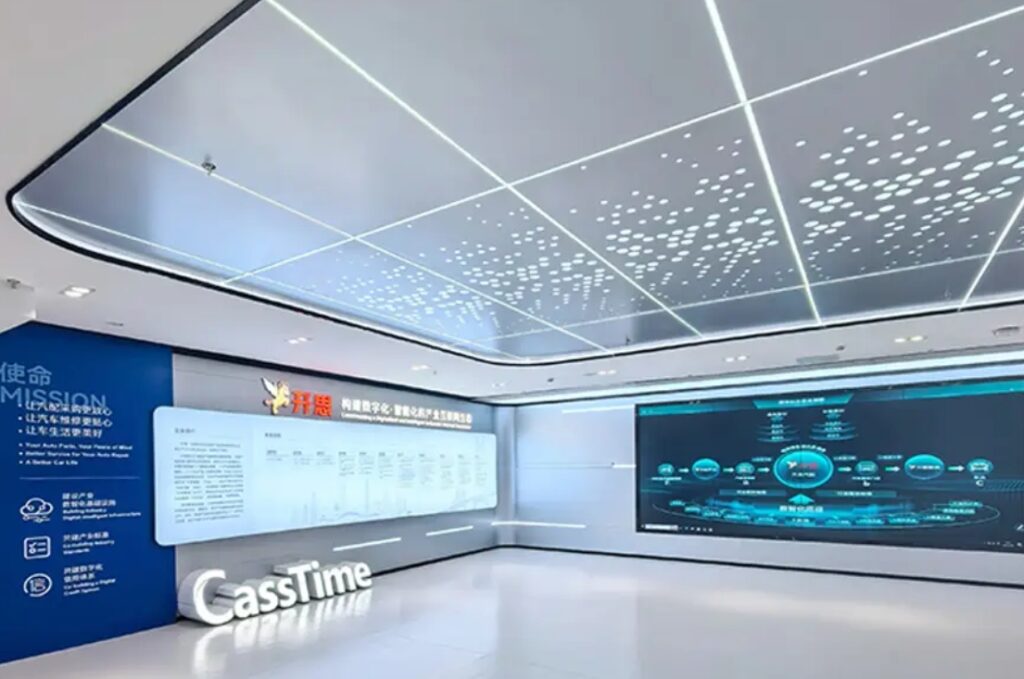
The operator of a digital hub for automotive components and services is seeking a Hong Kong listing, citing plans to expand its coverage to meet rising demand
image credit: Bamboo Works
Key Takeaways:
- Casstime increased its revenue and gross profit last year, but logged a wider net loss, hit by operating costs and fair-value changes
- Its shareholders include Shanghai Capital and Germany’s Bosch
With signs of a pick-up in some automotive stocks, a car parts and servicing platform has joined the convoy of companies heading to the equity market.
Casstime Holdings Ltd., which focuses on China’s automotive aftermarket, has applied to list on the Hong Kong Stock Exchange, with China International Capital Corp (CICC) as the sole sponsor.
Casstime operates platforms to facilitate the maintenance and repair of vehicles after they are sold, by matching businesses such as workshops and parts suppliers. It foresees rising demand from the boom in electric vehicles, whose batteries or other systems need to be periodically replaced or upgraded.
Founded in 2015, Casstime launched desktop versions of its auto parts trading platform and services system the following year and has since folded in a suite of artificial intelligence features for smart matching. Current backers include Shunwei Capital, which counts Xiaomi founder Lei Jun as one of its stakeholders, as well as Fosun International and Germany’s Bosch.
The aftermarket encompasses products and services to maintain, repair or modify a vehicle over its lifetime. From 2021 to 2025, the mainland Chinese aftermarket grew at a compound annual growth rate (CAGR) of 4.8%, outpacing the global average of 2.1%, according to industry research cited in the IPO application. As new energy vehicles (NEVs) gain stronger traction, the study projects the market will reach 2.2 trillion yuan ($320 billion) by 2030.
Compared to fuel-powered vehicles, NEVs have shorter product lifecycles and a faster pace of updates. As a result, distributors need to stock a wider and more complex set of components, each with a distinct code for inventory tracking.
The NEVs with their three main electrical parts – the battery, the motor and the control system – combine attributes of a traditional combustion engine with the iterative characteristics of electronic products. These factors, coupled with battery degradation and progress in vehicle intelligence, drive growth in the volume of parts that must be stored and processed.
The company said it would spend the IPO proceeds on expanding its parts stores and coverage to build what it called a comprehensive matrix, as well as investing in digital infrastructure and logistics.
Costs erode the bottom line
The company’s revenue comes from three main segments: the factory-to-business brand CassChoice, the business-to-business CassMall and value-added services.
CassChoice sources automotive parts directly from manufacturers and sells them to distributors. CassMall operates as a one-stop trading platform for auto parts, matching workshops with suppliers in real time and collecting a commission on transactions. The third strand is made up of subscription fees for its workshop management system as well as commissions from logistics services.
Last year, the sourcing platform CassChoice was the largest revenue earner, but the parts trading site CassMall, with much higher margins, provided a bigger chunk of profits.
CassChoice accounted for 70.8% of 2025 income, followed by CassMall at 23.1% and value-added services at 6.1%. When it came to gross profit, CassMall jumped to the top of the rankings at 200 million yuan, with services adding 45.3 million yuan and CassChoice lagging with 20.25 million yuan.
Spending outpaces gross profit
Casstime boasts a roster of prominent shareholders, but it is still far from breaking even. Meanwhile, Anthropic’s launch of agentic AI tools in February has sent shockwaves through the market, hurting software and platform stocks worldwide.
To subscribe to Bamboo Works free weekly newsletter, click here
Benzinga Disclaimer: This article is from an unpaid external contributor. It does not represent Benzinga’s reporting and has not been edited for content or accuracy.