
Published on
July 2, 2026

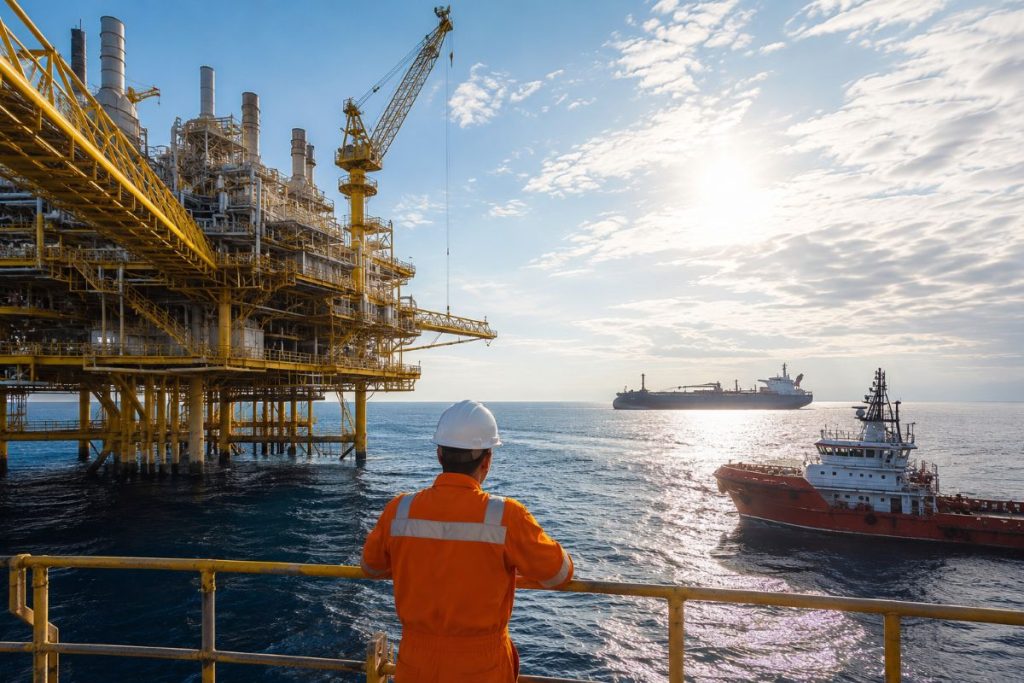
Image generated with Ai
The United Kingdom is witnessing a renewed political debate over the future of North Sea oil and gas exploration, a discussion that extends well beyond the energy sector into tourism, regional development, investment, and international travel confidence. As the Labour government faces growing pressure from some political leaders and industry representatives to reconsider its position on new drilling licences, Scotland once again finds itself at the centre of one of Europe’s most significant economic and environmental conversations. The outcome could influence not only Britain’s energy security but also the attractiveness of coastal destinations, infrastructure investment, and visitor confidence across the region.
For the travel industry, the North Sea debate carries broader implications than energy production alone. Scotland’s offshore sector supports thousands of jobs that sustain hospitality businesses, airlines, regional airports, hotels, restaurants, and tourism operators throughout Aberdeen, the Highlands, and surrounding coastal communities. At the same time, the government’s commitment to climate goals continues to shape the country’s international image as a sustainable destination. Finding a balance between economic resilience and environmental responsibility has become one of the defining policy challenges influencing both domestic and international tourism.
Labour Faces Growing Debate Over North Sea Oil and Gas Policy
The Labour government is under increasing political pressure as discussions intensify over whether new oil and gas drilling licences should be permitted in the North Sea. While Labour has maintained its commitment to ending the issuance of new exploration licences, several political voices have argued that changing global energy markets and geopolitical uncertainty warrant a fresh review of the policy.
Supporters of expanding domestic production argue that North Sea resources remain strategically important for maintaining energy security, protecting employment, and reducing dependence on imported fuels. Opponents continue to insist that expanding fossil fuel production would undermine Britain’s climate ambitions and delay investment in renewable energy.
| Labour Policy Position | Current Debate |
|---|---|
| No new exploration licences | Pressure to reconsider policy |
| Support for existing fields | Continued production from approved projects |
| Focus on renewable transition | Balancing energy security and climate targets |
| Net-zero commitment | Economic competitiveness concerns |
Scotland Remains at the Centre of Britain’s Offshore Economy
Scotland continues to play a central role in the UK’s offshore energy industry. Cities such as Aberdeen have developed into internationally recognised energy hubs, supporting thousands of highly skilled workers while attracting global investment throughout the supply chain.
The offshore sector contributes significantly to regional economies, with engineering firms, logistics companies, marine operators, accommodation providers, and transport services all benefiting from energy-related activity. Any policy shift affecting North Sea production therefore carries consequences for numerous industries beyond oil and gas.
Advertisement
Advertisement
| Scottish Economic Sector | Tourism and Travel Impact |
|---|---|
| Offshore energy | Supports business travel demand |
| Engineering services | Drives hotel occupancy |
| Maritime operations | Benefits ferry and port activity |
| Regional employment | Sustains local hospitality businesses |
Energy Security Debate Extends Beyond the United Kingdom
The discussion surrounding North Sea production is also being closely watched across Europe. Recent geopolitical tensions and volatile global energy markets have highlighted the importance of secure domestic energy supplies for many countries.
Supporters of continued North Sea development argue that locally produced oil and gas could provide greater stability while reducing reliance on imports from overseas suppliers. Critics respond that long-term energy resilience depends on accelerating renewable energy investment rather than expanding fossil fuel extraction.
Advertisement
Advertisement
For international investors and multinational businesses, policy certainty remains a key consideration when evaluating future commitments within the United Kingdom.
| Global Factor | Potential Influence |
|---|---|
| Energy price volatility | Higher operating costs |
| International conflicts | Greater focus on domestic production |
| Climate commitments | Increased renewable investment |
| Supply chain resilience | Long-term infrastructure planning |
Tourism Industry Watches Economic Implications
Although the debate primarily concerns energy policy, tourism stakeholders are carefully monitoring developments because regional economies and visitor infrastructure are closely linked.
Business travellers connected to the offshore sector contribute substantially to hotel occupancy, conference venues, restaurants, airlines, and local transport services throughout Scotland. Stable employment within the energy industry also supports consumer spending that benefits tourism businesses operating year-round.
Meanwhile, Scotland’s growing reputation as a sustainable destination remains equally important for attracting environmentally conscious international visitors. The challenge for policymakers is balancing economic growth with environmental leadership without damaging either objective.
Advertisement
Advertisement
| Tourism Segment | Possible Impact |
|---|---|
| Business travel | Stable corporate demand |
| Hotels | Continued occupancy |
| Airlines | Sustained regional connectivity |
| Restaurants | Local economic activity |
| Visitor attractions | Stronger domestic spending |
Climate Commitments Continue to Shape Government Decisions
The United Kingdom has committed to achieving net-zero carbon emissions while expanding renewable energy capacity. This commitment remains one of the government’s defining policy priorities.
Environmental organisations argue that approving additional oil and gas projects could weaken Britain’s credibility during international climate discussions. They also point out that increased domestic production does not necessarily reduce energy prices because oil and gas are traded within global markets.
Government ministers therefore continue seeking policies that maintain economic competitiveness while accelerating investment in offshore wind, hydrogen, carbon capture technologies, and clean energy infrastructure.
| Climate Objective | Government Focus |
|---|---|
| Net-zero emissions | Long-term priority |
| Offshore wind | Major investment |
| Green industries | Employment growth |
| Carbon reduction | International commitments |
Regional Communities Balance Employment and Sustainability
Communities across northeast Scotland have spent decades building expertise around offshore energy production. Many families depend directly or indirectly on employment generated by the sector.
Business owners throughout Aberdeen and surrounding regions argue that continued investment provides stability for hotels, transport operators, retailers, and tourism providers. At the same time, younger generations increasingly support expanding renewable industries that promise long-term sustainable employment.
The debate therefore reflects broader questions about how regional economies can successfully transition without creating economic uncertainty.
Advertisement
Advertisement
International Investors Seek Policy Stability
Investors continue monitoring Britain’s energy strategy closely because long-term infrastructure projects require stable regulatory environments.
Whether investment flows into traditional offshore production or renewable energy developments, consistent government policy remains essential for attracting international capital. Financial markets generally favour predictable frameworks that enable businesses to make multi-decade investment decisions.
For Scotland, maintaining investor confidence supports employment, innovation, airport connectivity, business events, and wider economic activity that ultimately benefits tourism.
Future Decisions Could Influence Britain’s Global Reputation
The government’s eventual approach to North Sea energy development will influence how international audiences perceive the United Kingdom’s balance between environmental responsibility and economic resilience.
Successfully combining energy security with ambitious climate policies could strengthen Britain’s reputation as a leader in sustainable economic transition. Conversely, prolonged political uncertainty may affect investor confidence and business planning across multiple sectors.
For the travel industry, stable economic growth, reliable infrastructure investment, and positive international perceptions remain essential ingredients supporting tourism demand.
Advertisement
Advertisement
Conclusion
The renewed debate over North Sea oil and gas drilling represents far more than a political disagreement over energy policy. It reflects broader questions surrounding economic resilience, regional employment, climate leadership, investment confidence, and the future direction of the United Kingdom’s economy. Scotland remains central to this conversation because its offshore industry continues supporting thousands of jobs and substantial business travel while simultaneously positioning itself as a destination embracing sustainability. As policymakers weigh competing priorities, the eventual decisions will shape not only Britain’s energy landscape but also its tourism sector, international reputation, and long-term attractiveness for visitors and investors alike.
FAQs
1. Why is the North Sea drilling debate important?
It affects energy security, employment, investment, climate policy, and regional economies across the United Kingdom.
2. Why is Scotland central to this discussion?
Scotland hosts much of the UK’s offshore oil and gas industry and supports thousands of related jobs.
3. What is Labour’s current position?
Labour has maintained its policy against issuing new oil and gas exploration licences while supporting production from existing approved fields.
4. How could tourism be affected?
Regional employment and business travel generated by the energy sector support hotels, airlines, restaurants, and visitor services.
5. Does domestic drilling lower energy prices?
Many analysts argue that global energy markets largely determine prices, limiting the direct impact of domestic production.
Advertisement
Advertisement
6. Why are investors monitoring the situation?
Stable government policy helps businesses make long-term investment decisions in both energy and infrastructure.
7. What role does renewable energy play?
The UK continues investing heavily in offshore wind, hydrogen, and other clean energy technologies alongside its net-zero strategy.
8. Which Scottish city is most closely linked to offshore energy?
Aberdeen remains the UK’s leading offshore energy hub and a major centre for business travel.
9. How does the debate affect international perception?
Britain’s ability to balance climate commitments with economic growth influences its global reputation among investors and visitors.
10. Why is this issue relevant to the travel industry?
Energy sector activity supports regional economies, transportation networks, hospitality businesses, conference tourism, and overall visitor confidence across Scotland and the wider United Kingdom.

Advertisement
Advertisement
