
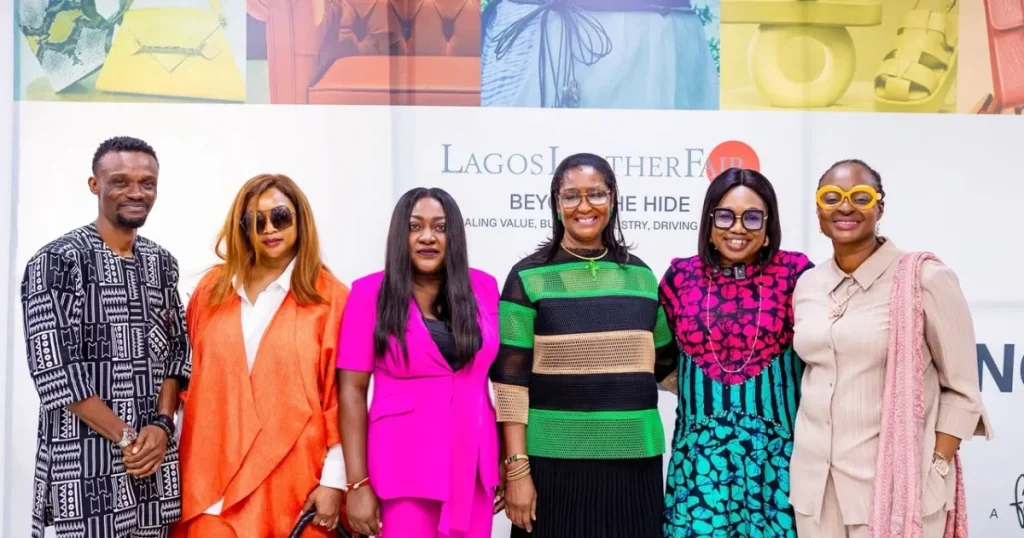
The organisers of the Lagos Leather Fair have unveiled plans for the ninth edition of the event, positioning it as a platform to connect artisans, manufacturers, financiers, and investors as part of efforts to strengthen Africa’s leather value chain and boost local manufacturing.
Speaking at a press conference in Lagos recently, stakeholders outlined an ambitious agenda for the 2026 edition of the fair, which is scheduled to hold from 27 to 28 June at the Ecobank Pan-African Centre, Victoria Island, Lagos.
Organised under the theme ‘ Beyond the Hide: Scaling Value, Building Industry and Driving Growth,’ this year’s event seeks to move discussions beyond the production of raw leather and focus on creating sustainable market opportunities, industrial infrastructure and cross-border growth for businesses operating in the sector.
The Lagos Leather Fair, established in 2017, has evolved from a niche industry gathering into one of West Africa’s leading platforms for promoting leather craftsmanship, manufacturing, and entrepreneurship.
Addressing journalists at the briefing, Convener of the Lagos Leather Fair and Creative Director of FemiHandbags, Femi Olayebi, said the 2026 edition reflects the fair’s growing focus on industrial development and value creation across the leather ecosystem.
“The 2026 focus moves beyond raw materials to strengthening market value and infrastructure and creating pathways for sustainable cross-continental growth within Africa’s leather and creative industries,” she remarked.
Olayebi reflected on the journey of the fair over the past nine years, noting that despite early challenges, the platform has continued to create opportunities for designers, manufacturers, and entrepreneurs while drawing attention to the untapped potential of Nigeria’s leather industry.
She said the fair aims to facilitate partnerships that can help transform the sector from a largely fragmented industry into a structured value chain capable of competing globally.
A key feature of the upcoming event will be the participation of financial institutions and business support organisations, with Ecobank reaffirming its commitment to supporting small and medium-sized enterprises operating in the creative and manufacturing sectors.
Speaking at the briefing, SME Partnerships and Collaborations Manager at Ecobank, Simisola Olaseinde, said the bank’s involvement extends beyond sponsorship and is designed to provide practical support for business growth.
According to her, Ecobank is leveraging its presence across more than 30 African markets to help entrepreneurs access financing, digital business solutions, new markets, and opportunities for expansion across borders.
“Our support is focused on empowering creative entrepreneurs through financing solutions and business infrastructure and systems that strengthen manufacturing capacity and industrial commerce,” Olaseinde said.
Industry stakeholders also stressed the importance of stronger partnerships and investments to unlock the full economic potential of the leather sector.
The organisers unveiled several experiential activities planned for the two-day event, including runway shows featuring leather fashion products, an industry awards ceremony, and the Signature Piece Challenge, a competition that will offer a N1m prize to emerging talents.
To deepen public understanding of the manufacturing process, the fair will also host ‘The LLF Atelier,’ an interactive production hub being delivered in partnership with the Ananse Centre for Design.
Training and Curriculum Manager at the centre, Owodunni Temiloluwa, said the activation will provide visitors with a behind-the-scenes look at leather production through live machinery demonstrations and practical manufacturing sessions.
“It will function as a live mini-manufacturing hub where attendees can observe the technical processes involved in transforming raw materials into finished luxury products,” he said.
Another attraction, ‘The Maker’s Bench’, curated by leather designer and Board of Trustees member Otejiri Ejumabone, will offer participants hands-on opportunities to create simple leather items and gain practical exposure to the craft.
Board of Trustees members Morin Obaweya and Anita Ugah also shared their experiences as industry practitioners, highlighting the progress recorded by local designers and manufacturers through the platform over the years.
They noted that increasing awareness, improved product quality, and stronger collaboration among industry players have contributed to the growth of the leather ecosystem, although challenges relating to financing, production infrastructure, and market access remain.
Project Lead, Public Relations Director, and Board of Trustees member, Dr Yetty Ogunnubi declared that the fair’s long-term objective is to create a thriving industry that supports employment generation, entrepreneurship, and economic diversification.
She noted that by bringing together artisans, manufacturers, buyers, investors, policymakers, and development partners, the platform is helping to build the relationships needed to drive sustainable growth across the sector.