
Assistance through the ‘valley of death’
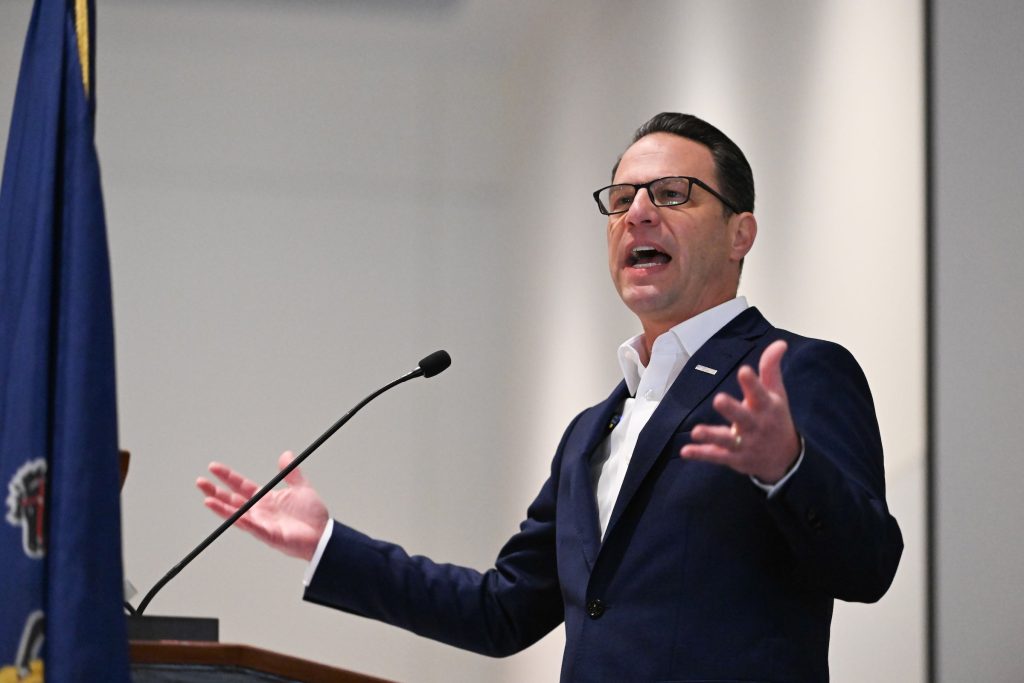
Shapiro said the fund is intended to help startups overcome what industry leaders often call the “valley of death” — the period between scientific discovery and attracting enough investment to commercialize a product.
B+labs currently houses about 25 life sciences companies and sits near research institutions like the Children’s Hospital of Philadelphia, University of Pennsylvania and Drexel University. Shapiro said incubators allow young companies to share expensive laboratory equipment, collaborate with researchers and connect with investors while reducing startup costs.
Matthew Burkhardt, director of B+labs, called the initiative “a belief in the quality of the innovation.”
“It’s trust in the individuals, giving them the tools and resources to move forward,” he said. “I look forward to how this is going to capitalize on the activity here in Philadelphia and in Pittsburgh and what that means for the companies that operate from here and the scientists that operate from here.”
Shapiro argued Pennsylvania is well positioned to become a national hub for biotechnology because of its universities, skilled workforce and manufacturing base. According to the governor, half of all vaccines distributed in the United States are manufactured in Pennsylvania.
Industry leaders said the investment comes at a critical time as venture capital has become more difficult for startup biotechnology companies to obtain.
Christopher Molineaux, president and CEO of Life Sciences Pennsylvania, called Innovate in PA 2.0 “the most significant commitment by Pennsylvania state government into the life sciences in almost three decades.”
He said nearly 40% of his organization’s approximate 960 member companies employ 10 people or fewer, making access to capital especially important.
“It is a very high-risk industry,” Molineaux said. “Not only is it significant, it’s also very timely. I think we all would acknowledge the last three years have been very difficult for startup companies raising capital.”
Madeline Bell, CEO of CHOP, said public investment helps transform research breakthroughs into lifesaving treatments. She pointed to the hospital’s recent personalized gene-editing treatment for a child known publicly as “Baby KJ,” the first person in the world to be successfully treated with a personalized, bespoke CRISPR gene-editing therapy.
“Every scientific breakthrough comes with a great idea, but it really requires funding and it requires teamwork,” Bell said. “Innovate in PA 2.0 is so important to us. It’s going to make our breakthroughs possible. It’s going to get them from the bench to the bedside more quickly.”
Labor unions support initiative too
Labor leaders have also praised the initiative, saying growth in the biotechnology industry has created demand for highly specialized construction projects.
Jim Snell, business manager of Steamfitters Local 420, said each new laboratory or pharmaceutical manufacturing facility translates into years of work for union members.
“When these small startups start growing … they build big manufacturing facilities,” Snell said. “What does it mean? It means jobs. It means job security for my members.”
State Sen. Vincent Hughes, D-Philadelphia, who helped negotiate the funding, said the investment extends beyond economic development.
“In the end, it’s about the innovators,” Hughes said. “It’s about the innovation. It’s about the lives that are being saved because of the incredible work and the incredible genius that exists within this building.”
He added that part of the funding will also be directed toward expanding opportunities for communities that have historically lacked access to investment.
State officials said the Department of Community and Economic Development expects to open applications for the program within the next few weeks.