
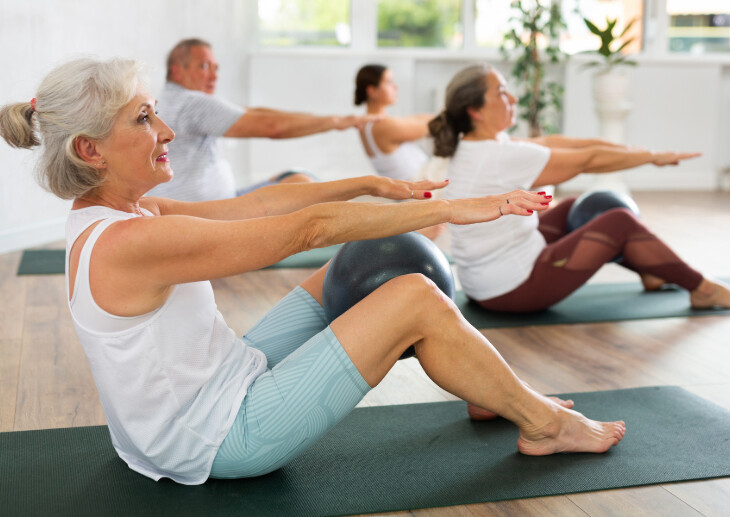
The government should require integrated care boards (ICB) to embed physical activity as a core preventive intervention within population health strategies, a committee of MPs has recommended.
A new Health and Social Care Committee report found that the embedding of physical activity in ICB strategies was ‘not yet consistent’, with it often being treated as an ‘optional add-on’.
The report into physical activity in an ageing society sets out a series of recommendations including that advice and social prescribing of physical activity should become a core, routine offering to older people from their GPs and other clinicians.
It also said that ICBs should demonstrate how physical activity is being integrated into healthy ageing, long-term condition management, and health inequalities frameworks.
The report added: ‘Physical activity remains insufficiently prioritised across health and care systems despite its clear contribution to preventing illness, improving population health and reducing inequalities.
‘While some integrated care boards (ICBs) have embedded physical activity into strategies, this is not yet consistent or widespread, with physical activity too often being treated as an optional add-on, rather than a core, evidence-based intervention.’
The report added: ‘The Department [of Health and Social Care (DHSC)] should require ICBs to embed physical activity as a core preventive intervention within population health strategies.
‘ICBs should demonstrate how physical activity is being integrated into healthy ageing, long-term condition management and health inequalities frameworks, with clear accountability for delivery.’
Other recommendations in the committee’s report include:
- The DHSC should develop a national framework to support ICBs and local authorities to commission and scale health interventions delivered in leisure and physical activity settings;
- Health leaders should demonstrate that physical activity is a priority and ensure all staff have access to training and examples of best practice; and
- Addressing inequalities in healthy life expectancy will require ICBs to take a targeted approach with specific interventions targeting communities where inactivity and poor health outcomes are most concentrated.
The report also said the government must set out how it will ensure social prescribing for older people is consistently embedded, prioritised and supported across the health system.
The cross-party committee of MPs said that it seemed ‘perverse’ to reduce support for social prescribing if the NHS is serious about shifting more towards prevention – one of the key shifts in the government’s 10-Year Health Plan.
It said that the DHSC should assess whether the overall funding, infrastructure and training available to social prescribing are sufficient to ‘reflect its growing role in promoting physical activity and reducing demand on health services’.
The new report, published last week, also said that social prescribing link workers were a ‘vital bridge’ between the health system and community organisations that offer older people chances to engage in physical activity.
It added that these workers – who are employed by primary care networks (PCN) through the additional roles reimbursement scheme (ARRS) – can turn clinical advice into ‘meaningful behavioural’ change.
Committee chair Layla Moran said there needed to be a ‘national conversation’ and ‘generational change’ in attitudes towards ageing as the population grows older.
Ms Moran added: ‘Promoting active lifestyles among older people would also tackle two policy objectives at once – shifting the NHS’s focus to prevention, and bringing services closer to home, not the nearest hospital.
‘Experts told us that exercise can be more effective than medication, and these changes would also cut the NHS’s vast expenditure on drugs. It’s a win-win, and this report sets out how the government can make it happen.’
A DHSC spokesperson said: ‘This government is making the biggest changes to our health service in a generation – focusing on preventing ill health and enabling people to live longer, healthier lives.’
They added: ‘Initiatives like Couch to 5k and NHS Active 10 show how small changes can have a big impact helping people build movement into everyday life.
‘We are also delivering radical measures including a generational ban on smoking and a clampdown on junk food advertising as we tackle some of the biggest causes of ill health.’
Register for free to get full access to the site and our newsletters
Related articles