
Some infections will disappear in certain places, but under different conditions, transmission can become so intense that it offsets the loss of infection elsewhere
Pieter Johnson
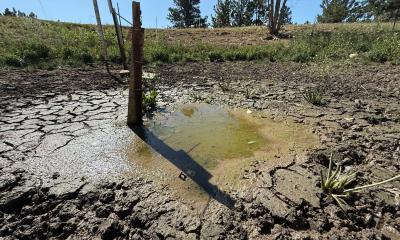
Over the past few decades, more than 77% of Earth’s land experienced drier conditions, according to a United Nations report. In the western United States, the worst megadrought in 1,200 years has drained crucial reservoirs like Lake Mead to only a third of their capacity. Rising temperatures driven by climate change are making droughts more frequent, more intense and more widespread.
While many infectious diseases are transmitted in water or through hosts like mosquitoes that rely on water to reproduce, drought doesn’t simply make those diseases disappear. For example, previous studies have found that periodic droughts in Florida increased the spread of St. Louis encephalitis virus, which is transmitted to people through infected mosquitoes.
Johnson first noticed these shifts in disease patterns while studying waterborne parasites in California that cause infected frogs to develop additional limbs, which in turn make them more vulnerable to predators. When a severe drought hit the state in 2014, Johnson and his team noticed that shrinking ponds forced amphibians to concentrate in remaining water bodies, resulting in more severe infections among frogs and higher infection rates. “That got us curious about why the loss of water sometimes kills off pathogens, but in other cases actually amplifies them. It seemed that the effects of drought on disease patterns are not linear,” Johnson said.
To better understand how drought affects disease transmission, Johnson and Stewart Merrill synthesized nearly 100 previous studies and identified the main mechanisms through which infectious diseases may respond to drought.
One key pathway is that as drought dries up rivers and ponds, animals have to congregate around the remaining watering holes and habitats. These places can become hotspots for parasite transmission, as happened with the frogs in California.