
By Alimat Aliyeva
China continued to record improvements in air and water quality
during the first seven months of 2026 as the government stepped up
efforts to reduce pollution and protect the country’s water
resources, AzerNEWS reports.
According to a statement from China’s Ministry of Ecology and
Environment, the country’s average concentration of PM2.5 — fine
particles considered one of the key indicators of air pollution —
fell by 1.8 micrograms per cubic meter compared with the same
period in 2025. This represents a decline of 6.2 percent.
At the same time, the share of days with good air quality
increased by 3.9 percentage points year on year, according to
figures cited by China Daily.
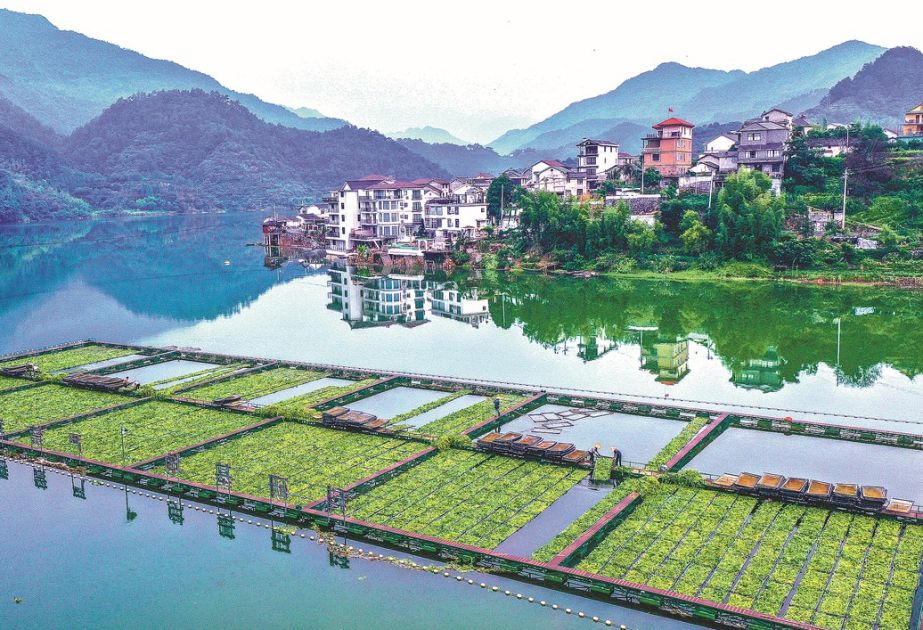
Water quality also showed positive trends. During the
January–July period, 86.5 percent of monitored surface-water sites
were rated Class I–III, which corresponds to relatively good water
quality. The figure was 2.4 percentage points higher than during
the same period last year.
China uses a five-level system to classify surface-water
quality, with Class I representing the highest standard and Class V
the lowest.
Environmental improvements have become a major focus of China’s
development policy in recent years. The country has invested
heavily in renewable energy, electric vehicles and
pollution-control technologies, while also tightening environmental
standards for industry.
One interesting aspect is the growing link between China’s
environmental policy and its energy transition. China is currently
the world’s largest producer and installer of solar and wind power,
meaning that efforts to reduce air pollution are increasingly
taking place alongside a rapid expansion of clean-energy
infrastructure.
Despite the progress, environmental challenges remain
significant, particularly in densely populated and heavily
industrialized regions. Authorities therefore continue to face the
task of balancing rapid economic development with long-term
improvements in air, water and overall environmental quality.