
The GKN chemical disaster in Garden Grove is already falling out of the news, but follow-up is critical. What unfolded in Garden Grove reveals an urgent need for better chemical disaster regulation and education. There are chemical disasters in the United States nearly every day, yet both the public and public officials are often unaware, hindering efforts to reduce risks. This incongruity motivates both our research and teaching as social scientists focused on environmental and disaster governance.
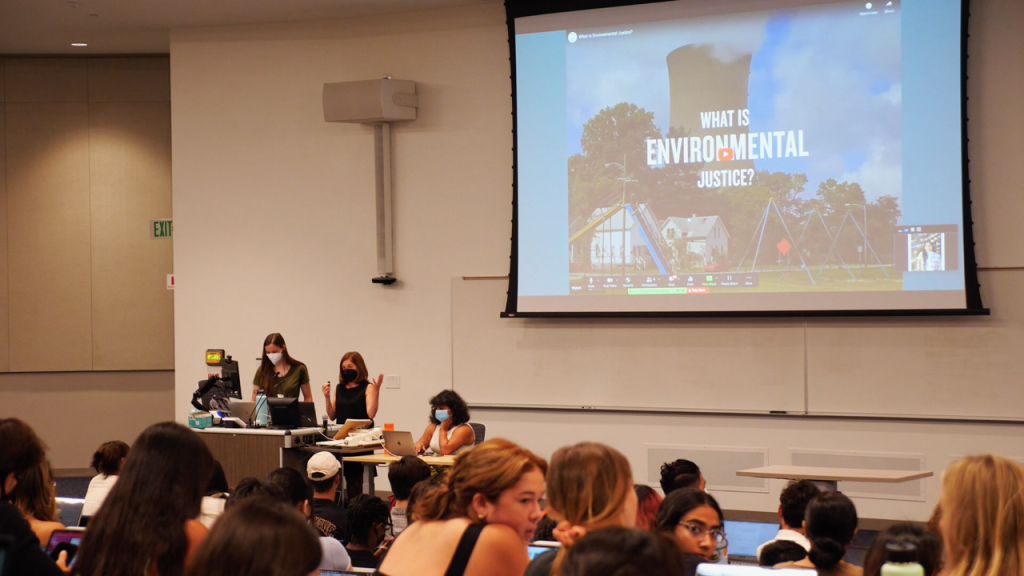
In a large anthropology course at the University of California, Irvine, we teach students how to analyze environmental injustice and governance failures in communities across California. A central task is identifying disaster risks, which we group into three categories: fast (requiring emergency response), slow (routine pollution), and combo, where multiple risks are exacerbated by extreme weather, war or terrorism. Despite their drama, fast disasters are typically the hardest for students to handle. Most communities have risks, but have not had an actual disaster—and disasters that might happen don’t generate news coverage or discussion. When disasters do happen—as in Garden Grove—they cycle out of the news quickly. Even “famous” cases like the 1984 Union Carbide disaster in Bhopal, India, which killed thousands and remains the world’s worst industrial disaster, have largely been forgotten.

The problems our students face trying to characterize fast disaster risks are similar to those the public—in Garden Grove and beyond—faced as the GKN disaster unfolded. These problems have become much worse because of the Trump administration’s regulatory roll-backs and elimination of crucial programs.
In the United States, facilities with the potential for catastrophic off-site consequences (an explosion or gas cloud) are regulated by the US Environmental Protection Agency (EPA) Risk Management Program (RMP), created in direct response to the Bhopal disaster. It was only in 2014, however, in the wake of a catastrophic chemical disaster in West, Texas, that the extent and inequity of chemical disaster risks in the United States were well-mapped — by non-government organizations. Kids in Danger Zones found that one in three children in the United States live within the vulnerability zone of at least one RMP facility, with many children living in the sweet spot of a venn-diagram of many facilities. A separate report, Who’s in Danger? Race, Poverty, and Chemical Disasters, showed that Black, Latino/a and low-income communities are disproportionately located in vulnerability zones. In the subsequent decades, little progress has been made reducing these risks—and associated inequities. Quite the contrary.

In the last 18 months, many tools for characterizing chemical disaster risks in the U.S. have been decommissioned. EPA’s EJScreen, which allowed users to compare their community’s proximity to RMP facilities with the rest of the country, has been taken down (although Public Data Partners, a non-government coalition, hosts an unofficial mirror). The EPA’s RMP Public Data Tool, which provided information on specific facilities, has also been taken down, and the Chemical Safety Board, which analyzes why particular chemical disasters occurred, is at risk of being defunded.
In California, the Accidental Release Prevention (CalARP) program regulates more facilities by including more chemicals and lower thresholds. Still, local knowledge about chemical disaster risks is limited. The ’s (CalEPA) Regulated Site Portal, for example, integrates data from many regulatory agencies and databases—but does not provide a simple way to determine whether a facility is regulated by RMP or CalARP.
To help our students work around these data gaps, we submitted a Public Records Act request for the names and locations of the more than 2,000 CalARP facilities. The map we built has important limits—it assumes a one-mile vulnerability zone due to a lack of information on chemicals and volumes at each facility, for example. It is just one step toward better chemical disaster education.
But missing or hard-to-find information is only the tip of the iceberg. The lists of chemicals regulated by RMP/CalARP do not include methyl methacrylate (MMA), the chemical of concern in Garden Grove. Nor do they include ammonium nitrate, the fertilizer that blew up the Port of Beirut in 2020, West, Texas in 2013, and Texas City, Texas in 1947. Adding chemicals to regulatory lists is a politically and scientifically fraught process that can take decades. Our students learn about this, too.
They also learn that regulators analyze facilities individually, one chemical at a time, without considering how risks compound. On our map, we can see that the GKN facility is on the edge of an industrial corridor, with three CalARP facilities within a mile. How an explosion would have impacted these facilities was never addressed.

There is also what we call “data divergence.” CalEPA’s Regulated Site Portal says that the maximum amount of liquid MMA that should be stored at GKN’s Garden Grove facility is 600-1199 gallons. Official reports, however, repeatedly described the failing tank as holding 7,000 gallons of MMA, with other tanks of MMA nearby. What explains this discrepancy? We want our students to be ready to ask these kinds of questions.
The point we want to emphasize here is that more chemical disaster education is urgently needed—and it must do more than teach people how to respond when alarms go off and evacuation orders are issued. We need our students—and the wider public—to understand and advocate for fundamentally new approaches to chemical disaster risk characterization, reduction and response.
Want to learn more? Sign up for our virtual seminar and dialogues here.
Kim Fortun is Professor of Anthropology and Director of EcoGovLab at the University of California, Irvine (UCI), and the author of Advocacy After Bhopal. Margaret Tebbe is an Anthropology PhD candidate and EcoGovLab researcher at UCI, and the author of Protecting Students From Our Changing Climate.
Opinions expressed in community opinion pieces belong to the authors and not Voice of OC.
Voice of OC is interested in hearing different perspectives and voices. If you want to weigh in on this issue or others please email opinions@voiceofoc.org.