
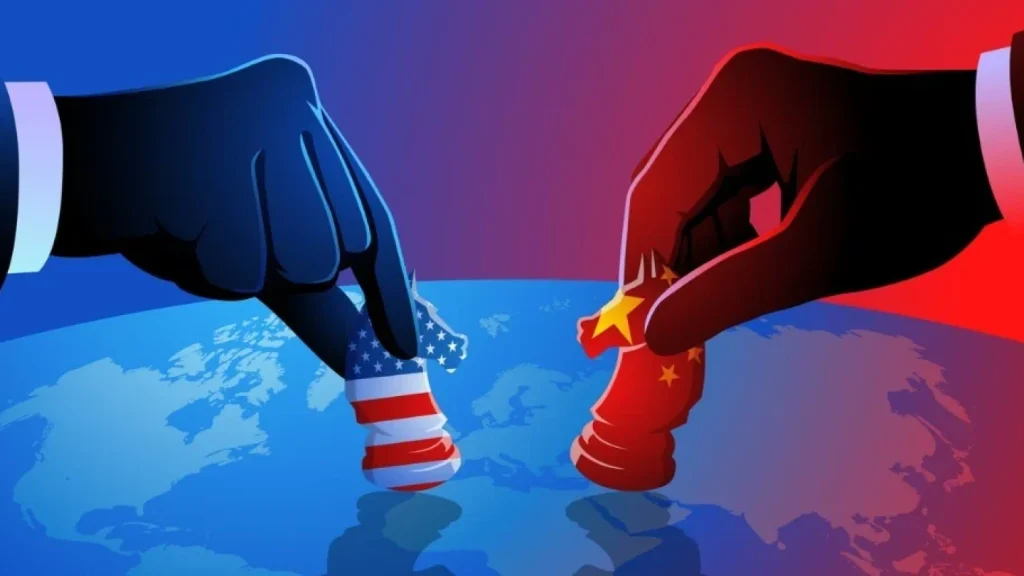

China has been strategically growing its biotech sector for years, increasingly becoming a source of in-licensed or partnered drugs for Big Pharma. At the same time, the U.S. government has been pushing to curb the industry’s ties to the Asian country.
It’s clear that these two stakeholders have very different motivations. For pharma companies, China serves as a valuable pool of innovation for growing their pipelines to support their bottom lines. In the government’s case, policies appear driven by the need to protect Americans against biosecurity risks. It’s a simple dichotomy in how industry and government view the problem: Is drug development an industry that should be valued for its societal and economic value, or is it more an issue of national security?
The opposing viewpoints lead to very different solutions for the undeniable rise of Chinese biotech. The government seems intent on limiting collaborations between U.S. and Chinese biotech, while industry is clamoring for systemic incentives and support that promote American innovation.
US government seeks to shore up against biotechnology threats
Last year, President Donald Trump signed into law the BIOSECURE Act after a long delay that threatened its existence altogether. The new law restricts contracts with Chinese biotechnology “companies of concern”—entities that the U.S. government views as national security threats. Fortunately for the biopharma industry, the legislation that was ultimately passed was a toned-down version of the original, which was widely seen as potentially damaging to pharma’s work in China, specifically naming companies such as widely used contract, research, development and manufacturing organization WuXi AppTec that would be off-limits to U.S. drug developers. While no specific companies were named in the final version of the law, pharmas have still been forced to diversify away from Chinese firms.

A new version of the controversial bill removes the specific company names that were included in a previous iteration but still requires the industry to ditch Chinese biotech contractors in order to receive federal dollars.
Another threat to the biopharma industry came in the form of Trump’s tariffs—and the Section 232 investigation focused on pharmaceuticals. A Section 232 is a formal government probe meant to determine if certain imports threaten national security. Ultimately, while the investigation concluded that America’s reliance on imported medicines and active pharmaceutical ingredients does threaten national security, the administration provided exemptions on the up to 100% tariffs, most notably for those companies that had struck Most Favored Nation (MFN) drug pricing deals with the White House—something that is changing the nature of biopharma dealmaking already.
This week, Rep. John Moolenaar’s (R-MI) actions perfectly illustrate a view that casts biotech as a potential national security threat. In letters he penned to Eli Lilly, Pfizer, Merck, Bristol Myers Squibb and AbbVie on Monday, the chairman of the House Select Committee on China expressed concern that the hundreds of clinical trials they are conducting in China “could fuel the CCP’s [Chinese Communist Party’s] military biotechnology research, experimentation, and capability development.”
Moolenaar requested that by July 17 the companies provide information on how they are protecting their data and other details on their due diligence relating especially to studies conducted at military hospitals and in the Xinjiang region, where the Chinese government has targeted Uyghurs and other ethnic and religious minorities.
While it remains unclear how the congressman might use the information he receives from the companies, one potential outcome is legislation intended to block U.S. companies from operating at Chinese trial sites that may put our country at risk in some way. That is a valiant and worthy goal, but there’s a reason Big Pharma has turned to China to run more of its clinical trials—it’s cheaper and more efficient. Taking that option away without providing an alternative would only hinder drug development.
“I do worry about unintended consequences and effectiveness of trying to put bans in place,” BIO CEO John Crowley said in an address to media at the trade organization’s international convention in San Diego last week. “You worry about, frankly, distraction from the real issues, which is, how do we outcompete? How do we reform our system to be more competitive?”

Speaking to media on Tuesday, BIO CEO John Crowley complimented China’s rise as a biotech powerhouse but said U.S. policy needs to protect and maintain America’s lead.
Biotech needs a support system, not limits
The Department of Health and Human Services (HHS) now appears to have the same goal. On June 22, the first day of the BIO convention, the FDA announced an investigational new drug (IND) pilot program specifically aimed at expediting early-stage research in the U.S. The very next day, Crowley discussed the initiative with current agency leadership.
“This is really a whole of HHS effort,” explained Mike Davis, acting director of the Center for Drug Evaluation and Research (CDER). “FDA is . . . one piece of the puzzle.” He listed the National Institutes of Health (NIH), the National Cancer Institute and the Centers for Medicare & Medicaid Services as some of the other agencies working to address the attrition of clinical trials to China and cited internal review boards (IRBs) as one relevant part of clinical research that the FDA “is less involved in regulating.”
Davis described an internal FDA town hall meeting with about 2,000 staffers where agency leadership showed data and statistics breaking down different phases of clinical trials and how they’re shifting overseas. “[Leadership] really laid out the problems of what the country is facing,” he said. “Just judging by a lot of the feedback coming into me afterwards, my sense is some many people might not really appreciate the scope of this problem.”

From Chinese innovation to AI, biotech CEOs are being hit with challenges at a breakneck pace. Three leaders from BioSpace’s NextGen Class of 2026 told us about the issues keeping them up at night.
Now that FDA employees are learning more about it, he added, they want to help, “because they see that this is truly a priority.”
But I would wager that rather than being scared for the country’s national security in the face of China’s biotechnological prowess, these individuals, like the industry they regulate, want to see the U.S. maintain its dominance in biotech and bring novel medicines to patients faster in America than any other country. For them, American innovation is a source of pride, and they want to keep the country as the leader in this global industry.
While the current administration may agree with that sentiment, other actions taken in the past year have undermined this mission. Last year, thousands of NIH grants were frozen or canceled, wiping out billions of dollars in research funding. The industry has widely decried such cuts, arguing that it will shut off the innovation pipeline that biopharma depends on.
More recently, the White House Office of Management and Budget (OMB) proposed a rule that adds new regulations on how federal research grants are awarded and managed—something that will take effect on Oct. 1, the start of the fiscal year 2027, if approved. This week, the American Association for Cancer Research issued a statement describing how “the OMB proposal, if finalized, will be extremely disruptive to the lifesaving research that the federal government funds and oversees, mainly through NIH.”
The problem seems clear: the U.S. biotechnology sector is ceding dominance to China. But the reasons that this is a problem seem disparate and the potential solutions disjointed. Until stakeholders can come together and agree on a unified path forward as China has done, I worry we will not right the ship.

Members of the American Biotech Innovation Alliance (ABIA) want to build a national biotech strategy—just like China did years ago.