
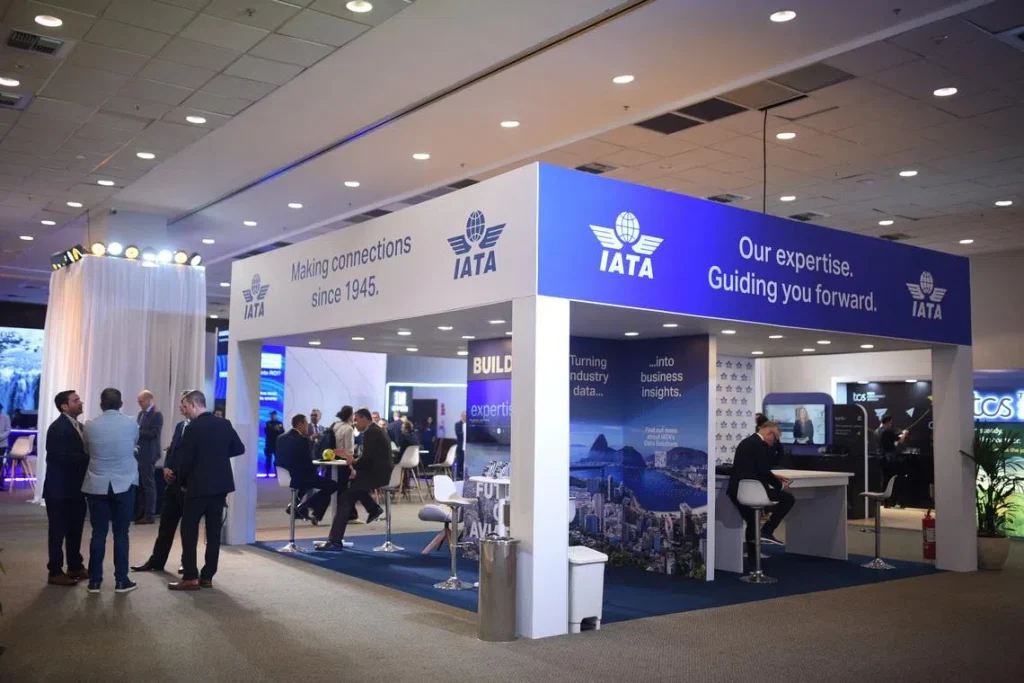
RIO DE JANEIRO – It is “obviously problematic” that prices of sustainable aviation fuel have climbed amid the war in the Middle East, even though the cost of producing green jet fuel is separate from conventional fuel costs, said a global airline industry body.
Speaking at a sustainability media briefing on June 6 at the International Air Transport Association’s (IATA) annual general meeting in Rio de Janeiro, Brazil, IATA’s director of energy transition Hemant Mistry said green jet fuel functions as the biggest lever for decarbonisation, so it is important to find a way to avoid the cost increases in producing it.
Such fuel is mostly made from waste materials, such as used cooking oil.
Latest figures from IATA show that the price of green jet fuel increased from slightly more than US$2,000 (S$2,582) per metric ton in February – before the Middle East conflict began – to around US$3,000 in May.
IATA’s comments come after the production of sustainable aviation fuel has stagnated since December 2025. It is expected to reach 2.4 million tonnes in 2026 – less than 1 per cent of the global demand for jet fuel.
This is despite the expansion of the global production capacity of green jet fuel to nine million tonnes in 2026, highlighting how it is underused.
Partly attributing this to how policies are structured, Preeti Jain, head of net zero research and programmes at IATA, said the production of renewable diesel for vehicles is favoured over green jet fuel, and noted that the uneven availability of feedstock, mainly in North America, Europe and Asia, has resulted in slow growth in production of green jet fuel.
Mistry urged an expansion in the production of sustainable aviation fuel for prices to become competitive, and to reduce the differences in the cost of production between conventional fuel and green jet fuel.
This is why IATA proposes operating on a “book and claim” system, where airlines can choose to pay for the green fuel and claim the related carbon reductions without needing to use the fuel on their own flights, as such fuel may not be available everywhere.
This means that an airline in another country can use the green fuel at an airport where it is available, because the effect on the atmosphere – in terms of reduced carbon emissions – remains the same.
Marie Owens Thomsen, senior vice-president for sustainability and chief economist at IATA, said this arrangement separates the physical delivery of green jet fuel from the reaping of its environmental benefits.
This system helps to expand the market for green jet fuel without needing to wait for all the supply chains to be established, effectively quickening the uptake and production of such fuel, said Thomsen.
To further support aviation decarbonisation, IATA on June 6 launched a supporting alliance to boost the supply of CORSIA Eligible Emissions Units (EEUs).
CORSIA, known as the Carbon Offsetting and Reduction Scheme for International Aviation, is a globally recognised framework established in 2016 to address carbon emissions from international aviation.
There have not been enough EEUs on the market, as states are concerned about fulfilling their own obligations under the Paris Agreement adopted by the United Nations Framework Convention on Climate Change, said Thomsen.
Noting that credits must be transferred between both systems to avoid double-counting, Thomsen said the alliance will provide assistance in clearing bottlenecks that prevent credits from entering the CORSIA market.
It will involve making sure that 175 million EEUs are brought to the market by the end of 2026, she added.
For a start, the initial alliance will comprise more than 32 entities, including carriers such as Singapore Airlines and its low-cost subsidiary Scoot.
Separately, at a media briefing for the Asia-Pacific region, Sheldon Hee, regional vice-president for Asia-Pacific at IATA, commented on Singapore’s move to delay a green aviation fuel passenger levy due to the impact of the Middle East war.
He described the delay as a “relatively short” one, adding that IATA is supportive of how Singapore took a constructive and balanced approach on the matter.
While the levy will kick in only in 2027, Hee believes “there is every possibility” that the nation’s 2027 green jet fuel target of 1 per cent can be achieved.
Passengers flying out of Singapore from Jan 1, 2027, will pay a levy of between $1 and $41.60 that will go towards the purchase of sustainable aviation fuel.
On the impact of high fuel costs, he said airlines are already adjusting their flight capacity on domestic and regional routes to alleviate some short-term pressures.
Hee noted that Singapore is “quite well insulated” from the impact of the Middle East conflict, primarily because it serves an international market. It is also a hub focused on transfer traffic, which offers opportunities.