

On 22 April, Malaysia awarded US$890 million worth of agreements during the DSA 2026 exhibition in Kuala Lumpur. This involved twelve procurement contracts, four letters of intent (LoI) and eight industrial collaboration programmes (ICP).
The main contracts encompassed an initial batch of missiles for the Royal Malaysian Navy’s (RMN) five Maharaja Lela-class Littoral Combat Ships (LCS) under construction in Malaysia, as well as for the three Littoral Mission Ships (LMS) Batch 2 under construction in Turkey.
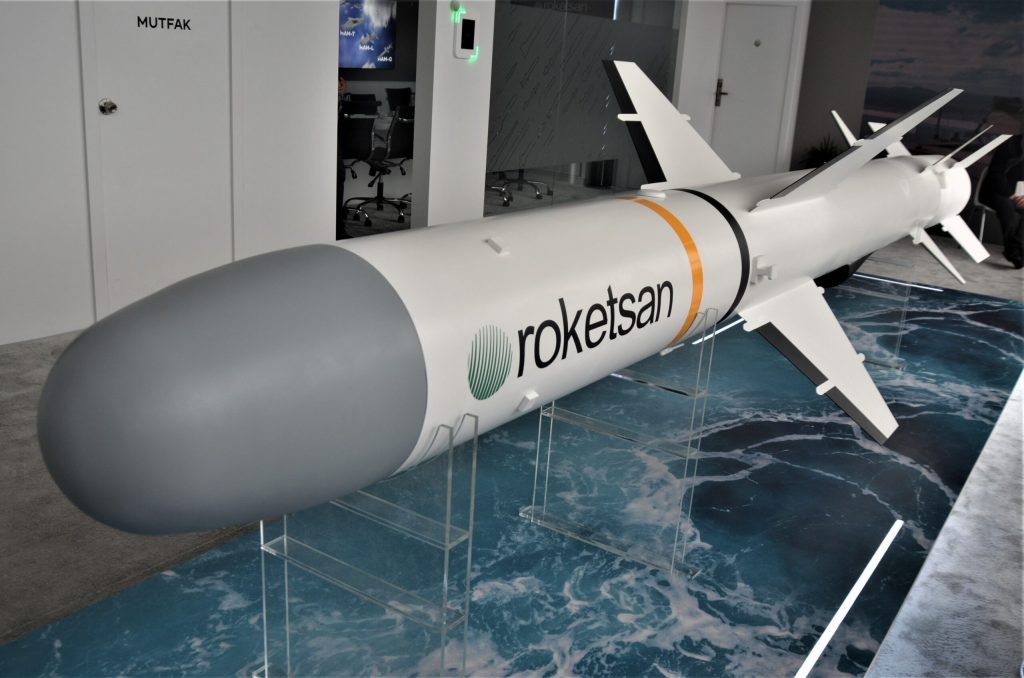
In detail, Malaysia’s Ministry of Defence announced a US$94.49 million contract for 48 LIG Defense & Aerospace K-SAAM Haegung surface-to-air missiles (SAM) and a US$93.11 million contract for 24 Roketsan Atmaca anti-ship missiles. Both will arm LMS Batch 2 ships being built by STM. Significantly, Malaysia is the first export customer for the K-SAAM.
MBDA, meanwhile, received a contract for 29 VL MICA SAMs for the LCS, although no value was released due to negotiations on the final value still occurring.
The LCS programme – dogged by delays, cost overruns and allegations of corruption prior to a government programme takeover in 2023 – currently expects first ship delivery in December 2026, instead of the August target. A deal for anti-ship missiles for the LCS, the Kongsberg Naval Strike Missile, was signed in 2018.
No details were released on the value of other contracts that covered services, equipment, ammunition and spare parts.
Notable among the LoIs was the award to Target Mega Marine for submarine escape and rescue services. This company has been continuously providing such a service to the RMN with the submarine rescue ship MV Mega Bakti, ever since two Scorpene-class submarines entered operational service. The latest LoI should continue the service.
Eight ICPs were issued, the most notable ones covering LMS Batch 2, where four companies – BHIC Submarine Engineering Services, Lumut Naval Shipyard, Preston Shipyard and Labuan Shipyard – were given ICP contracts. The four companies will send personnel to Turkey for training to enable them to support LMS Batch 2 maintenance, repair and overhaul operations in Malaysia.

In contrast to previous DSA and LIMA exhibitions, the number of contracts awarded was significantly reduced. This is likely due to two factors.
Firstly, a rise in oil prices is significantly affecting Malaysia’s finances due to the nation’s fuel subsidy for citizens, along with aid packages implemented to offset the economic impact caused by the war in the Middle East. At the same time, given public concern over the impact of the Iran war on their finances, the government would likely face a public backlash if it announced large defence contracts.
Secondly, Prime Minister Anwar Ibrahim ordered a freeze on military and police contracts in January in the wake of criminal charges filed against the previous Malaysian Armed Forces chief and the previous chief of army in relation to procurement corruption.
The freeze included reviews of tenders issued during the command period of both chiefs. Anwar agreed in February to lift the freeze in stages, and the Ministry of Defence in the same month implemented new procedures for the award of tenders.
There are a number of Malaysian Armed Forces programmes still awaiting decisions, such as the army’s 36 105mm towed howitzers and up to 18 self-propelled howitzers.
Meanwhile, tenders for other programmes, such as the Multi-Role Support Ship, and medium-range air defence missiles for the army and Royal Malaysian Air Force (RMAF), are expected to be issued this year.
Despite the RMAF being a recipient of a government contract to lease up to 28 Leonardo helicopters from Weststar, it still requires combat search and rescue helicopters, since Weststar as a civilian company cannot provide armed helicopters.
However, the fiscal impact caused by the Iran war may force the Malaysian government to postpone these military procurement plans and programmes this year.
by Dzirhan Mahadzir