
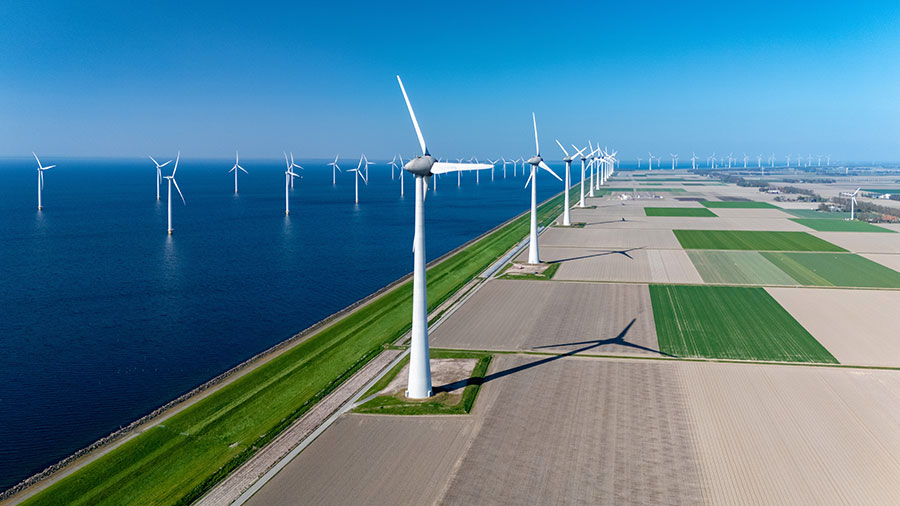
Indonesia is rapidly expanding renewable energy investment to meet rising electricity demand, strengthen energy security, and achieve its long-term decarbonization objectives. Supported by one of the world’s largest renewable energy resource bases and a growing pipeline of utility-scale projects, grid infrastructure, manufacturing, and emerging clean energy industries, the country is creating investment opportunities across the renewable energy value chain. This article examines Indonesia’s renewable energy market, the commercial opportunities available to foreign investors, and the regulatory considerations for entering the sector.
Indonesia’s renewable energy market
Indonesia possesses one of the world’s largest renewable energy resource bases, with an estimated technical potential exceeding 3,687 GW. Solar energy represents the largest opportunity at more than 3,294 GW, followed by hydropower, wind, bioenergy, geothermal, marine energy, and other renewable sources. Despite this abundance, renewable energy continues to account for a relatively modest share of the country’s electricity generation, leaving considerable room for future investment.
Recognizing both rising electricity demand and its long-term decarbonization objectives, the Indonesian government has significantly expanded renewable energy development through PLN’s (Perusahaan Listrik Negara, Indonesia’s state-owned electricity utility and the country’s sole electricity transmission operator and principal purchaser of electricity) 2025-2034 Electricity Supply Business Plan (RUPTL). The plan allocates 42.6 GW of renewable and low-carbon generation capacity, representing around 61 percent of all planned new generation. Solar power accounts for 17.1 GW, followed by hydropower (11.7 GW), wind (7.2 GW), geothermal (5.2 GW), and bioenergy (0.9 GW).
Find Business Support

Private investment is expected to play a central role in delivering this expansion. Approximately 73 percent of planned renewable capacity will be developed by Independent Power Producers (IPPs), supported by an estimated IDR 2,133.7 trillion (US$130 billion) in generation investment, including approximately IDR 1,341.8 trillion (US$82 billion) allocated to renewable energy projects developed by IPPs. Beyond electricity generation, growing investment in downstream nickel processing, electric vehicle manufacturing, industrial decarbonization, and cross-border electricity trade is expanding demand for renewable energy infrastructure, equipment manufacturing, engineering services, and emerging clean energy technologies, creating investment opportunities across the broader renewable energy value chain.
The next phase of Indonesia’s renewable energy market
Indonesia’s renewable energy sector is creating investment opportunities well beyond power generation. As the market expands, investment is increasingly extending into electricity infrastructure, manufacturing, industrial decarbonization, carbon markets, and emerging clean energy technologies, allowing foreign investors to participate across multiple stages of the renewable energy value chain.
Utility-scale renewable energy development
Utility-scale renewable energy projects remain the largest source of investment in Indonesia’s energy transition. Under PLN’s 2025-2034 RUPTL, Indonesia plans to add 42.6 GW of renewable and new energy capacity, with solar (17.1 GW), hydropower (11.7 GW), wind (7.2 GW), and geothermal (5.2 GW) accounting for most new generation. Approximately 73 percent of planned capacity will be developed by Independent Power Producers (IPPs), creating one of Southeast Asia’s largest pipelines of privately financed renewable energy projects.
The investment pipeline also creates significant opportunities beyond project ownership. PLN estimates that new generation capacity will require around IDR 2,133.7 trillion (US$130 billion) in investment, including approximately IDR 1,341.8 trillion (US$82 billion) allocated to renewable energy projects developed by IPPs. Beyond power developers, this investment supports demand for engineering, project finance, environmental studies, legal advisory, project management, and long-term operations and maintenance, allowing foreign investors to participate throughout the lifecycle of renewable energy projects.
Grid infrastructure and energy storage
Integrating renewable energy at scale requires substantial investment in the electricity infrastructure needed to connect new generation and maintain grid reliability across Indonesia’s archipelago. Under the RUPTL, PLN plans to develop 10.3 GW of energy storage, almost 47,758 circuit-kilometers of transmission lines, and 107,950 MVA of additional substation capacity. International financing is also supporting grid expansion, with the Japan Bank for International Cooperation (JBIC) strengthening its cooperation with PLN on projects including smart grids, high-voltage direct current (HVDC) transmission, and electricity interconnection.
As solar and wind capacity expands, investment is increasing in battery energy storage systems (BESS), grid automation, digital substations, SCADA systems, engineering services, and infrastructure financing. Together, these investments are modernizing Indonesia’s electricity network while creating commercial opportunities across grid modernization and digital energy infrastructure.
Renewable energy manufacturing
Expanding renewable energy deployment is also driving investment in domestic manufacturing. Indonesia is encouraging greater local production of renewable energy equipment to reduce import dependence, strengthen domestic supply chains, and support its broader industrial policy. Demand is increasing for solar photovoltaic (PV) modules, battery systems, transformers, switchgear, cables, and other electrical equipment as utility-scale renewable projects continue to advance. This expansion is also attracting significant manufacturing investment. In 2026, an integrated battery manufacturing project developed by CATL, Indonesia Battery Corporation (IBC), and PT Aneka Tambang (Antam) was scheduled to commence operations in Karawang with an initial annual production capacity of 15 GWh under a broader US$5.9 billion investment spanning Indonesia’s EV battery supply chain.
Commercial opportunities extend beyond establishing production facilities. Foreign manufacturers can participate through technology transfer, component manufacturing, joint ventures with Indonesian partners, and supplying equipment to PLN projects, Independent Power Producers (IPPs), industrial estates, and private renewable energy developers. The expansion of domestic manufacturing capacity is making renewable energy equipment production an increasingly important component of Indonesia’s clean energy investment landscape.
Industrial decarbonization solutions
Industrial demand is becoming an increasingly important driver of renewable energy investment in Indonesia. The expansion of nickel processing, electric vehicle battery manufacturing, data centers, and export-oriented industrial estates is increasing demand for reliable low-carbon electricity, particularly as international customers place greater emphasis on supply chain decarbonization and sustainability reporting.
This trend is creating commercial opportunities beyond electricity generation. Industrial facilities are increasingly evaluating rooftop solar, corporate power purchase agreements (PPAs), battery energy storage systems (BESS), microgrids, and digital energy management solutions to improve energy resilience while supporting international supply chain requirements. The growing adoption of these technologies is increasing demand for developers, engineering firms, energy service providers, and technology companies supporting industrial decarbonization.
Carbon markets and carbon trading
Alongside renewable energy deployment, Indonesia’s carbon market is becoming an increasingly important source of commercial opportunity. The launch of IDXCarbon, Indonesia’s regulated carbon exchange, together with the country’s participation in international carbon trading under Article 6 of the Paris Agreement, is creating new revenue opportunities for qualifying renewable energy and emissions reduction projects. By April 2026, 155 registered service users had obtained licenses to participate in the exchange, while cumulative trading volume had reached more than 1.97 million tCO₂e, with transaction values exceeding IDR 93.75 billion (US$5.7 million).
For foreign investors, carbon markets can complement renewable energy investments by generating additional revenue through carbon credit transactions alongside electricity sales. Growing carbon market activity is also increasing demand for measurement, reporting and verification (MRV) services, carbon project validation, environmental consulting, digital trading platforms, legal advisory, and carbon finance, broadening commercial opportunities across Indonesia’s developing carbon economy.
Green hydrogen and emerging energy technologies
Green hydrogen represents one of Indonesia’s newest renewable energy investment opportunities. Supported by the National Hydrogen Strategy and pilot projects such as Pertamina’s Green Hydrogen Plant at the Ulubelu Geothermal Power Plant in Lampung, the government is beginning to position hydrogen as part of its long-term energy transition and industrial decarbonization strategy.
Although the market remains at an early stage, commercial opportunities are emerging across hydrogen production, hydrogen equipment manufacturing, storage infrastructure, transportation, and industrial applications, particularly for hard-to-abate sectors.
Renewable energy exports and regional energy integration
Regional electricity trade is emerging as the next stage of Indonesia’s renewable energy ambitions. Supported by its estimated 3,687 GW renewable energy potential, Indonesia is pursuing cross-border electricity exports, particularly to Singapore, while also strengthening cooperation on Green Industrial Corridors and cross-border carbon capture and storage (CCS) initiatives. These developments align with broader ASEAN efforts to improve regional electricity connectivity through the ASEAN Power Grid.
Expanding regional energy integration creates investment opportunities that extend beyond renewable power generation. Cross-border electricity trade requires significant investment in subsea transmission infrastructure, high-voltage interconnections, project financing, engineering, and regional electricity market development. Indonesia’s growing role within Southeast Asia’s emerging low-carbon energy network is expected to create additional opportunities for foreign investors participating in regional energy infrastructure and electricity trading.
Choosing the right renewable energy investment model
Foreign investors can participate across much of Indonesia’s renewable energy value chain, including electricity generation, equipment manufacturing, engineering, procurement and construction (EPC), and technical services. However, the ownership, licensing, and regulatory requirements vary according to the specific business activity. Selecting the appropriate investment model is therefore one of the first commercial decisions before establishing an Indonesian entity.
The table below illustrates how market entry differs across the renewable energy value chain.
|
Business Activity |
Foreign Investment |
Typical Investment Structure |
Key Commercial Considerations |
|
Utility-scale renewable power generation |
Generally open to foreign investment, including wholly foreign-owned PT PMAs where permitted under the applicable business classification and sector-specific requirements |
Project company (PT PMA) |
PLN procurement, Power Purchase Agreement (PPA), grid connection, project financing |
|
Rooftop solar and captive renewable power |
Generally open to foreign investment |
PT PMA operating the industrial facility or dedicated project company |
Electricity generated for self-consumption, electricity demand profile, technical approvals |
|
Solar module, battery, and renewable equipment manufacturing |
Generally open to foreign investment |
Manufacturing PT PMA |
Industrial licensing, supply chain localisation, export opportunities, investment incentives |
|
EPC, engineering, and technical services |
Depends on the specific construction or engineering activity |
PT PMA or another permitted structure depending on the business classification |
Construction licensing, technical certifications, project delivery |
|
Operations and maintenance services |
Generally open to foreign investment |
Service PT PMA |
Long-term maintenance contracts, skilled workforce, after-sales support |
Rather than viewing renewable energy as a single investment opportunity, foreign investors should first determine where they intend to participate within the value chain. An independent power producer faces a fundamentally different commercial pathway from a battery manufacturer, EPC contractor, or engineering consultancy, even though all operate within Indonesia’s renewable energy sector. Aligning the investment structure with the intended business model from the outset reduces the likelihood of restructuring as the business expands.
Licensing and project development
Once the investment model has been selected, the licensing process largely reflects the commercial activity being undertaken.
A utility-scale renewable energy developer will typically establish a PT PMA, obtain a Business Identification Number (NIB) through Indonesia’s Online Single Submission (OSS) system, register the appropriate electricity generation business classification, and secure the licenses and technical approvals required before commencing commercial operations. Depending on the project, additional approvals relating to environmental management, land use, forestry, or grid connection may also be required.
Find Business Support
Manufacturing businesses generally follow a different route. Investors producing solar modules, battery cells, wind turbine components, or other renewable energy equipment normally require industrial business licenses rather than electricity generation licenses. Likewise, EPC contractors, engineering firms, and operations and maintenance providers follow separate licensing pathways corresponding to the services they provide rather than the electricity they generate.
Selected projects generally proceed through PLN’s procurement process before the successful developer negotiates a long-term Power Purchase Agreement (PPA). The PPA establishes the project’s commercial framework, covering electricity tariffs, construction milestones, operational performance, dispatch obligations, payment mechanisms, and project completion requirements. For project-financed developments, the PPA is one of the most important commercial documents because lenders rely on the certainty of future revenue when assessing whether the project can achieve financial close.
Using Indonesia’s renewable energy investment incentives
Indonesia’s renewable energy incentive framework extends beyond general investment promotion measures. Foreign investors should distinguish between incentives specifically supporting renewable energy projects and Indonesia’s broader investment incentive regime, as the eligibility requirements, application process, and commercial benefits differ significantly.
Renewable energy projects may benefit from sector-specific fiscal facilities designed to reduce development costs. Depending on the investment, qualifying projects may receive import duty relief on eligible machinery and equipment, VAT facilities for strategic capital goods, and accelerated depreciation or amortization for qualifying assets. These incentives are particularly valuable for utility-scale renewable projects that rely on imported turbines, photovoltaic modules, battery systems, or other specialized equipment that may not yet be manufactured domestically.
Separate from these sector-specific measures, renewable energy investments may also qualify for Indonesia’s broader investment incentive framework.
One of the most significant incentives is the tax allowance. Qualifying investments may receive a deduction equal to 30 percent of the approved investment value, claimed over six years at 5 percent annually. The regime may also provide accelerated depreciation and amortization together with an extended tax-loss carry-forward period, improving cash flow during the project’s early operating years.
For example, a renewable energy manufacturer investing IDR 2 trillion (US$112 million) in a qualifying project could potentially receive tax allowance deductions totaling IDR 600 billion (US$33.5 million) over six years, equivalent to IDR 100 billion (US$5.6 million) annually, in addition to accelerated depreciation and other available facilities. While eligibility depends on the specific investment, location, and approved business activity, the incentive can materially improve long-term project returns for capital-intensive investments.
The tax holiday should be assessed separately from the tax allowance regime. Tax holidays have traditionally been available only to qualifying investments in designated pioneer industries that satisfy the applicable investment criteria and government approval requirements. Renewable energy projects should therefore not assume automatic eligibility simply because they operate within the sector. Instead, investors should assess whether the proposed business activity falls within the government’s designated pioneer industries and whether the prevailing tax holiday program remains open to new applications at the time the investment is structured.
Find Business Support
Investors should also distinguish between renewable electricity generation and renewable energy manufacturing. Manufacturing investments producing solar modules, battery cells, energy storage systems, or other renewable energy equipment may qualify for a broader range of investment incentives than generation projects because they contribute directly to Indonesia’s industrial development objectives and domestic supply chain expansion.
Contact Dezan Shira & Associates for renewable energy investment advisory
Dezan Shira & Associates assists foreign investors with renewable energy market entry in Indonesia, including PT PMA establishment, investment structuring, licensing, tax, and regulatory compliance. Contact our Indonesia office to discuss your renewable energy investment strategy.