
Stay up to speed with stories written by drivers, for drivers.
Get automotive news, DIY tips, market trends, in-depth car profiles, and more right in your email inbox.
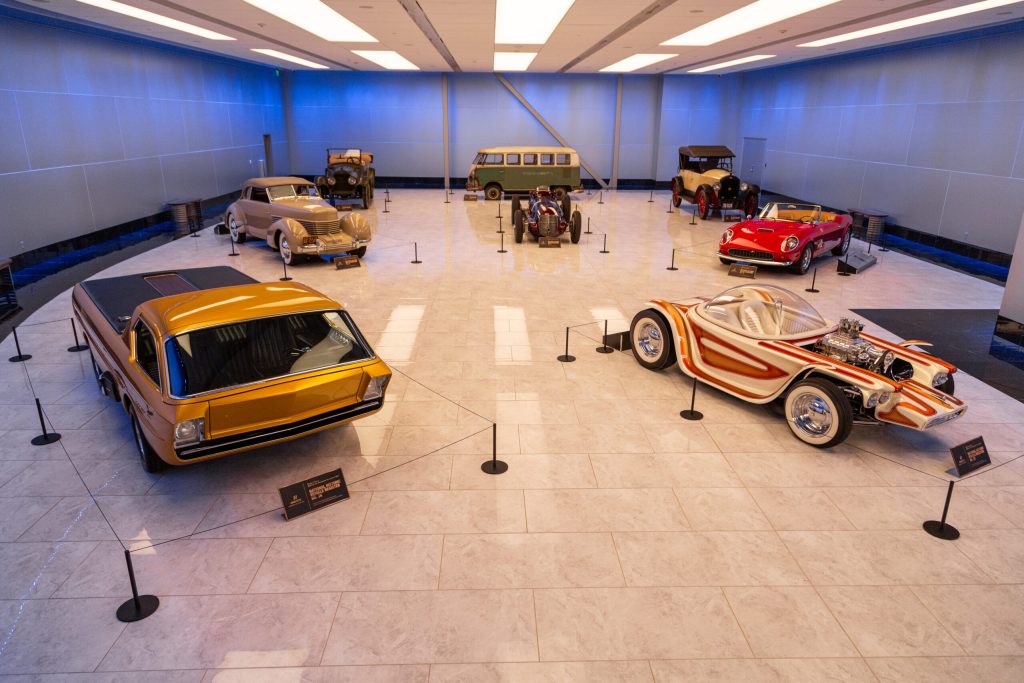
Starting this week, eight vehicles from the National Historic Vehicle Register (NHVR) will be on display at the Savoy Automobile Museum in Georgia, roughly 45 miles northwest of Atlanta. The exhibit, National Treasures: Cars on the National Historic Register, runs until December 6 and is the largest public gathering of NHVR vehicles ever assembled. A collaboration between the museum, Hagerty and the Register, the exhibit also showcases the significant investment Hagerty and the Hagerty Drivers Foundation (HDF) have made in preserving American automotive heritage.
The NHVR, initiated in 2013, is a federally recognized program that honors America’s most significant automobiles via induction into the Register. The documentation process, which involves photography, research, and oral history, also creates a permanent archive held at the Library of Congress. The vehicles inducted “demonstrate the vast impact cars have had on all aspects of American history.” Think of it like the rolling version of the National Register of Historic Places. There are currently 38 vehicles in the NHVR.

Included in the exhibit is a Maserati 8CTF, aka the “Boyle Special.” It may have come from Italy, but it’s a huge part of American automotive history, having won the Indianapolis 500 twice (1939 and ’40), then finishing third in 1946 and ’47, and fourth in ’48. Powered by a twin-supercharged 3.0-liter straight-eight, it also retains many of its original materials, components, and craftsmanship. It is one of the highlight features of the Indianapolis Motor Speedway Museum, and was the third vehicle inducted into the NHVR.

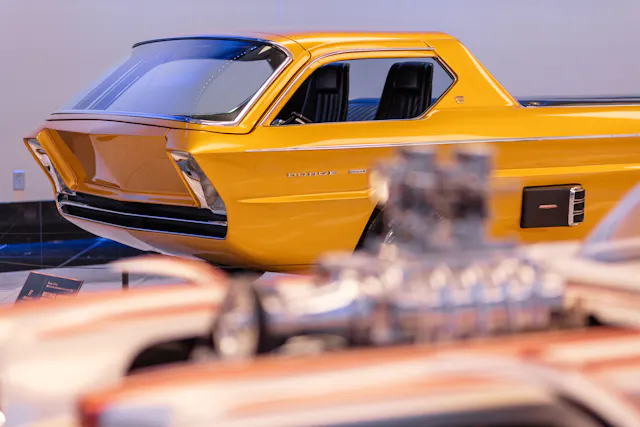

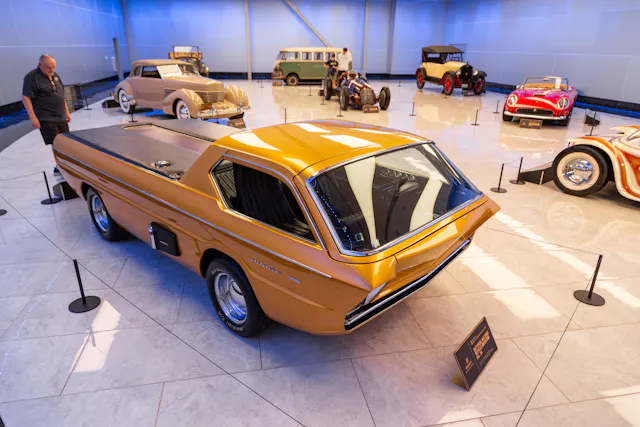
The exhibit also showcases America’s long tradition of customization with the Deora. The handiwork of brothers Larry and Mike Alexander and famed designer Harry Bentley Bradley, the Deora started as a humble Dodge A100 pickup. They transformed it into something completely different for the 1967 Detroit Autorama show, where it captured the coveted Ridler Award and caught the attention of Dodge, which then took the Deora on tour. It was then made even more famous as one of the first 16 Hot Wheels models ever cast.
Also among that first batch of Hot Wheels was the Beatnik Bandit, one of the wild creations of Ed “Big Daddy” Roth. Its handmade fiberglass body and bubble top rest on a shortened 1950 Oldsmobile chassis. It eventually wound up in the gigantic collection of William Harrah, who had it restored, and after Harrah passed away, it wound up as part of the National Automobile Museum.

The Cord 810/812 was a groundbreaking American design with its “coffin nose” and pop-up headlights, and this 812 Phaeton sold new to aviator Amelia Earhart, less than a year before her famous disappearance over the South Pacific. Her husband sold it shortly after, and it was eventually disassembled and split up. The body, frame, and engine were finally reunited in the 2000s, and in the late 2010s it was fully restored.


The 1918 Cadillac Type 57, better known by its military designation U.S. 1257X, served as a support vehicle for the American Expeditionary Forces and Young Men’s Christian Association (YMCA) during the First World War. It is the only known Cadillac to have participated in the war with a documented service record, and retains many of its original materials and components.
Anderson, which operated in South Carolina from 1916–22, was arguably the most successful automobile company to come out of the American South. The Six Convertible Roadster (above, right) is the only known survivor of this body type, and it was the first automobile to be added to the National Historic Vehicle Register for its local and regional historic significance.

The ’66 VW Transporter sold as a used car to civil rights pioneers Esau and Janie B. Jenkins, who emblazoned it with Esau’s motto “Love is Progress, Hate is Expensive” on the rear engine cover and used it to support their various initiatives. It remains in largely original condition.
Finally, the car from Ferris Bueller’s Day Off is just about as famous as the movie itself, though production didn’t use real 250 GT California Spiders for the hard driving and eventual destruction of Cameron’s dad’s prized Ferrari. Instead, they used Ford-powered replicas built by a California outfit called Modena Design and Development. The car in the Register was used for the wide shots. Bonhams sold it at an auction in 2010 for £79,600 (about $122K at the time), and it was subsequently restored.

The Savoy Automobile Museum opened in late 2021 and is located on a 37-acre property in Cartersville, Georgia. It houses multiple rotating exhibits and is open Tuesday through Sunday from 10:00 am to 5:00 pm.