
Close Menu
Simply Invest Asia
  • Home
  • About us
  • Explore industries/sectors
    • Automobile
    • Aviation
    • Banking
    • Biotechnology
    • Chemical & Fertilizer
    • Entertainment and Media
    • Food Processing
    • Healthcare
    • Iron and Steel
    • Leather
    • Mining
    • Oil and Gas
    • Pharmaceutical
  • Explore by countries
    • China
    • Dubai / UAE
    • Hong Kong
    • India
    • Indonesia
    • Japan
    • Malaysia
  • Explore cities
    • Bangkok
    • Beijing
    • Chongqing
    • Delhi
    • Dubai
    • Guangzhou
    • Jakarta
    • Kuala Lumpur
  • Why Asia
Facebook X (Twitter) Instagram Threads
Trending:
  • Dubai blasts add to Gulf tensions as Strait of Hormuz talks continue
  • Bankers in Dubai are preparing for a protracted war
  • Delhi Government initates action against Health Secretary over alleged procurement lapses of medical items – ANI News
  • Markel hires first dedicated claims adjuster in Hong Kong
  • India’s LIC Stake Sale Drew Strong Demand From Big Investors
  • Indonesia Stocks Rise as Strong GDP, Fresh Rp 70T Liquidity Boost Lift Sentiment
  • Chongqing leverages strategic location to develop integrated logistics network
  • Dubai jet-ski accidents: Police warn of biggest mistakes that put riders at risk
  • Beijing named UNESCO-UIA World Capital of Architecture 2029 for its rich heritage and sustainable vision
  • India’s competitive coexistence with China
  • Sofitel Bangkok boosts revenue after IDeaS system switch
  • Heineiken Malaysia falls to Dec 2023 lows, analysts slash forecasts after weak quarter
  • LegCo to fully back HKSAR govt in drafting Hong Kong’s 1st five-year plan: LegCo president
  • Are India and Indonesia Leaving the Non-Aligned Movement Behind? – The Diplomat
  • Dubai tourism dip ‘opens door to hotel buyers’
  • North Korea warns of ‘military options’ over Japan rearmament – Asia News Network
  • Prabowo’s popularity slides in Indonesia amid economic anxiety, policy concerns
  • HSBC’s 26% insurance sales jump lifts Hong Kong’s market outlook
Thursday, August 6
Facebook X (Twitter) Instagram
Simply Invest Asia
  • Home
  • About us
  • Explore industries/sectors
    • Automobile
    • Aviation
    • Banking
    • Biotechnology
    • Chemical & Fertilizer
    • Entertainment and Media
    • Food Processing
    • Healthcare
    • Iron and Steel
    • Leather
    • Mining
    • Oil and Gas
    • Pharmaceutical
  • Explore by countries
    • China
    • Dubai / UAE
    • Hong Kong
    • India
    • Indonesia
    • Japan
    • Malaysia
  • Explore cities
    • Bangkok
    • Beijing
    • Chongqing
    • Delhi
    • Dubai
    • Guangzhou
    • Jakarta
    • Kuala Lumpur
  • Why Asia
Simply Invest Asia
Home»Explore by countries»India»Are India and Indonesia Leaving the Non-Aligned Movement Behind? – The Diplomat
India

Are India and Indonesia Leaving the Non-Aligned Movement Behind? – The Diplomat

By IslaAugust 6, 20264 Mins Read
Share
Facebook Twitter Pinterest Threads Bluesky Copy Link


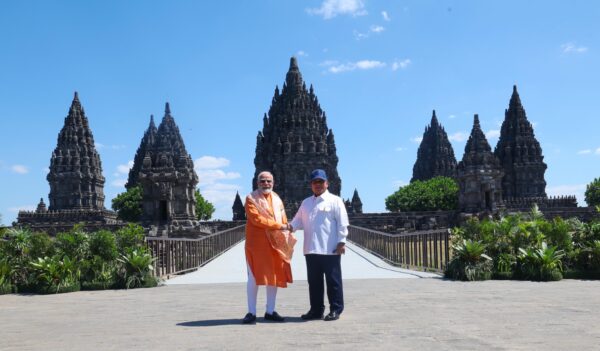
When Indian Prime Minister Narendra Modi visited Jakarta last month, the joint statement issued by India and Indonesia addressed almost every major strategic issue facing Asia. It highlighted the Indo-Pacific, BRICS, ASEAN, maritime security, artificial intelligence, critical minerals, resilient supply chains, and cooperation among the Global South. Yet there was no reference to the Non Aligned Movement (NAM), despite India and Indonesia being among its founding members and the leaders whose cooperation at the 1955 Bandung Conference helped lay its intellectual foundations.

The NAM was similarly absent from the joint statement issued during President Prabowo Subianto’s visit to India in January 2025. The disappearance of the NAM offers a window into how two of Asia’s most important middle powers now understand strategic autonomy. Rather than signaling the abandonment of non-alignment, the same principles are increasingly pursued through a different set of institutions, partnerships, and diplomatic priorities.

India and Indonesia have long occupied a unique place in the history of postcolonial diplomacy. The Bandung Conference articulated principles of sovereignty, anti-colonialism, peaceful coexistence, and independent foreign policy that later shaped the establishment of the NAM in 1961. During the Cold War, these ideas provided newly independent states with a framework for resisting pressure to align with either Washington or Moscow while asserting a greater voice in international affairs.

But the strategic environment that gave rise to non-alignment no longer exists. The central challenge facing Asian middle powers today is not simply avoiding military blocs. It is preserving policy autonomy while navigating an increasingly complex landscape shaped by great power competition, economic interdependence, technological rivalry, and overlapping regional institutions. Strategic autonomy has therefore become less about standing apart from the international system than about participating in it on one’s own terms.

That evolution is clearly reflected in the India-Indonesia partnership. Rather than centering the relationship on the language of non-alignment, the two countries frame their cooperation through a dense network of contemporary frameworks, including ASEAN, BRICS, the G20, the Indian Ocean Rim Association, and overlapping conceptions of the Indo-Pacific. In building up their ties, India and Indonesia have placed equal emphasis on defense industrial cooperation, maritime domain awareness, artificial intelligence, digital connectivity, critical minerals, and resilient supply chains. These priorities represent a different way of pursuing national resilience and strategic flexibility. Strategic autonomy has become increasingly issue-based rather than institution-based.

During the Cold War, the NAM served as the principal political vehicle through which many developing countries expressed their independence. Today, India and Indonesia pursue the same objective across multiple platforms simultaneously. ASEAN reinforces regional diplomacy. BRICS expands cooperation among emerging economies. The G20 provides influence over global economic governance. Indo-Pacific initiatives address maritime security and connectivity. Rather than relying on a single movement, both countries increasingly assemble strategic autonomy through overlapping partnerships.

Importantly, the principles associated with Bandung – sovereignty, territorial integrity, international law, peaceful dispute settlement, and a stronger voice for the Global South – have not disappeared. These are ideas deeply embedded in the diplomatic traditions of both countries, but those principles are now expressed through different means.

This distinction matters beyond India and Indonesia. Across Asia, middle powers are adapting to a strategic environment that is simultaneously more interconnected and more contested than the Cold War order. Few seek exclusive alignment with any single major power. Instead, they cultivate diversified relationships across security, economic, and technological domains while preserving room for independent decision making. Strategic autonomy has become an exercise in managing multiple partnerships rather than avoiding them.

Seen in this light, the disappearance of the NAM from India and Indonesia’s recent joint statements should not be interpreted as evidence of its demise. The movement continues to exist, and many of its core principles remain relevant. What appears to be fading is its role as the primary diplomatic framework through which those principles are articulated.

India and Indonesia continue to defend the values that once inspired the NAM. But they increasingly do so in the language of ASEAN centrality, “a free, open, transparent, rules-based, peaceful, prosperous and inclusive Indo-Pacific,” BRICS, and the Global South rather than the NAM itself. The legacy of Bandung therefore lies not in the continued invocation of a Cold War institution, but in the enduring pursuit of strategic autonomy under the conditions of a very different international order.


Source link

Related Posts

India’s LIC Stake Sale Drew Strong Demand From Big Investors

August 6, 2026

EXCLUSIVE: Classified report reveals how India’s Bishnoi gang uses Canada’s student visa program

August 5, 2026

Fugro to Support India’s Deepwater Exploration Plans with ROV Services Contract

August 5, 2026
Add A Comment
Leave A Reply Cancel Reply

Top Posts

China Scraps 12,000 Degrees in Biggest Academic Overhaul in Years

June 14, 2026

Chinese Wall may stem India tech flows for electronics and automobile

June 1, 2026

Abandoned malls, whispers of nuclear war and young foreigners detained. This is what’s REALLY going on in Dubai… and the chilling warning one taxi driver gave to the Mail’s IAN BIRRELL

April 11, 2026
Don't Miss

Dubai blasts add to Gulf tensions as Strait of Hormuz talks continue

By IslaAugust 6, 2026

Several explosions were reported near Dubai’s Jebel Ali area on Wednesday, with videos shared online…

Bankers in Dubai are preparing for a protracted war

August 6, 2026

Delhi Government initates action against Health Secretary over alleged procurement lapses of medical items – ANI News

August 6, 2026

Markel hires first dedicated claims adjuster in Hong Kong

August 6, 2026
SUBSCRIBE TO OUR NEWSLETTER

Get our latest downloads and information first. Complete the form below to subscribe to our weekly newsletter.


I consent to being contacted via telephone and/or email and I consent to my data being stored in accordance with European GDPR regulations and agree to the terms of use and privacy policy.

Stay In Touch
  • Facebook
  • YouTube
  • TikTok
  • WhatsApp
  • Twitter
  • Instagram
Top Trending

LegCo to fully back HKSAR govt in drafting Hong Kong’s 1st five-year plan: LegCo president

By IslaAugust 6, 2026

Are India and Indonesia Leaving the Non-Aligned Movement Behind? – The Diplomat

By IslaAugust 6, 2026

Dubai tourism dip ‘opens door to hotel buyers’

By IslaAugust 6, 2026
Most Popular

From New York to Dubai, Maker’s Mark Turns Global Cities Into Collectible Bourbon Bottles

July 18, 2026

Norman Ng: A Personal Perspective on Hong Kong’s Public Healthcare Journey

July 25, 2026

Licensing application: Dubai Bites, 77 Tottenham Court Road

June 9, 2026
Our Picks

Singapore, Malaysia heads of state encourage deeper cooperation between the two countries

July 14, 2026

Non-Associated Gas Licence for Loran gas field

June 14, 2026

Chinese Autonomous Driving Startup Momenta Advances Hong Kong IPO Plan

June 23, 2026
SUBSCRIBE TO OUR NEWSLETTER

Get our latest downloads and information first. Complete the form below to subscribe to our weekly newsletter.


I consent to being contacted via telephone and/or email and I consent to my data being stored in accordance with European GDPR regulations and agree to the terms of use and privacy policy.

© 2026 Simply Invest Asia.
  • Get In Touch
  • Cookie Policy
  • Privacy policy
  • Terms & Conditions

Type above and press Enter to search. Press Esc to cancel.

SUBSCRIBE TO OUR NEWSLETTER

Get our latest downloads and information first.

Complete the form below to subscribe to our weekly newsletter.


I consent to being contacted via telephone and/or email and I consent to my data being stored in accordance with European GDPR regulations and agree to the terms of use and privacy policy.