
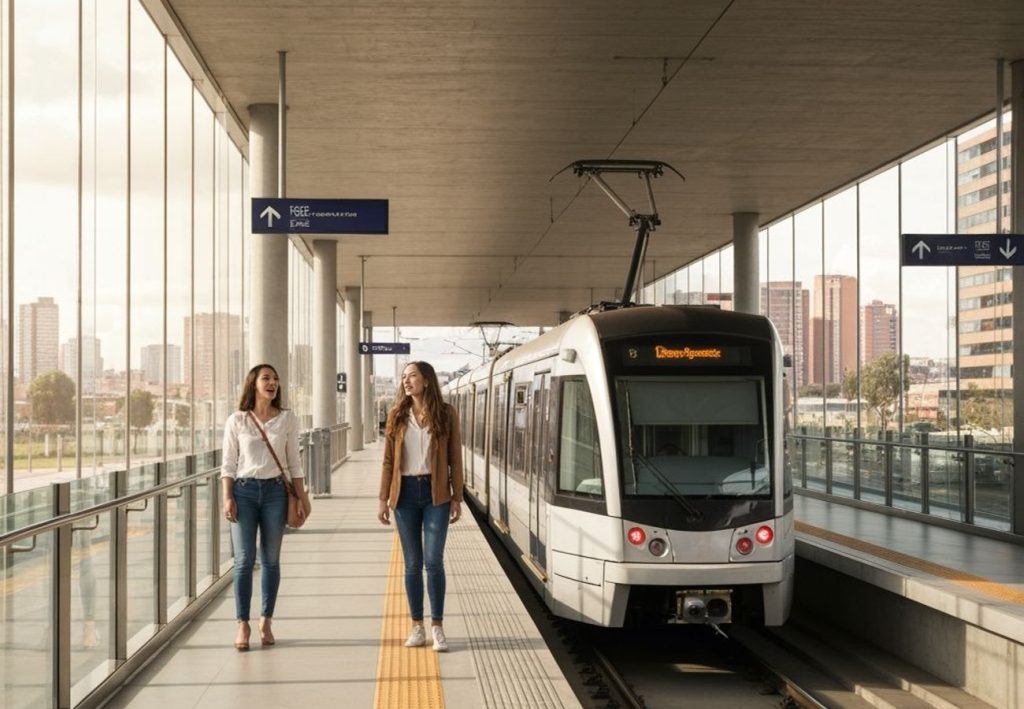
Colombia’s Rail Transformation Begins: Guangzhou Metro Takes the Keys to RegioTram de Occidente
Colombia just made a bold move into its rail future. Guangzhou Metro Group, one of Asia’s most sophisticated urban transit operators, has been positioned as the future operating partner for RegioTram de Occidente — a transformative 40-kilometer electric rail corridor designed to bind Bogotá and key Cundinamarca municipalities into a seamless mobility network.
This isn’t simply a construction story. This is about how millions of travelers, commuters, business delegates, and regional visitors will move between Colombia’s capital and its western suburbs starting in the second half of 2027.
The stakes are high. The implications are global.
Why This Matters Beyond the Rails
For anyone tracking infrastructure in Latin America, this signals something critical: China’s transit expertise is reshaping Colombian mobility. But more importantly, it means RegioTram de Occidente is moving from blueprint phase into operational readiness.
That distinction matters enormously.
Rail infrastructure fails when tracks exist but operations collapse. Stations open but trains run late. Systems launch with broken maintenance cultures or untrained staff. Guangzhou Metro’s involvement eliminates that uncertainty. They bring 20+ years of managing one of Asia’s most complex metro systems into a project desperately needing operational discipline.
Reddit: “Better than another abandoned rail project gathering rust. If Guangzhou runs it like their own system, this actually works.” — r/transit
The 40km Corridor That Changes Everything
RegioTram de Occidente connects Bogotá with four strategic municipalities: Funza, Mosquera, Madrid, and Facatativá. The system features approximately 17 stations distributed across the electric train-tram corridor, with an estimated weekday demand of around 130,000 passengers.
These are not theoretical numbers. These represent real commuters, business travelers, students, and visitors who currently waste hours fighting road congestion. The modal shift — from vehicles to rail — could reshape the entire Bogotá-Cundinamarca economic zone.
For the travel industry specifically, this creates cascading opportunities:
Hotels and hospitality gain predictable guest access to regional attractions. Event planners can confidently book delegates across a wider geography. Corporate travel managers eliminate unpredictable transit times. Tour operators can package new Cundinamarca experiences knowing travelers can actually reach them efficiently.
Guangzhou Metro Brings Global Operating Standards
Here’s what most people miss: infrastructure alone never succeeds. You need the operator.
Guangzhou Metro Group doesn’t just manage trains. They manage complex passenger ecosystems. They oversee safety protocols, maintenance scheduling, staff training, real-time control systems, and the cultural disciplines that keep urban rail functioning reliably. That expertise doesn’t transfer automatically — it requires institutional commitment.
Colombia’s Ministry of Transport has been explicit: this is a regional electric passenger rail system designed to ease transport integration between the capital and surrounding municipalities. But success depends entirely on operational excellence.
Guangzhou brings that. They’ve scaled metro operations across one of China’s most demanding urban corridors. They understand mixed-use corridors (part urban, part suburban), complex passenger demand patterns, and the infrastructure reliability that business travelers and event planners require.
The 2027 Launch Window: What It Means for Businesses
Second half of 2027 isn’t randomly chosen. It’s a planning horizon for the entire Bogotá region.
Hotel developers can now evaluate station-area demand and design properties accordingly. Corporate real estate teams can assess office locations with confidence in future transit access. Municipal governments can prioritize pedestrian infrastructure and station-area development. Event venues can market their accessibility differently.
More tactically: this timeline gives the travel industry roughly 18 months to study the emerging mobility patterns and design new products around the line’s opening.
That’s not much time. But it’s actionable time.
The Broader Colombian Rail Strategy
RegioTram de Occidente doesn’t operate in isolation. It’s part of a wider Colombian policy shift toward cleaner public transport. Bogotá’s Metro development, expanding electric bus systems, and now regional rail all signal a coordinated mobility transformation.
This matters because fragmented transport systems fail. Integrated systems succeed. When RegioTram connects seamlessly with Bogotá’s broader transit network — including future metro connections — the entire region becomes more navigable for visitors, more efficient for commuters, and more attractive for business investment.
The Chinese partnership also signals Colombia’s pragmatic approach: get the best operator available, regardless of geography. That’s not ideology. That’s infrastructure competence.
How This Reshapes Cundinamarca’s Travel Economy
The real story isn’t Bogotá. It’s Cundinamarca.
Funza, Mosquera, Madrid, and Facatativá have historically operated in Bogotá’s shadow. Regional businesses faced commuter constraints. Visitors couldn’t easily access Cundinamarca’s attractions from the capital. The western Sabana corridor — rich with agricultural heritage, day-trip potential, and emerging business parks — remained isolated by road-dependency.
RegioTram changes that equation entirely.
Suddenly, Cundinamarca becomes a coherent destination system rather than disconnected municipalities. A visitor staying in Bogotá can access the broader region with predictable journey times. Local workers can reach jobs across a wider geography. Business delegates can attend conferences and meetings region-wide without logistics nightmares.
That’s economy reshaping.
The Operational Reality Check
None of this happens automatically. Guangzhou Metro’s role is crucial, but success requires:
Colombian government commitment to completed infrastructure. Stations, tracks, signaling, and electrical systems must meet the operator’s standards. Staff training programs need institutional support. Maintenance facilities must be properly funded. Safety protocols demand regulatory oversight.
The travel industry should remain cautiously optimistic. Enthusiastically interested. But monitoring operational readiness remains essential. Rail projects in Latin America have sometimes launched with incomplete infrastructure or insufficient training. This partnership should prevent that — but only if all parties execute.
What Travelers and Businesses Should Do Now
If you’re analyzing investment, planning events, or developing tourism products in the Bogotá region, start mapping the RegioTram corridor now. Identify which stations serve your target destinations. Evaluate how the electric rail system changes your business logistics.
The line launches in late 2027. That means planning windows are compressing. Early-mover advantages go to those who understand the new mobility patterns first.
For frequent travelers to Colombia, the message is simpler: Colombian mobility is improving. Faster regional access. Cleaner transport. Better integration. These changes make Bogotá and Cundinamarca easier to navigate and more rewarding to explore.
Guangzhou Metro is bringing operational excellence to Colombian rails — watch this space closely through 2027.
Related Travel Guides
Disclaimer: This article is based on publicly reported information about RegioTram de Occidente and Guangzhou Metro Group’s operational role. Rail project timelines, station details, and operational capacity are subject to change. For official updates, consult Colombia’s Ministry of Transport and RegioTram de Occidente project management offices. Travel planning decisions should incorporate flexibility for infrastructure adjustments or scheduling modifications.