

As Hong Kong prepares to formulate its first Five-Year Plan (2026–2030), aligning closely with the national 15th Five-Year Plan, the city faces a defining question: how will it power its next stage of development?
For Mr Joseph Law, Managing Director of CLP Power Hong Kong Limited (CLP), the answer begins with recognising electricity as more than a background utility. He believes it must be positioned at the heart of long-term economic strategy.
“Electricity is no longer just a supporting service,” Law says. “It is the backbone of innovation, digital transformation and economic security. If Hong Kong is serious about high-quality development, energy planning must be elevated to the level of strategic economic infrastructure.”
With a history of more than 125 years and deep roots in Hong Kong, CLP has powered the city through industrialisation, financial expansion and technological change. As the government drafts its inaugural Five-Year Plan, Law says early and close coordination between policymakers and the power sector will be critical.
“Balancing development and energy security priorities requires forward-looking planning,” he notes. “If electricity infrastructure is integrated from the outset, we can reduce long-term societal costs and risks while ensuring strategic projects are delivered on time.”
Powering the Northern Metropolis

Few projects illustrate this interdependence more clearly than the Northern Metropolis, envisioned as a new growth engine centred on innovation and cross-boundary collaboration.
The area has long been within CLP’s service territory. From rural electrification in the 1960s to supporting rapid industrial and commercial growth in the 1970s and 1980s, the company has evolved alongside the New Territories. Now, the scale and sophistication of demand are changing again.
“Modern data centres and advanced computing facilities require enormous amounts of stable, high-quality electricity,” Law says. “Digital infrastructure and power infrastructure are inseparable.”
CLP is formulating medium- to long-term development strategies to support the Northern Metropolis and has recommended establishing a computing-power coordination mechanism to align computing infrastructure with grid development.
“We have the capability and confidence to support electricity demand equivalent to three to four supercomputing centres of the Sandy Ridge Data Facility Cluster’s scale over the next decade,” he said. “But that requires coordinated, anticipatory planning.”
Advancing Decarbonisation While Ensuring Stability
Hong Kong’s pledge to achieve carbon neutrality before 2050, in support of the national dual carbon goals, adds another layer of complexity to the city’s energy planning.
“To meet carbon neutrality targets, we must accelerate the energy transition without compromising reliability,” Law states. “Stable, large-scale zero-carbon energy sources will be essential.”
CLP is increasing imports of nuclear and renewable energy from Guangdong, expanding local renewable development and upgrading the grid to integrate new energy technologies. Law believes securing a dedicated nuclear power supply from Guangdong would provide long-term, transparent and stable clean energy.
“If we align with the national vision of accelerating energy transition, nuclear energy will play an indispensable role,” he states. “It offers scale and stability that complements renewables.”
Strengthening Energy Security in Uncertain Times
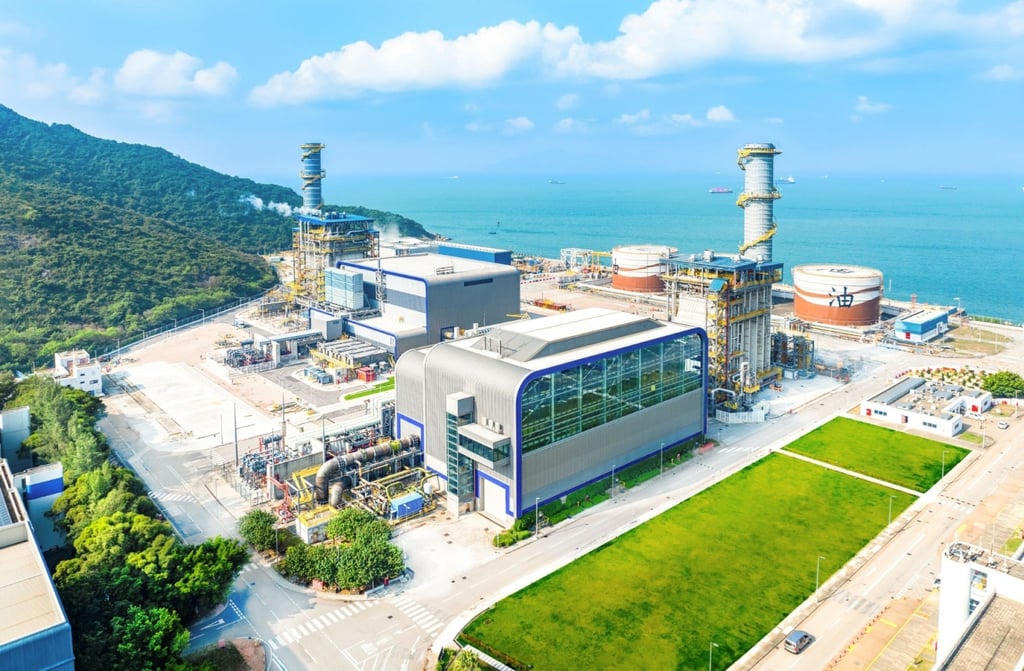
Global geopolitical tensions and market volatility have heightened awareness of energy security. CLP maintains 99.999% supply reliability, supported by a diversified fuel mix that includes natural gas, coal, nuclear power from Daya Bay and renewable energy.
In Law’s view, “energy security is a critical dimension of sustainable development” and “diversification is how we manage risk responsibly”.
Innovation is also part of that strategy. CLP has launched a pilot project using hydrogen-blended natural gas for power generation at Black Point Power Station, with testing expected to be completed by 2028.
“This marks an important step towards hydrogen-fired power generation,” Law notes. “We are also exploring opportunities in carbon capture, utilisation and storage (CCUS). Prioritising pilot projects and feasibility studies in Hong Kong can help us scale cost-effective solutions over time.”
Building Climate Resilience
Extreme weather events are becoming more frequent and intense, presenting challenges for infrastructure across the city. While CLP has strengthened flood protection, upgraded equipment and implemented real-time monitoring systems, vulnerabilities remain in ageing buildings with customer-owned substations and electrical installations.
“Even when CLP’s power supply remains stable, extreme weather may disrupt electricity supply within buildings due to flooding, water ingress, or inadequate maintenance,” Law warns. “Climate resilience must be addressed holistically.”
He has proposed establishing a government-led, cross-sector Climate Resilience Task Force to coordinate efforts among bureaux, utilities and industry stakeholders.
“Resilience is a shared responsibility,” he advises. “We need coordinated action to safeguard the community.”
Electrification, Green Finance and Talent
Electrification across the transport, marine and building sectors will be central to Hong Kong’s decarbonisation pathway. CLP is expanding its high-density electric-vehicle charging network and upgrading the grid to support increased demand.
“Electrification is one of the most effective ways to reduce urban emissions,” Law says. “Clear timelines and stronger incentives to phase out internal combustion engine commercial vehicles will accelerate progress.”
He also supports positioning shore power facilities as critical green port infrastructure and facilitating advanced LNG bunkering services to strengthen Hong Kong’s competitiveness as an international maritime centre.
Financing the transition will require robust green finance frameworks. Law has called for accelerating the development of the Hong Kong Taxonomy for Sustainable Finance, aligning it with both mainland and international standards.“A clear and credible taxonomy builds investor confidence,” he says. “Public-private partnerships and innovative financing models can help mobilise the capital needed for long-term infrastructure.”
Underlying all of this is talent development.
“Energy transformation demands expertise in engineering, digitalisation and clean technologies,” Law states. “Designating the energy sector as a priority talent development area will help Hong Kong build a strong green talent pool.”
A Strategic Moment
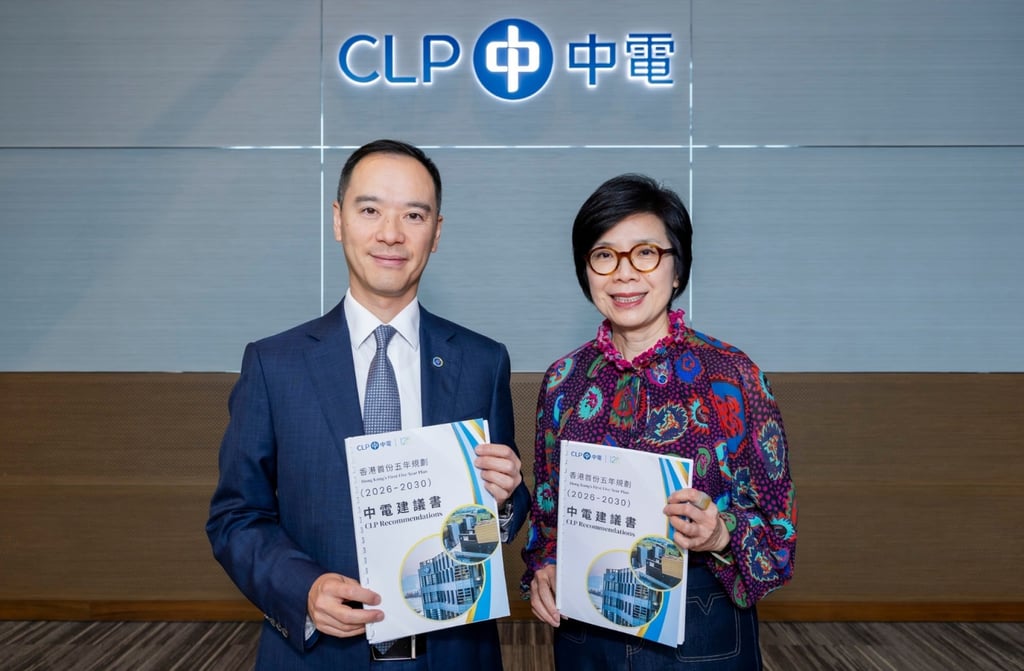
As Hong Kong draws up its first Five-Year Plan, Law believes the city has a strategic opportunity to embed energy planning into its broader economic blueprint.
“Our role goes beyond supplying electricity,” he advises. “We are committed to serving as a super connector and super value-adder, contributing our technical expertise, mainland experience and global perspective. By positioning electricity as strategic economic infrastructure, we can help build a greener, more resilient and more prosperous Hong Kong.”
For businesses, investors and residents alike, the message is straightforward: powering Hong Kong’s future will require vision, coordination and decisive action beginning now.