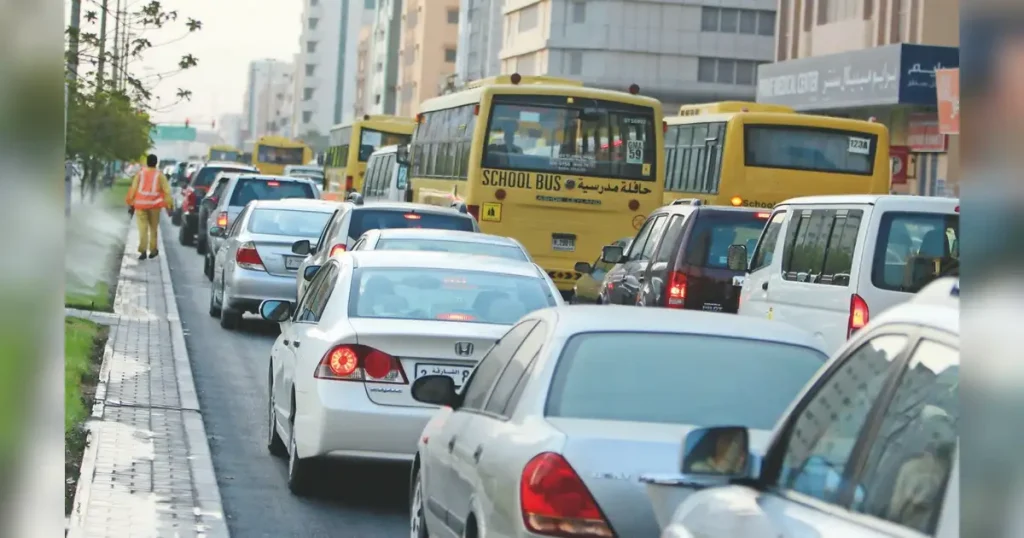
As schools reopen across the UAE, motorists may need to keep extra time for their journeys, particularly when passing through school zones during the morning rush.
Taxi drivers who spend hours on the road every day said traffic has already started increasing as residents return from summer holidays. They expect some school zones to add around 15 to 30 minutes to journeys, while the first three days after reopening could be the most unpredictable.
Here is what motorists need to know.
Stay up to date with the latest news. Follow KT on WhatsApp Channels.
Which areas could see heavier traffic?
Taxi drivers identified Karama, Bur Dubai, Oud Metha, Garhoud, Al Twar, Al Nahda, Al Barsha and Al Quoz as areas where traffic could build quickly. Roads leading to schools and surrounding residential neighbourhoods are likely to be among the first to slow down.
Shahidul Islam, a taxi driver, said the change is already noticeable. “People who were on vacation are already back. We can feel the traffic now,” he said.
He also expects heavier movement around Garhoud, Al Nahda and Festival City because the roads lead to schools in those areas.
What are the busiest school-run timings?
Drivers expect the morning rush to be strongest between around 6am and 8am. Al Twar, Garhoud and Oud Metha could become particularly busy between 6.30am and 9am, while another wave of traffic may begin after 2pm during school pick-up hours.
Mushtaq, another taxi driver, said motorists should not expect to find completely traffic-free roads during these periods. “During school hours, most roads will have traffic. Avoiding one road may not make much difference,” he said.
How much extra time should motorists keep?
For journeys within Dubai, drivers recommend leaving around 10 to 15 minutes earlier than usual. Motorists passing directly through a busy school zone may need an additional 15 to 30 minutes, depending on traffic conditions.
Drivers said one major change after the summer holidays is that congestion begins earlier, with residential areas starting to fill up as school and office traffic overlap.
Travelling from Sharjah to Dubai?
For Sharjah commuters, the advice is to leave much earlier. Mushtaq recommended keeping at least an additional hour once schools reopen.
“If you enter Dubai from Sharjah before 6am, it’s fine. After 7am, keep an extra hour,” he said.
Drivers said motorists leaving before 6am generally have more freedom to choose their route before school traffic begins building.
Should motorists take shortcuts?
Not necessarily.
Taxi drivers said smaller internal roads can sometimes become slower because they pass directly through school and residential neighbourhoods.
Their advice is to check live traffic before leaving rather than assuming a shortcut will always save time.
“Check Google Maps and see which route is jammed and which isn’t,” said Islam.
Will new roads and flyovers help?
Drivers believe recently opened roads, bridges and flyovers could ease pressure in some areas. Islam advised motorists to consider routes that may not have been available before the summer break.
“Use the new flyovers opened during the summer,” he said. “They were built in areas where we used to see heavy traffic.”
Mushtaq said the real impact would become clearer after schools reopen. “We will know in two or three days which roads are actually moving better after schools reopen,” he said.
Which major roads should motorists watch?
Abdul Rahim, another cabbie said motorists should keep an eye on Sheikh Mohammed bin Zayed Road, Sheikh Zayed Road and Al Ittihad Road during peak hours.
He advised drivers to check traffic conditions before leaving and avoid roads immediately surrounding schools when possible.
Why could the first three days be difficult?
Drivers said the first three days are usually when motorists, school buses and parents are still settling back into their regular routines. This year, the effect of new roads and flyovers could also change familiar traffic patterns.
They expect routes to become easier to predict after the first few days, once motorists understand where the biggest bottlenecks are forming.
Do taxi drivers themselves avoid school areas?
Not always.
Drivers said they still take passengers to school-heavy neighbourhoods even when they know they could get stuck in traffic.
Areas such as Al Twar, Garhoud and Oud Metha can also generate passenger demand during the morning, particularly between 7.30am and 9am.
What should motorists avoid doing in traffic?
The drivers’ final advice was about patience rather than route choice. They urged motorists not to use their phones, not to rush and not to become aggressive when traffic slows down.
“One small accident can add up to over an hour,” said the drivers.
Abdul Rahim added a simple reminder: “Don’t use your mobile phone while driving.”
The drivers said giving yourself extra time, staying focused and avoiding road rage may ultimately save more time than trying to force your way through congestion.