
DUBAI
A Dubai initiative that uses the familiar ritual of Arabic coffee to encourage greater care in the use of the Arabic language has released a new digital edition, turning everyday linguistic lessons into a cultural exercise in precision, expression and appreciation of the language’s richness.
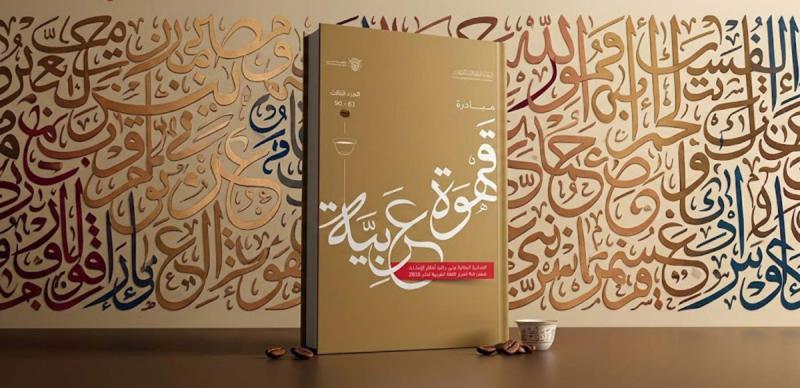
The General Secretariat of Dubai’s Supreme Legislation Committee has launched the third edition of its electronic booklet for the “Arabic Coffee” initiative, which seeks to improve the use of Arabic in legislative drafting, identify common linguistic mistakes and draw attention to the aesthetic qualities of the language.
The initiative places particular emphasis on legal language, where precision is essential, while also presenting Arabic as a living language whose flexibility, vocabulary and expressive range can enrich official writing rather than simply impose rules on it.
Secretary-General of the Supreme Legislation Committee Ahmed Saeed bin Meshar said the latest edition builds on the initiative’s contribution to Dubai’s intellectual and cultural activity and forms part of wider national efforts to promote accurate use of Arabic.
He said the initiative highlights the language’s “aesthetic qualities, flexibility in expression and richness of vocabulary”, presenting linguistic accuracy as both a practical requirement and a means of preserving the character of Arabic in official communication.
The third edition follows a series of milestones for the initiative, including its success at the UAE Ideas Award, where it won in the “Promoting the Arabic Language” category. Its team was also recognised by Sheikh Ahmed bin Saeed Al Maktoum, honorary patron of the Dubai Quality Group.
But the concept behind “Arabic Coffee” goes beyond correcting grammatical or stylistic errors. Its organisers have sought to make the process more accessible by linking linguistic guidance to the cultural symbolism of Arabic coffee, a tradition deeply embedded in social life across the Gulf.
Salem Al Ahmad, the committee’s Arabic language adviser and founder of the initiative, said “Arabic Coffee” seeks to strengthen the position of the language by correcting widespread mistakes while expanding the vocabulary and linguistic skills of government employees.
He stressed that the initiative was not limited to identifying what is wrong, but also aimed to demonstrate the richness and importance of Arabic and its enduring civilisational role.
The approach is particularly relevant to legislative drafting, where a misplaced word or ambiguous expression can affect the clarity of a legal provision. By focusing on language at the drafting stage, the initiative seeks to make legislation more precise and accessible while preserving the elegance of Arabic expression.
The latest booklet contains 30 “cups” of linguistic insights, each focusing on expressions and usages intended to improve the accuracy and quality of legal drafting.
The format gives the initiative a distinctive character: instead of treating language as a purely technical subject, it presents individual linguistic lessons as something to be sampled, shared and revisited, much like cups of coffee offered during a traditional gathering.
The initiative has also attracted engagement beyond government offices, with officials and employees interacting with its content alongside followers on social media platforms.
Al Ahmad said this response demonstrated the initiative’s tangible impact in strengthening linguistic accuracy in legal writing. The committee, he added, intends to continue developing “Arabic Coffee” and widening its reach through cooperation with partners and other relevant bodies.
The project comes as institutions across the UAE place renewed emphasis on strengthening the use of Arabic in public life, including in government communication and legislation. For Dubai’s legislative authorities, the challenge is particularly acute: legal language must combine technical precision with clarity, consistency and a recognisably Arabic voice.
In that sense, “Arabic Coffee” seeks to bridge two worlds – the formal language of legislation and the cultural familiarity of a traditional social ritual. Its third edition presents Arabic not merely as a language to be protected from mistakes, but as a flexible and evolving instrument of knowledge, law and cultural expression.